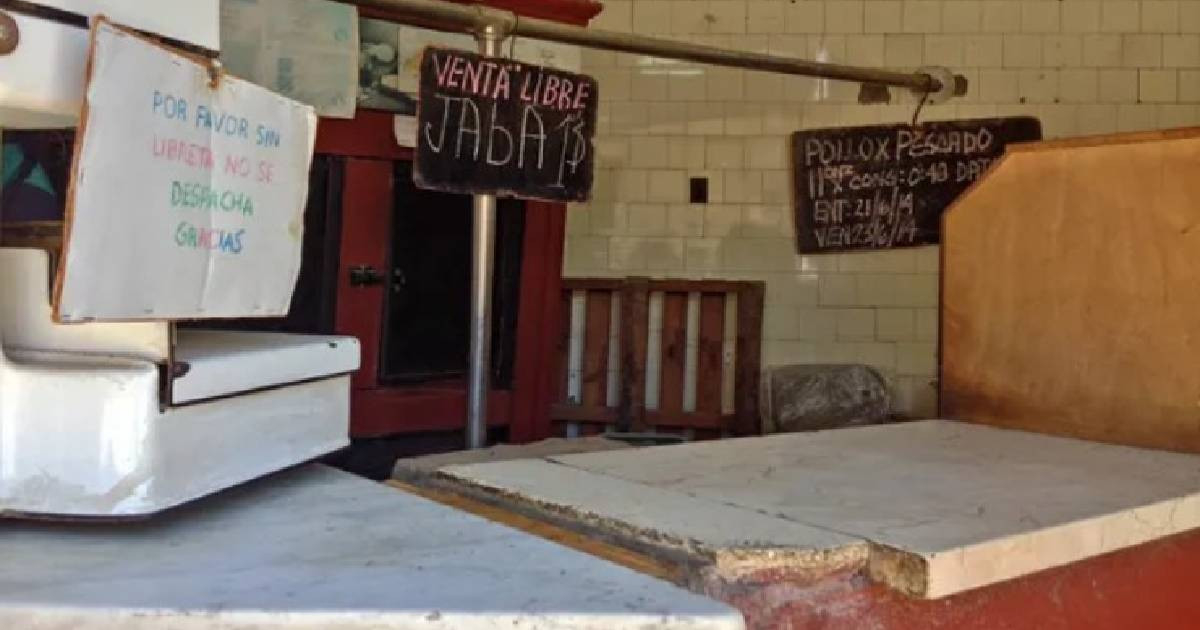
The province of Cienfuegos has commenced the process of auctioning off 47 of its 69 butcher shops, locally referred to as "casillas," to transfer their management to producers and other non-state entities. This development was confirmed by the official newspaper 5 de Septiembre on Saturday.
Yanser Toledo Pérez, the Municipal Director of Commerce, acknowledged that these butcher shops have remained closed due to a lack of products.
"The shortage of products has led to the closure of the casillas, although their social purpose remains intact," he stated. He further announced that 47 establishments, representing 68% of the total, will be offered to interested producers willing to provide this service.
This move is supported by Resolution 40/2022 from the Ministry of Domestic Trade, which allows self-employed workers, non-agricultural cooperatives, small and medium-sized enterprises (SMEs), and local development projects to manage state properties.
Expanding the Private Sector's Role in Local Commerce
The auction is part of a broader transformation within the Commerce, Gastronomy, and Services sector. Orelvis González Suárez, Provincial Director of Gastronomy, admitted that auctioning idle establishments has become "the primary management tool" amid sector challenges.
The main municipal area is leading this initiative, while other territories in the province have completed assessments of closed or underperforming units and are preparing to implement a similar model.
Previously, Cienfuegos had started transferring the management of other state-owned spaces to private entities. Notably, the Coppelia Prado and El Cairo ice cream parlors were auctioned to an SME focused on ice cream production using renewable energy.
Transforming State Facilities Without Changing Ownership
Ana Javier Chaplis, Director of Gastronomy, Lodging, and Recreation, stated that employees were retained, and the establishments began offering new options and adjusted pricing.
The Laguna del Cura restaurant reopened after being closed for over two years, while the iconic Covadonga restaurant is preparing to revive its traditional paella under private management.
Authorities emphasize that this process does not involve transferring the state ownership of the properties but solely their management.
Chaplis linked this strategy to the 19th pillar of the 176 economic measures announced in June, emphasizing the coexistence of state and private sectors.
Supporting Local Commerce and Price Reductions
This initiative is also aligned with Resolution 16/2026 from the now-defunct Ministry of Domestic Trade (Mincin), which established "Neighborhood Markets." These are venues where state companies, SMEs, cooperatives, and self-employed individuals can sell essential goods at prices 10% to 15% lower than other outlets, thanks to tax incentives.
The benefits include a 5% sales tax reduction for non-state actors and a complete exemption for those selling wholesale under the Domestic Trade system.
Understanding the Shift in Cienfuegos' Butcher Shop Management
What prompted Cienfuegos to transfer the management of butcher shops to private entities?
The primary reason was the prolonged closure of these shops due to product shortages. The government aims to revitalize them by allowing private management, ensuring services are provided to the community.
How does Resolution 40/2022 support this transition?
Resolution 40/2022 facilitates this transition by permitting non-state actors such as self-employed individuals, cooperatives, and SMEs to manage state properties, thereby encouraging private sector involvement.
What are the benefits for private entities managing these state properties?
Private entities benefit from tax incentives, such as a 5% reduction in sales tax and full exemption for those selling wholesale, making it financially attractive to manage these properties.