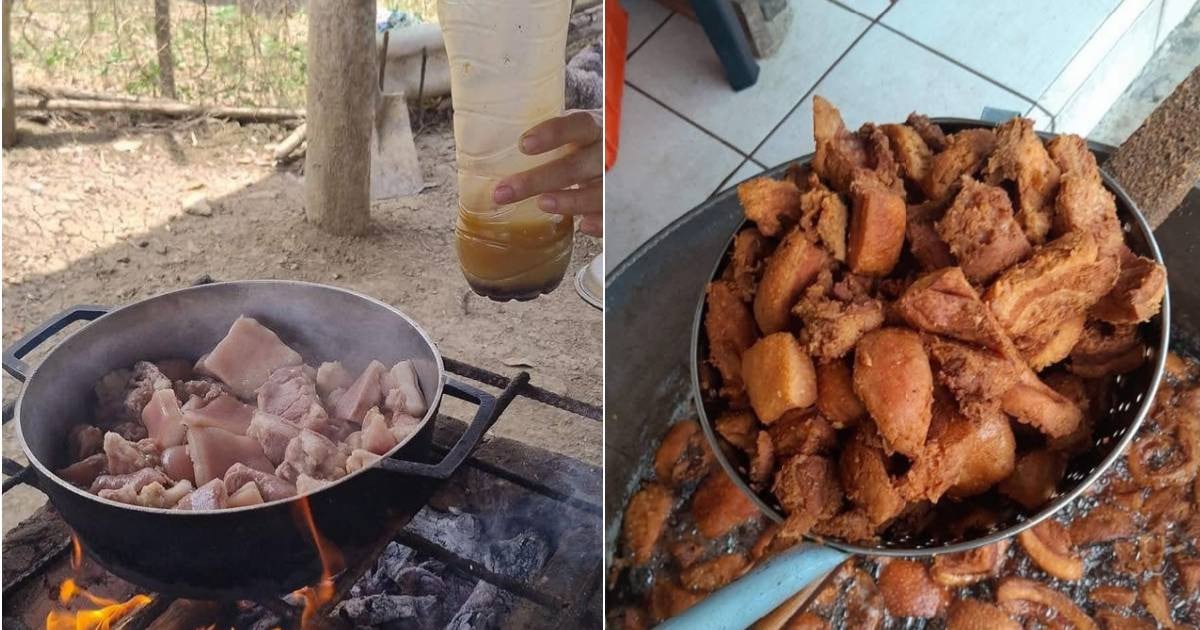
Osmel Diazboloy, a Cuban citizen, announced an "oil strike" on Saturday in response to the exorbitant prices of cooking oil, declaring he would revert to using pork lard for cooking.
"6,000... 7,000 for a bottle of oil. Is it oil or French perfume? Does the bottle come with fried chicken, an apartment, or what?" Diazboloy quipped on his Facebook page.
"I'm not on a hunger strike... it's an oil strike. My frying pan is in therapy right now. The deep fryer is job hunting. And the pork lard is watching from the corner saying: 'And who's the bourgeois now?'" he added humorously.
Diazboloy’s post sparked numerous comments from Cubans across various provinces, many of whom pointed out that pork lard isn't a viable alternative either.
"If we're talking about strikes... then let's strike against oil, eggs, sausages, and so on... because nothing is available anymore, and if it magically appears, the price is out of reach for most," commented one user. The same user noted that lard is also beyond the financial reach of many.
Widespread Struggles with Food Prices
From Guantánamo, another user stated that oil is being sold at 5,500 pesos and that pork lard is nowhere to be found. Another person echoed the sentiment of the original post, saying, "I join your strike, but mine includes lard too, as its price now rivals oil."
In Baracoa, a resident mentioned that coconut oil is used for cooking since "regular oil has vanished." A different commenter noted that butter prices have also climbed because people started using it for cooking.
These comments highlight the return of pork lard to Cuban kitchens after years of oil being the standard cooking option. Some users reminisced about the past when lard was commonly used for cooking, with oil reserved for salads.
Economic Challenges and Government Response
The humorous "oil strike" by Diazboloy underscores the declining purchasing power and difficulty in acquiring basic goods at affordable prices. The price surge followed the Ministry of Finance and Pricing’s Resolution 150/2026, released on June 20, which removed national caps on imported edible oils and eliminated the previous limit of 990 pesos per liter.
Since this resolution, oil prices have jumped from about 1,500 pesos in April to over 4,000 in some areas by August, with reports from citizens indicating costs as high as 7,000 pesos per bottle.
The Cuban government admitted that this year it hasn't provided oil through ration books, a significant absence given the product's role in daily diet. In response to social pressure, local governments began setting their own price limits. Guantánamo set the price at 2,200 pesos, Pinar del Río at 2,150, and Matanzas at 2,500, just weeks after the national cap was lifted.
Humor as a Coping Mechanism Amidst Crisis
Diazboloy's post joins a wave of viral content using humor to cope with the crisis. Troubadour Yordan Quintero went viral with a poem about oil costing 3,500 pesos in Ranchuelo, which garnered over 1.1 million views.
Additionally, a Cuban mother posed with a bottle of oil, captioning: "I have gold in my hands."
With a minimum monthly wage of 3,210 pesos since July, a liter of oil costing 4,000 pesos exceeds the earnings of those with the lowest incomes in Cuba. Meanwhile, the minimum pension barely reaches 4,000 pesos, equivalent to less than eight dollars.
Understanding Cuba's Oil Crisis
Why are oil prices so high in Cuba?
Oil prices in Cuba have surged due to the removal of national price caps by the Ministry of Finance and Pricing, which led to significant increases in the cost of imported edible oils.
What alternatives do Cubans have for cooking oil?
Cubans have turned to alternatives like pork lard or coconut oil, but these options are also becoming less affordable or available.
How has the Cuban government responded to the oil price crisis?
In response to public pressure, some local governments have set their own price limits for oil, although these prices are still high compared to the average income.