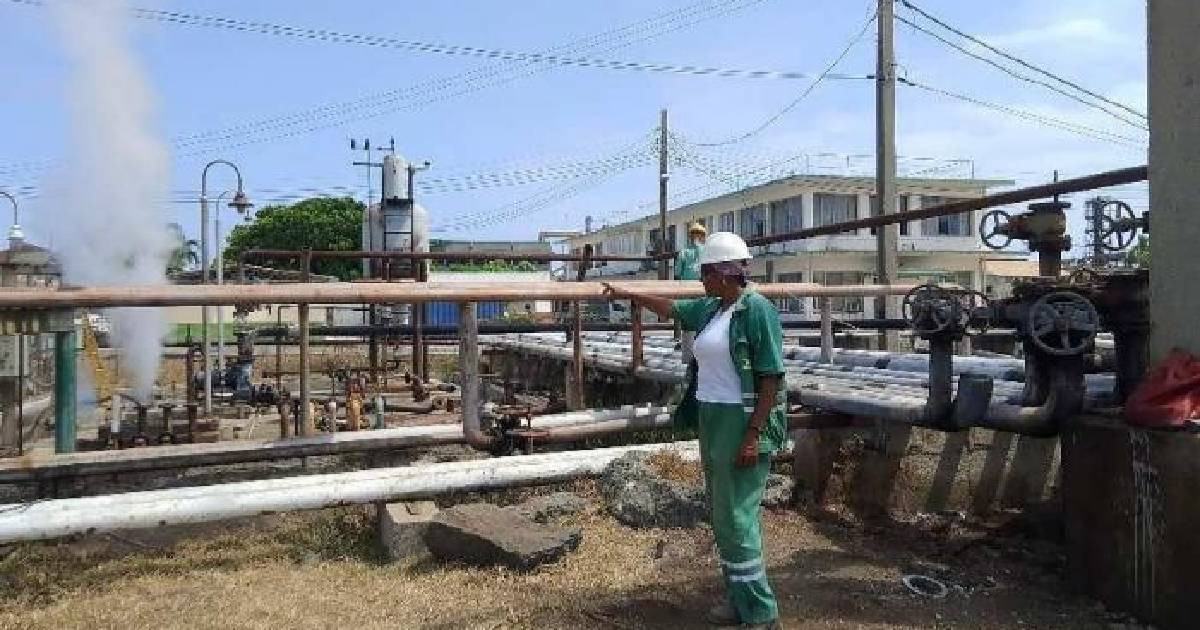
The Hermanos Díaz oil refinery in Santiago de Cuba has successfully completed its third trial run using domestically-sourced crude, yielding 2,000 tons of naphtha and 10,000 tons of fuel oil, according to the official Communist Party newspaper, Granma, on Friday.
Plant General Manager, Engineer Irene Barbado Lucio, shared with the party's publication that this endeavor is "progressing with each run," following previous tests in March and May. She emphasized improvements in technological solutions, particularly in the unloading of crude materials.
While Barbado hailed the effort as progress toward energy self-sufficiency, she acknowledged the ongoing challenges posed by Cuban crude oil's unique properties.
Adapting to Cuban Crude Characteristics
Engineer Cristóbal Acosta Blanco highlighted ongoing work to adapt protocols for future modifications. This is necessary due to the high viscosity, acidity, and sulfur content of the national crude, alongside essential measures to maintain each area's infrastructure vitality.
Originally, the refinery was designed to process imported light crude, not the heavier, more acidic oil extracted in Cuba. This has necessitated process adaptations for each run.
Challenges Faced in Previous Runs
During the second trial in May, a side stream intended for diesel production failed to meet quality standards due to the high sulfur content in Cuban crude, as acknowledged by refinery executives.
The naphtha from earlier runs was allocated primarily for operations in the Varadero oil fields, while the fuel oil from the second trial was used at the Rente thermal power plant, also in Santiago de Cuba.
Energy Crisis Context
These trials occur amid Cuba's most severe energy crisis in decades, with oil imports plummeting by 80% to 90% since January. This decline is attributed to secondary sanctions from the Trump administration, the halt of subsidized Venezuelan oil after former President Nicolás Maduro's capture, and the suspension of Mexican shipments.
Cuba produces between 30,000 to 40,000 barrels daily of a heavy crude with high sulfur levels, meeting only 40% of an estimated national demand of 90,000 to 110,000 barrels daily.
This year alone, the island has experienced at least six nationwide blackouts, with some areas enduring up to 20-hour daily outages and a generation shortfall exceeding 2,000 megawatts.
Long Road Ahead for Energy Solutions
Energy and Mines Minister Vicente de la O Levy confessed that resolving the blackout issue involves a "long road," a statement contrasting with the regime's triumphant portrayal of each Hermanos Díaz refinery run.
The Sergio Soto refinery in Cabaiguán, Sancti Spíritus, has been processing domestic crude since 2010 and increased its capacity from 400 to 600 tons daily this year, albeit with severe raw material constraints.
Hermanos Díaz executives admit that the volumes yielded from these pilot tests are insufficient to meet national demand, and the technological adaptation process to Cuban crude continues without a set timeline for industrial-scale operation.
Frequently Asked Questions about Cuban Crude Refining
Why is refining Cuban crude challenging?
Refining Cuban crude presents challenges due to its high viscosity, acidity, and sulfur content, which require specific technological adaptations from refineries.
What are the implications of Cuba's current energy crisis?
Cuba's energy crisis has led to drastic oil import reductions, frequent blackouts, and a significant generation deficit, affecting daily life and industrial operations.
How is the Hermanos Díaz refinery adapting to Cuban crude?
The Hermanos Díaz refinery is adapting by developing protocols and technological solutions to handle the unique properties of Cuban crude oil.