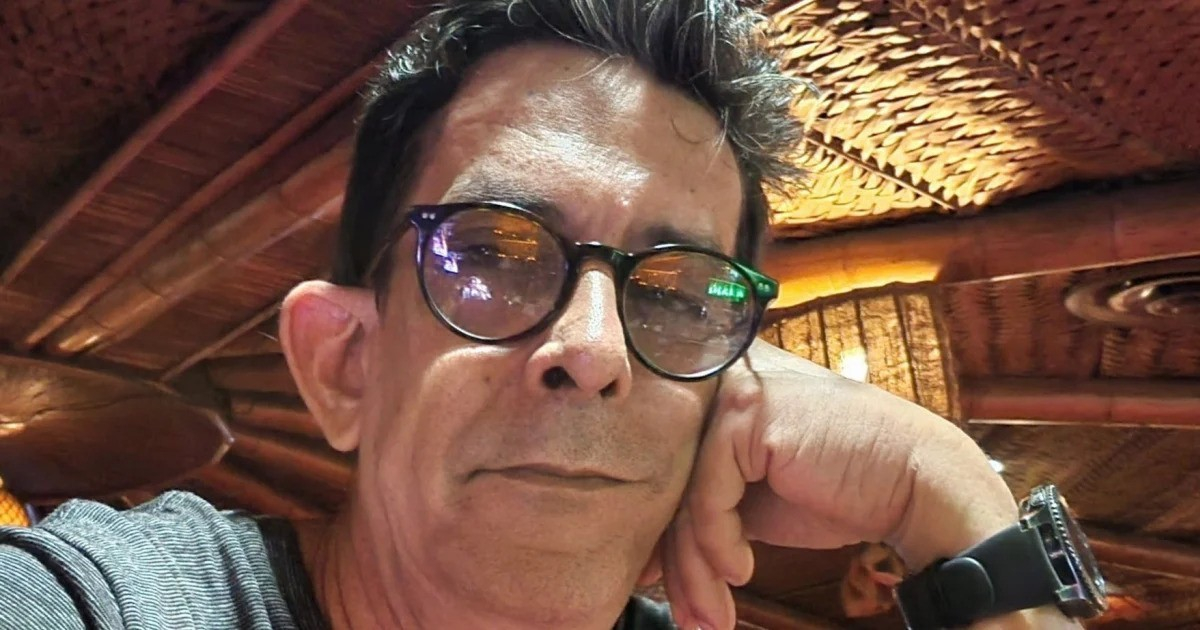
Cuban comedian and actor Ulises Toirac sparked an intense discussion among his followers after posting a poignant reflection on Cuba's ongoing crisis on his Facebook profile this past Friday. His statement, "The most fundamental freedom is thought, yet it's the hardest to attain," became the focal point of the debate.
Toirac set the tone of his message with a sharp irony, stating, "A complex and discommunicated day — heck, I can invent euphemisms too." This deliberately constructed term served as a satire of the official language that has historically masked the Cuban reality with empty words.
The Sobering Reality Behind the Humor
Beyond the humor, Toirac's message carried a somber undertone. "It's... tragic to live and realize the hole people, Cubans, are in," he wrote. He pointed out how the very "indiosyncracy" — a term he intentionally misspelled — of Cubans limits "any possibility of the future, each pulling in their own direction, adopting extreme views — mostly, views borrowed from those who profit through deceit, manipulation, and stubbornness."
Ongoing Social Media Activism
Toirac's post is not an isolated event. Throughout 2026, he has used his social media platforms as a consistent outlet to voice concerns about the island's situation. In June, he described Cuba as an unsolvable maze, doubting a resolution "within my lifetime," at 62 years old. By July, his outlook was bleaker, stating there was no longer "light at the end of the tunnel," but rather "no tunnel at all."
In April, he labeled the country's situation as a "catastrophe," attributing it to the stubbornness and doctrines that have sown division among Cubans. That July, he also demanded the release of all political prisoners, "without kidnappings or disguised deportations," and criticized the caudillismo as one of the island's "worst legacies."
Context of Repression
His recent reflection on the freedom of thought comes amidst documented repression. A July report by Prisoners Defenders revealed that Cuba had 1,306 political prisoners by the end of June 2026, many detained for exercising rights to protest, association, and free speech. The Cuban Institute for Freedom of Expression and Press (ICLEP) recorded 179 attacks against freedom of expression and the press just in April of that year.
Toirac's followers echoed his sentiments with comments that amplified his message. "It's hard to feel like we've given up one of the most cherished things, our freedom," wrote one user. Another pointed out the risks of speaking one's mind in Cuba: "They say thinking is silent, without saying what you think. If you speak your mind and it doesn't align with theirs, you get imprisoned." A third person noted how "thought is controlled, and in what a way."
One of the most shared comments offered a metaphor that resonated strongly with readers: "Some countries die overnight. Wars, earthquakes, or fires leave only ashes. And some countries fade slowly. So slowly that one day their people stop noticing the darkness. Perhaps that's the deepest defeat of all. Because if a nation forgets what it means to live with dignity, I doubt they will ever seek freedom."
From Entertainment to Advocacy
Another user lamented the country's drift "towards more banality and hypocrisy without freeing ourselves from what strikes us senseless," while another summarized Cuba's paradox with bitterness: "Silence is golden."
Known for decades for television shows like Sabadazo and ¿Jura decir la verdad?, Toirac has transitioned in recent years from entertainment to becoming a consistent public voice highlighting Cuba's decline, refusing to side with any political extreme. His statement on Friday — "The most fundamental freedom is thought, yet it's the hardest to attain" — succinctly encapsulates what the repression statistics starkly confirm.
Understanding Ulises Toirac's Critique on Cuban Freedom
What sparked the debate among Ulises Toirac's followers?
The debate was sparked by Toirac's Facebook post where he stated, "The most fundamental freedom is thought, yet it's the hardest to attain," regarding the crisis in Cuba.
How has Ulises Toirac used his social media platforms in 2026?
In 2026, Toirac has utilized his social media as a platform for continuous criticism and advocacy about the dire situation in Cuba.
What report highlights the state of political prisoners in Cuba?
A report by Prisoners Defenders in July highlighted that there were 1,306 political prisoners in Cuba by the end of June 2026.