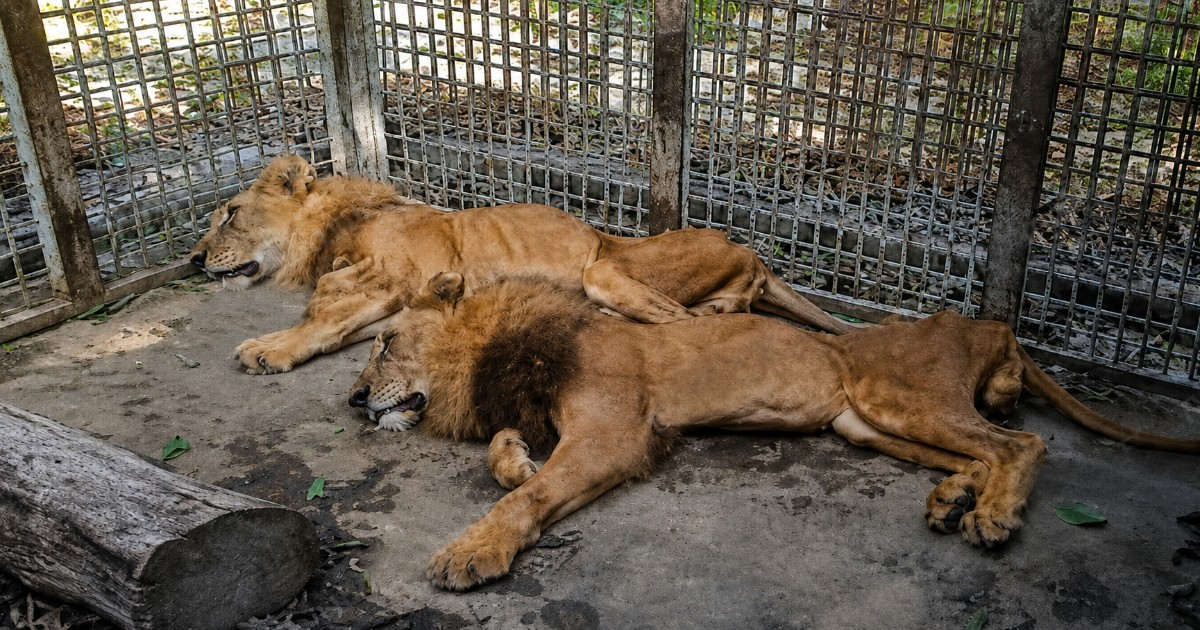
In the Cuban province of Las Tunas, concerned locals have raised alarms over the critical malnourishment of two lions housed at the local zoo. The big cats are reportedly so emaciated that their ribs and bones protrude prominently, and they struggle to stand in their small, rusted-bar enclosure.
Photographs highlighting the dire situation were submitted to the independent platform NiO Crime Reporting by a resident who expressed deep concern over the animals' difficulty in obtaining adequate nutrition.
The images show a male lion with a faint mane and a female, both unable to move normally, confined in a visibly dirty space lacking basic welfare conditions.
Urgent Call to Action for Animal Welfare
The platform has issued a direct appeal to Cuban authorities, stating, "If the state lacks the necessary food, resources, medications, specialized personnel, and facilities to ensure a dignified life for these animals, alternative solutions must be sought."
Among these alternatives, the platform insists on allowing international animal welfare organizations to assess the lions' condition and, if needed, facilitating their relocation to accredited sanctuaries or reserves through legal and veterinary channels.
"This is not simply about handing them over to anyone," the platform emphasized.
Recurring Issues in Cuban Zoos
This situation is neither new nor isolated. Back in February 2026, the organization Animal Welfare Cuba (BAC) highlighted abandonment and hunger at the Puerto Padre zoo, also in Las Tunas province. Lions there exhibited clear signs of starvation, with limited access to water and confined to concrete spaces. Local authorities did not publicly address the issue at that time.
The earliest recorded complaint about this zoo dates back to September 2020, when animal rights advocates warned of lions starving to death and alleged diversion of meat meant for their sustenance. Six years later, the scenario remains unchanged.
Nationwide Concerns
The problem extends beyond Las Tunas. In April 2026, there were reports of extreme neglect of lions at the Camagüey zoo, sparking "Operation Leo": a nighttime transfer of the lion "Panchito" from Florida's municipal zoo in Camagüey to the Ciego de Ávila zoo, where he now receives proper veterinary care and enhanced nutrition.
Just days before this recent report, a zebra was witnessed wandering the streets of Calabazar in Havana, further drawing public scrutiny to the dismal state of Cuban zoos, although there is no official confirmation regarding the animal's origin.
Cuba lacks a modern animal protection law and an independent body to oversee the welfare of captive animals.
In November 2025, Animal Welfare Cuba formally requested permission to visit and evaluate the country's zoos, but a positive official response has yet to be reported.
"The hunger of a caged animal is particularly cruel: it depends entirely on those who chose to keep it in captivity," NiO Crime Reporting concluded. "These animals cannot speak out. We must speak for them."
Frequently Asked Questions about Animal Welfare in Cuban Zoos
What is the current condition of the lions in Las Tunas zoo?
The lions in Las Tunas zoo are reportedly suffering from severe malnutrition, with visible ribs and bones, and are unable to move normally within their enclosure.
What actions are being suggested to address the lions' condition?
The platform NiO Crime Reporting has called for international animal welfare organizations to assess the situation and potentially relocate the lions to accredited sanctuaries or reserves.
Has this issue been reported before?
Yes, similar issues have been reported in previous years, with animal welfare organizations highlighting neglect and starvation in other zoos within the province and beyond.