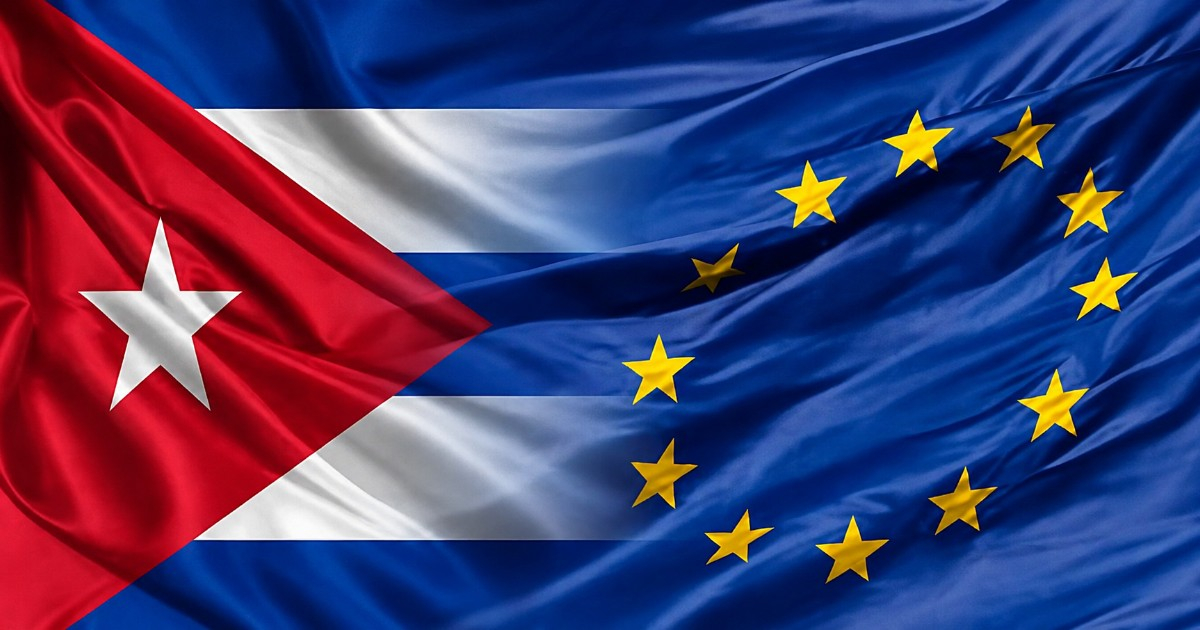
Spain and the European Union are accused of economically sustaining the Cuban regime through debt forgiveness, substantial cooperation, subsidies, and other mechanisms using public resources, as detailed in a report by Foro Madrid. The report scrutinizes the flow of funds to Havana.
Entitled "Cuba: A Criminal Regime Supported from Abroad," the document asserts that a significant portion of Cuba's economic survival hinges on foreign resources, explicitly highlighting Spain and EU institutions.
According to the international alliance led by the Disenso Foundation, these connections facilitate financial support for the Cuban regime from abroad.
Foreign Financial Support Amidst Cuba's Economic Crisis
Foro Madrid challenges the fact that, despite Cuba's severe economic and social crisis, European governments and institutions continue to funnel millions to the island through cooperation, debt restructuring and forgiveness, public guarantees for business operations, and other financial tools.
Spain's Debt with Cuba: A Central Issue
One of the report's primary focuses is Cuba's debt to Spain. Foro Madrid highlights that, according to data revealed by the Spanish government in a parliamentary response, Cuba had amassed a debt of 1.970,66 million euros by early 2020, nearly two-thirds of all debt owed to Spain by Latin American countries.
The document also reviews several restructuring and forgiveness operations. In 2015, 201 million euros were restructured, and 110.8 million were forgiven. The following year, another operation involved 2.242 billion euros of medium and long-term debt, of which 1.492 billion were forgiven, according to the report.
Foro Madrid points to a new agreement approved in July 2025, after several moratoriums, which included a forgiveness and a debt conversion program worth 375 million euros.
The organization interprets these operations not merely as accounting adjustments between states but as mechanisms through which Spain absorbs part of Cuba's debt cost, providing financial relief to Havana.
Public Funds and Business Deals with GAESA-Linked Companies
The report also criticizes business relations. The Cuban government's debt with Spanish companies is at least 300 million euros. An economic report from the Spanish Economic and Commercial Office in Havana cited the official private debt at 255.9 million euros, but when factoring in retained dividends and other funds that cannot leave Cuba, the figure rises to approximately 330 million.
Foment del Treball also reported over 350 million euros in unpaid fees to around 300 Spanish companies. Foro Madrid is particularly critical of investments where the Cuban counterpart is linked to the Grupo de Administración Empresarial S.A. (GAESA), a conglomerate controlled by the Cuban Armed Forces.
The document claims that Spanish companies associated with GAESA entities still receive support from mechanisms funded with Spanish public resources. This point is central to Foro Madrid's denunciation: the organization argues that money doesn't just reach Cuba through cooperation programs but also through financial structures that lower the risks of doing business with Cuban state-linked companies.
European Union's Involvement in Cuban Projects
Criticism also extends to Brussels. Foro Madrid scrutinizes the Political Dialogue and Cooperation Agreement between Cuba and the European Union, arguing that this framework has allowed continued and expanded European funding to the island without the political transformations the organization demands.
The report notes that by 2025, there were 80 projects funded by the EU in execution, totaling 155 million euros. Foro Madrid also recalls that the agreement between Brussels and Havana includes human rights provisions and states that several European Parliament resolutions have called for using mechanisms against alleged Cuban government violations.
The organization questions how these funds are channeled. According to their analysis, a significant portion of international cooperation inevitably ties to state institutions due to the Cuban government's control over projects on the island.
For this reason, Foro Madrid demands that aid for Cubans be directed, whenever possible, through organizations independent of the state, rather than through Havana-controlled structures.
Historical Costs for Spain
Criticism of funds Spain has directly or indirectly allocated to Cuba is not new. In July, another report estimated the cost to Spain of successive Cuban debt forgiveness and restructuring at 4,994 million euros over approximately three decades.
This figure comes from a separate study and should not be confused with Foro Madrid's calculations, although both analyses agree in questioning the financial relationship with Havana's impact on Spanish accounts.
Spain also maintains a prominent role as a European intermediary with the Cuban government. In February, Cuban Foreign Minister Bruno Rodríguez visited Madrid to meet with Spanish Foreign Minister José Manuel Albares at Cuba's request.
For Foro Madrid, the issue extends beyond diplomatic relations. Their thesis is that Spain and the European Union continue to provide financial resources, subsidies, debt relief, and economic coverage that ultimately reduce pressure on a system incapable of generating the necessary resources independently.
The report calls for a reevaluation of these policies and questions why funds from European taxpayers continue flowing to Cuban state structures while the population faces shortages, blackouts, inflation, and deteriorating basic services.
Foro Madrid concludes that these relationships are not merely cooperative or commercial ties but part of a network of external financing and subsidies that, in their view, helps sustain the Cuban regime economically.
Key Questions about Spain and EU's Financial Involvement with Cuba
What is the main accusation against Spain and the EU regarding Cuba?
Spain and the EU are accused of economically supporting the Cuban regime through debt forgiveness, subsidies, and public-funded mechanisms, thus reducing pressure on Cuba's financially struggling system.
How does Foro Madrid view the financial operations between Spain and Cuba?
Foro Madrid sees these operations not as mere accounting adjustments but as Spain absorbing part of Cuba's debt costs, providing financial relief to Havana.
What is the report's stance on EU-funded projects in Cuba?
The report criticizes EU-funded projects, arguing that the Political Dialogue and Cooperation Agreement allowed ongoing funding without necessary political transformations in Cuba.