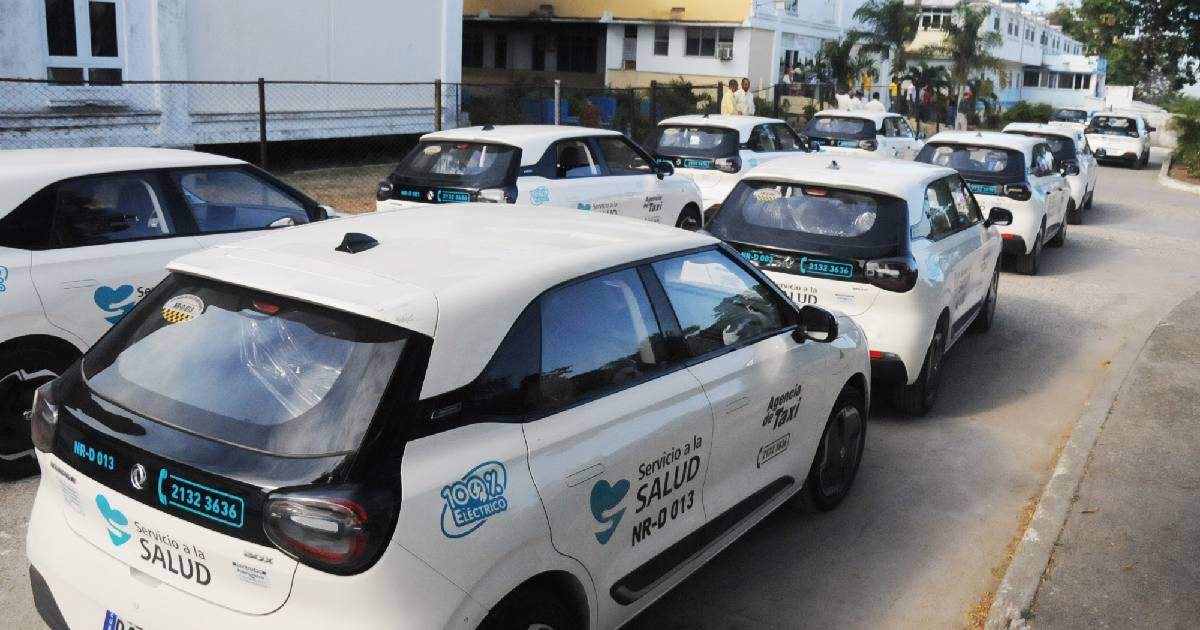
In a recent move, the province of Guantánamo has acquired 20 Chinese-made electric vehicles dedicated to transporting the 96 renal failure patients who undergo hemodialysis at the Dr. Agostinho Neto General Teaching Hospital, as reported by the official newspaper Venceremos on Friday.
The vehicles are Dongfeng brand, model Box 430, boasting a range of up to 430 kilometers per full charge. They were procured through the Ministry of Transportation's Development Fund.
This initiative coincides with the centennial celebrations of dictator Fidel Castro's birth (1926-2016) and is part of a broader national plan announced by the regime in March.
The national strategy includes the distribution of 400 Dongfeng electric cars to facilitate the transportation of kidney patients across the country.
The initial 200 vehicles began operation in May, allocating 40 units to Havana, 20 to Guantánamo, 15 to Granma, 10 to each of the remaining provinces, and five to the Isle of Youth.
This measure is a response to a humanitarian crisis that worsened earlier this year when the collapse of medical transport left thousands of kidney patients stranded in various provinces.
More than 3,000 Cuban patients with chronic renal insufficiency depend on regular sessions, typically three times a week, in 57 hemodialysis units located throughout the nation.
Due to the lack of official transport, many hemodialysis patients faced peril and had to pay up to 500 pesos per trip in informal taxis.
In Camagüey, patients went nearly a week without treatment in June due to a shortage of chemical supplies.
The distribution is progressing province by province. Villa Clara received 10 units in mid-June; Las Tunas added 10 electric taxis at the start of July, followed by Matanzas receiving another 10.
This Friday, Santiago de Cuba also received 10 similar vehicles to assist 106 renal patients across five healthcare centers in the province.
Guantánamo has a total of 124 patients needing hemodialysis, with 96 treated at Agostinho Neto and the remainder at Baracoa hospital.
According to Venceremos, the deployment of these vehicles has a "significant impact on patients, their families, and the general population."
In addition to the electric cars, local authorities inaugurated a desalination plant in San Antonio del Sur, funded by the United Nations Children's Fund (Unicef), the Italian organization Cospe, and the German government to assist those affected by Hurricane Oscar in October 2024.
Moreover, the community charging center El Framboyán has opened, providing solar-powered recharging for vehicles and electric equipment amid Cuba's deepest energy crisis in decades.
FAQs on Electric Cars for Hemodialysis Patients in Cuba
Why were electric cars introduced for hemodialysis patients in Guantánamo?
The electric cars were introduced to address a transportation crisis that left many hemodialysis patients stranded due to the collapse of medical transport services in the region.
How are the electric cars being distributed across Cuba?
The vehicles are being distributed incrementally, with allocations varying by province. For instance, Havana received 40 vehicles, Guantánamo received 20, and smaller allocations were made to other provinces.
What is the range capability of the Dongfeng electric cars?
The Dongfeng Box 430 electric cars have a range of up to 430 kilometers per full charge, which enables efficient transport services for patients.