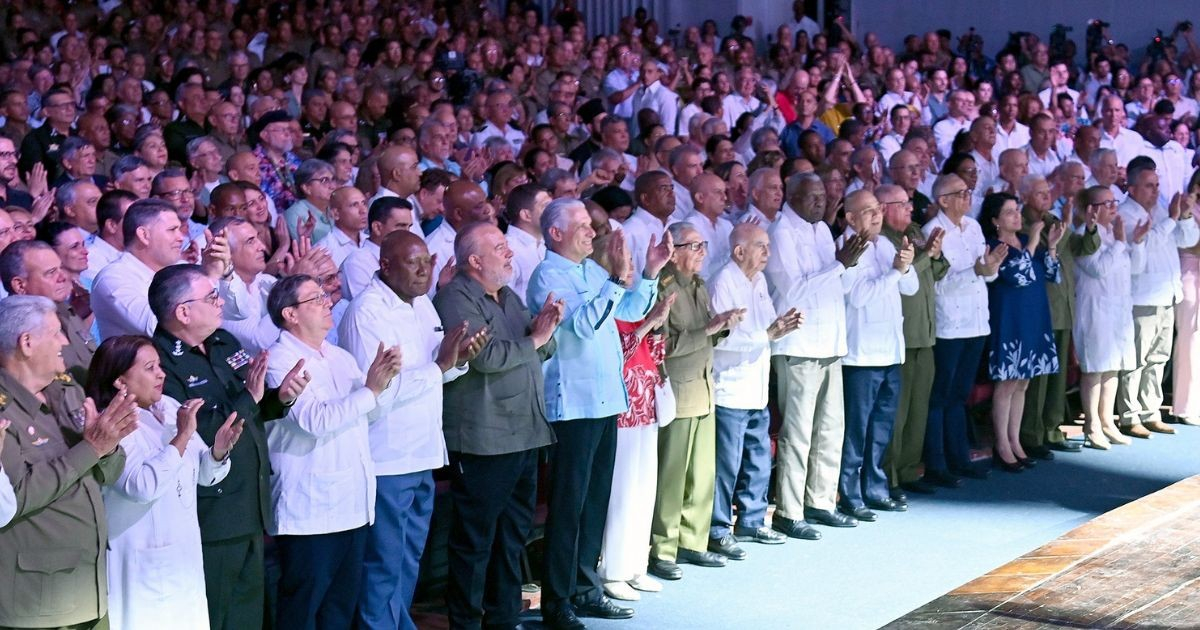
Present-day Cuba reflects certain inequalities reminiscent of feudal times: a relatively secure elite shielded from hardships, while ordinary citizens endure the brunt of shortages, blackouts, food scarcity, and the decay of essential services.
This perspective was put forth by the Food Monitor Program (FMP), an organization overseeing food security in Cuba, in their report titled "Contemporary Feudalism: Protected Elites and Sacrificed Citizens in Cuba."
Although European feudalism and 21st-century Cuba are historically distinct, the report suggests parallels in how power shifts the repercussions of its decisions onto those least able to avoid them.
Historical Parallels and Modern Sacrifices
The comparison is based on a straightforward idea: during feudal times, peasants were obligated to provide labor, crops, and taxes to sustain a power structure that offered them minimal protection from war's fallout. Today in Cuba, the sacrifices are no longer measured by crops handed over to a lord, but by the daily loss of basic living conditions.
"The conflict no longer manifests as sword battles but as a prolonged economic, political, and social attrition," the analysis highlights, focusing on issues plaguing Cuban households: food, medicine, fuel, electricity, and potable water.
A Crisis Managed, Not Experienced, by the Elite
One of the most critical aspects of the report is FMP's description of a "class immunity." The organization argues that Cuba's power structure allows specific state-affiliated sectors access to resources, supplies, security, and services under conditions vastly different from those faced by the majority of the population.
While many families rely on ration books, remittances, or unaffordable markets, the analysis points out that those close to the state apparatus have supply networks and support mechanisms that cushion issues like blackouts or shortages.
"Politicians do not experience scarcity in the same way as citizens; they manage it," the document summarizes.
Food Insecurity and Its Far-Reaching Impact
The food situation adds a particularly grave context to this comparison. A survey conducted in May by FMP and Cuido60, based on 2,513 valid responses from 16 provinces, revealed that 33.9% of households had at least one person who went to bed hungry during the study period. Furthermore, 79.4% of those surveyed spent 80% or more of their monthly income on food.
FMP has previously scrutinized resource management, accusing GAESA in May of exacerbating the food crisis by concentrating currency, imports, and distribution chains. The report criticized the privileged access to resources by strategic sectors while a growing portion of the population struggles to purchase food.
Exile Politics and the Broader Critique
The analysis extends its criticism beyond Cuba's internal power, arguing that certain political sectors in exile can also contribute to this asymmetry by advocating pressure strategies from environments with greater economic, legal, and personal security than those on the island.
According to FMP, although officials and these exile sectors pursue entirely opposing objectives, there is a shared aspect: those crafting or defending certain political strategies do not always directly suffer their material consequences.
In contrast, ordinary citizens often end up as victims or symbols in a dispute over which they have little decision-making power.
The document also critiques the constant creation of absolute enemies. It suggests the government uses confrontation with the United States to justify sacrifices and restrictions under the guise of "resistance," while the most polarized exile sectors may employ a similarly rigid logic about the need to defeat the regime.
FMP argues that this dynamic sidelines the immediate human cost.
A Systemic Crisis Affecting Basic Needs
The comparison to feudalism arises as the food deterioration extends far beyond mere product shortages. Another recent FMP analysis warned that Cuba is losing its capacity to produce, transport, preserve, and distribute food, describing the supply chain as "broken."
This study noted that 97.65% of households surveyed faced difficulties accessing essential products and described how carts, adapted bicycles, and family or informal networks are partially replacing logistical structures that no longer function regularly.
For the Food Monitor Program, the problem ultimately surpasses a series of economic errors. Their conclusion is that the crisis could become a mode of the system itself: power no longer necessarily ensures well-being but manages precariousness while keeping the population mobilized around a perpetual threat.
This leads to the question with which the analysis nearly closes: not just when the Cuban crisis will end, but who gains power, legitimacy, or influence from its continuation and who ends up bearing the consequences.
Understanding the Cuban Crisis: Key Questions Answered
How does the current situation in Cuba resemble feudalism?
The situation in Cuba is likened to feudalism because a small, protected elite is shielded from hardships, while the general population bears the brunt of economic and social challenges, similar to peasants supporting a power structure in feudal times.
What are the main hardships faced by ordinary Cubans?
Ordinary Cubans face numerous hardships, including food scarcity, medicine shortages, frequent blackouts, and a lack of essential services like fuel, electricity, and clean water.
Who benefits from the ongoing crisis in Cuba?
The ongoing crisis may benefit those in power, who gain legitimacy or influence from the status quo, while the general population suffers the consequences.
What role do exile politics play in the Cuban crisis?
Exile politics can exacerbate the crisis by promoting pressure strategies from safer environments, contributing to an asymmetry similar to that within Cuba’s own power dynamics.