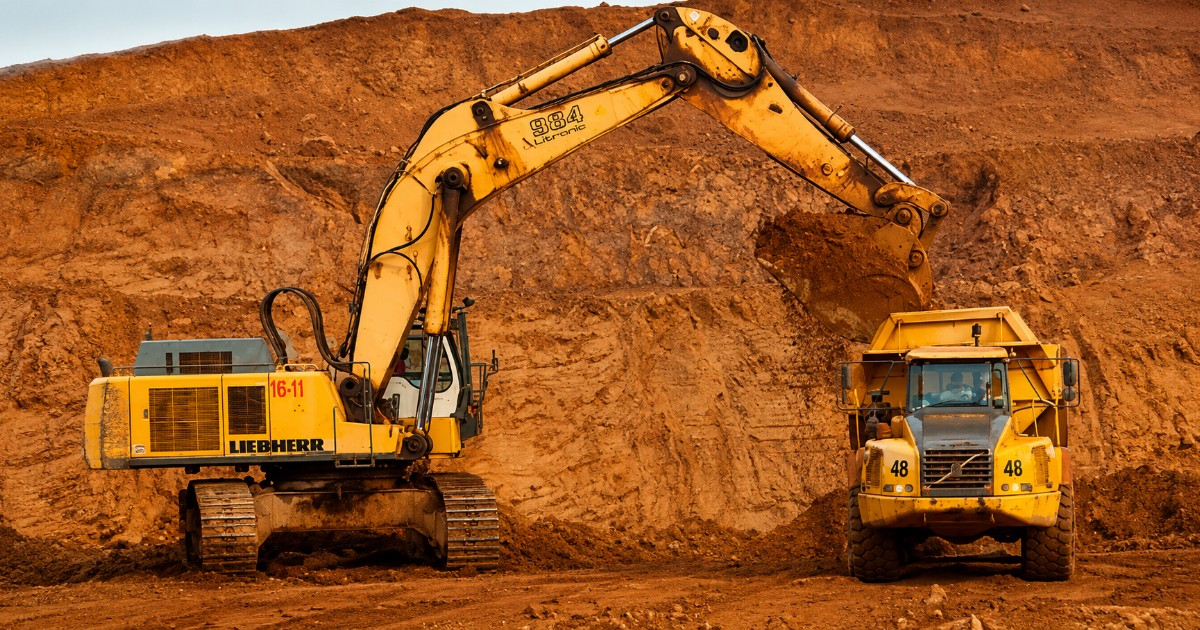
Two competing American investment groups are vying for control over Cuba's largest nickel and cobalt mining operation, situated on land seized from American and Cuban owners by Fidel Castro's regime more than 60 years ago, according to an investigation by the Miami Herald.
The offers target a 55% stake in Sherritt International Corporation, a Toronto-based Canadian company that runs the Moa mines in Holguín province in a 50-50 partnership with Cuba's state-owned General Nickel Company.
Gillon Capital, LLC, associated with Texas businessman Ray Washburne, was the first to act. Washburne led the U.S. government's development bank for overseas investments during Donald Trump's first term.
In May, Gillon reached a preliminary, non-binding agreement to acquire the 55% stake in Sherritt, as reported by the U.S.-Cuba Trade and Economic Council.
Last Monday, another consortium disclosed that it had submitted a competing bid to Sherritt's board back in late June. This group includes London-based Kyma Capital, hedge fund investor Trifon Natsis, commodities giant Glencore, and an undisclosed prominent American investor.
Financial Offers and Legal Challenges
Unlike Gillon's proposal, this competing offer includes upfront cash at a rate of 0.12 Canadian dollars per share.
Should either deal be finalized, it would mark the first U.S.-backed mining venture in Cuba in six decades, emphasized by the Miami Herald.
Sherritt's crisis was triggered by Washington's sanctions. On May 1, Trump signed an executive order expanding U.S. authority to penalize foreign entities active in Cuba's mining and energy sectors.
Six days later, the State Department sanctioned Moa Nickel S.A., the joint venture between Sherritt and the Cuban government. Although Sherritt was not directly named, the company suspended its Cuban operations, withdrew staff from the island, and saw its CFO, auditor, and three board members resign.
Historical Context and Legal Quagmire
The historical backdrop adds a layer of significant legal intricacy. The Moa Bay Mining Company, then under the control of Freeport Sulphur Company—a predecessor of today's Freeport-McMoRan—was seized by the Cuban government on August 19, 1960.
The U.S. Foreign Claims Settlement Commission later certified losses amounting to $88,349,000 related to its mining concessions and properties in Cuba.
Adding to the complexities is a lawsuit filed in July by the Cuban Electric Company—owned by Connecticut's Atlas Holdings, which also owns Office Depot—against Cuba's state electric utility and Energas S.A., a power generation company in which Sherritt holds a one-third stake.
The certified claim by the Cuban Electric Company is the largest, totaling $267.6 million plus decades of accrued interest.
Given Sherritt's 33% stake in Energas, the U.S.-Cuba Trade and Economic Council believes the lawsuit could either complicate a potential acquisition of the Canadian miner or provide an opportunity to simultaneously resolve two major claims related to confiscated properties in Cuba.
Individual Claims and Future Prospects
Among the affected parties is retired engineer William Pitt, now residing in Miami, who asserts that Sherritt expanded its operations beyond the original boundaries of Moa Bay, encroaching on mines that belonged to his father.
Pitt told the Miami Herald he had already warned Gillon Capital about potential legal action: "I've already written to Gillon explaining that we own those mines adjacent to Sherritt's, which they have been exploiting. When they buy 55% of Sherritt, we could sue Gillon."
Any final transaction will require approval from the Departments of State and Treasury, as well as agreements with claim holders from the 1960s' confiscations.
According to the Miami Herald, both Gillon Capital and the rival consortium stated that the State Department has not opposed their negotiations with Sherritt. However, the department did not respond to the newspaper's request for comments on Gillon's preliminary agreement.
Key Questions About U.S. Investments in Cuban Mines
Why are American investors interested in Cuban nickel and cobalt mines?
American investors are interested in Cuban nickel and cobalt mines due to the high demand and strategic importance of these minerals in the production of batteries and electronic devices.
What legal challenges could arise from these acquisitions?
Legal challenges could stem from historical claims related to properties confiscated by the Cuban government in the 1960s, as well as potential lawsuits from individuals who claim ownership of these lands.
How do U.S. sanctions affect Sherritt's operations in Cuba?
U.S. sanctions have severely impacted Sherritt's operations by limiting its ability to engage in business activities within Cuba, leading to suspended operations and withdrawal of staff.