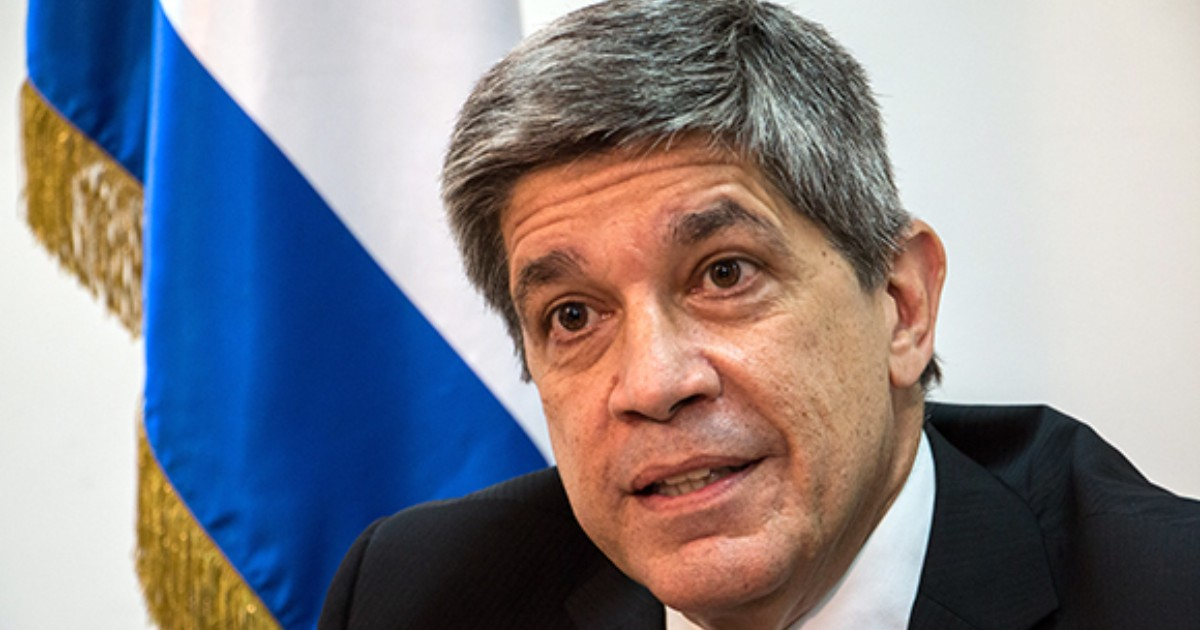
The Cuban Deputy Foreign Minister, Carlos Fernández de Cossío, has accused the United States of turning a blind eye to networks involved in the illicit trafficking of Cuban migrants for years. He suggested that Washington's inaction could stem from "negligence, complicity, political design, or a combination of these factors."
He emphasized that Cuban delegations repeatedly warned U.S. authorities between 2022 and 2024 about human trafficking operations organized and financed from South Florida.
Longstanding Bilateral Agreements
According to Fernández de Cossío, Cuba and the United States are bound by a series of bilateral migration agreements dating back to 1984, which necessitate collaboration between the two governments.
Officially, Washington acknowledges the agreements from 1984, 1994, 1995, and 2017, as well as the periodic meetings held to review their implementation.
Intensified Migration Discussions
During the height of the Cuban exodus to the United States, six bilateral migration meetings occurred from 2022 to 2024—three in Washington and three in Havana. Cossío noted that at several of these meetings, including one in Havana in December 2024, the Cuban delegation highlighted the significant number of Cubans being smuggled into the U.S. via other countries in the region.
He claimed that these networks charged between $7,000 and $15,000 per person.
Financial Aspects of Trafficking
To underscore the scale of the trafficking operations, Cossío referenced the entry of over 100,000 Cubans annually through the U.S. southern border, reflecting the substantial revenue generated by these networks. "It wasn't difficult to estimate the size of the trafficking business," he remarked.
These warnings extended beyond formal migration meetings and were reiterated during other "technical and operational" exchanges between the two countries.
According to Cossío, the networks were centered in South Florida, where trips were organized and funded, and profits were ultimately directed.
Comprehensive Migrant Services
Cossío described a well-organized operation offering migrants various services during their journey, including transportation, accommodation, communication, financial support, and legal assistance.
Questioning U.S. Government's Role
Beyond highlighting these networks, the Deputy Minister questioned the actions of the U.S. government. "It's absurd to assume the U.S. government was unaware of the phenomenon," he declared, emphasizing that Cuba had issued "official and repeated warnings."
"If U.S. authorities failed to act and allowed the massive and uncontrolled entry of Cubans through their southern border over several years, and tolerated the establishment of trafficking networks, it was due to negligence, complicity, political design, or a combination of these factors," Cossío asserted.
Despite suggesting "complicity" or a "political design," Fernández de Cossío did not present evidence that Washington deliberately protected these networks or provided documents indicating a U.S. government decision to allow their operation.
Controversy and Denials
The allegations surface amid controversy over revelations regarding Raúl Guillermo Rodríguez Castro, known as "El Cangrejo" and the grandson of Raúl Castro, who is linked to a transnational criminal network under U.S. investigation.
In response to these revelations, Foreign Minister Bruno Rodríguez denied any Cuban government involvement in human trafficking operations, dismissing the accusations as "slanderous fabrications."
Rodríguez echoed the argument now presented by Fernández de Cossío, insisting that between 2022 and 2024, the Cuban delegation consistently warned Washington about one or more Cuban trafficking operations coordinated from South Florida.
Understanding U.S.-Cuba Migration Issues
What are the key migration agreements between Cuba and the U.S.?
The key migration agreements between Cuba and the U.S. are from 1984, 1994, 1995, and 2017. These agreements require cooperation between both governments to manage migration issues effectively.
How much do migrant trafficking networks allegedly charge per person?
According to Fernández de Cossío, these networks are known to charge between $7,000 and $15,000 per person for facilitating illegal migration to the United States.
What services do trafficking networks offer to migrants?
These networks provide a range of services to migrants, including transportation, accommodation, communication, financial support, and legal assistance during their journey.