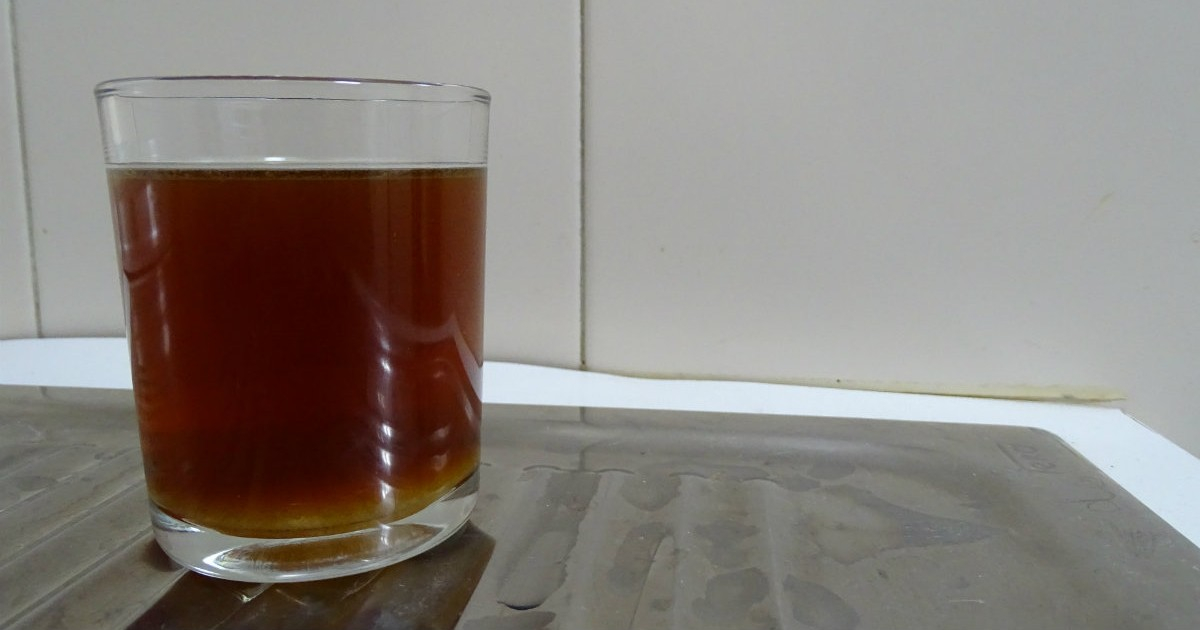
This week, a Facebook post by broadcaster and presenter Laritza Camacho sparked a wave of nostalgia mixed with bitter humor among Cubans. The post highlighted that milordo—a simple drink made by mixing water with brown sugar—is now "on the brink of extinction," not due to cultural neglect but because of the simultaneous shortage of both ingredients.
The sentiment was captured in a poignant phrase: "I never imagined that milordo would become an endangered recipe. Extinct due to the lack of sugar and water."
Known also as munga, aguazúcar, or "sopa de gallo," milordo is the Cuban version of sugar syrup, which is simply called syrup in other parts of the world.
The preparation is straightforward, requiring no cooking or special ingredients: just dissolve sugar, preferably brown or dark, in water. For decades, it served as a snack for those with nothing else.
Comments on the post ranged from ironic to sorrowful. "Anyone who can drink it now is a millionaire," one user quipped, highlighting the challenge of finding sugar on the island.
Others recalled milordo as part of a childhood marked by scarcity. "Those of us who were in boarding schools from the '70s to the '80s know it well, known as munga," shared a Cuban woman.
A woman reminisced about pairing it with flauta bread and lamented that something so basic has become a privilege: "Poor generation, we can't even offer them milordo."
Comments also brought up other humble foods that have vanished from Cuban tables. "The guajiro's snack has also disappeared," one user noted. "And what about bread with oil?" asked another.
The Broader Crisis Behind the Nostalgia
This viral nostalgia underscores a dual structural crisis. On one hand, Cuban sugar production has collapsed to levels unseen since before 1899: the 2024-2025 harvest didn't reach 150,000 metric tons, a figure even lower than Cuba's output after three years of independence war.
Only six out of the planned 14 sugar mills operated during that harvest. Economist Mauricio de Miranda pointed to the real culprit: "Economic sanctions are not to blame for the destruction of the sugar industry. The true responsibility lies with Fidel Castro."
In 2002, Castro initiated the "Tarea Álvaro Reynoso," which closed 71 of the 156 existing sugar mills, ultimately dismantling around 98 in total, eliminating 100,000 jobs, and leaving the cane fields overrun by marabú.
In 1970, Cuba produced 8.5 million tons—25% of the world's supply. Today, it cannot meet its internal consumption needs, estimated between 600,000 and 700,000 tons annually, and must import sugar.
In provinces like Las Tunas, only one pound per person is distributed.
This crisis has turned milordo into an unintentional symbol: what was once the go-to for those with nothing has become, by 2026, an unattainable luxury for millions of Cubans.
Cuban Sugar Industry: A Crisis Unveiled
What is Milordo?
Milordo is a Cuban beverage made by mixing water with brown sugar. It's also known as munga, aguazúcar, or "sopa de gallo".
Why is Milordo considered endangered?
Milordo is considered endangered due to the simultaneous shortage of both its ingredients: sugar and water, which are increasingly difficult to find in Cuba.
What led to the collapse of Cuba's sugar industry?
Cuba's sugar industry collapsed due to policies initiated by Fidel Castro, including the "Tarea Álvaro Reynoso," which closed numerous sugar mills, leading to massive job losses and reduced production capacity.