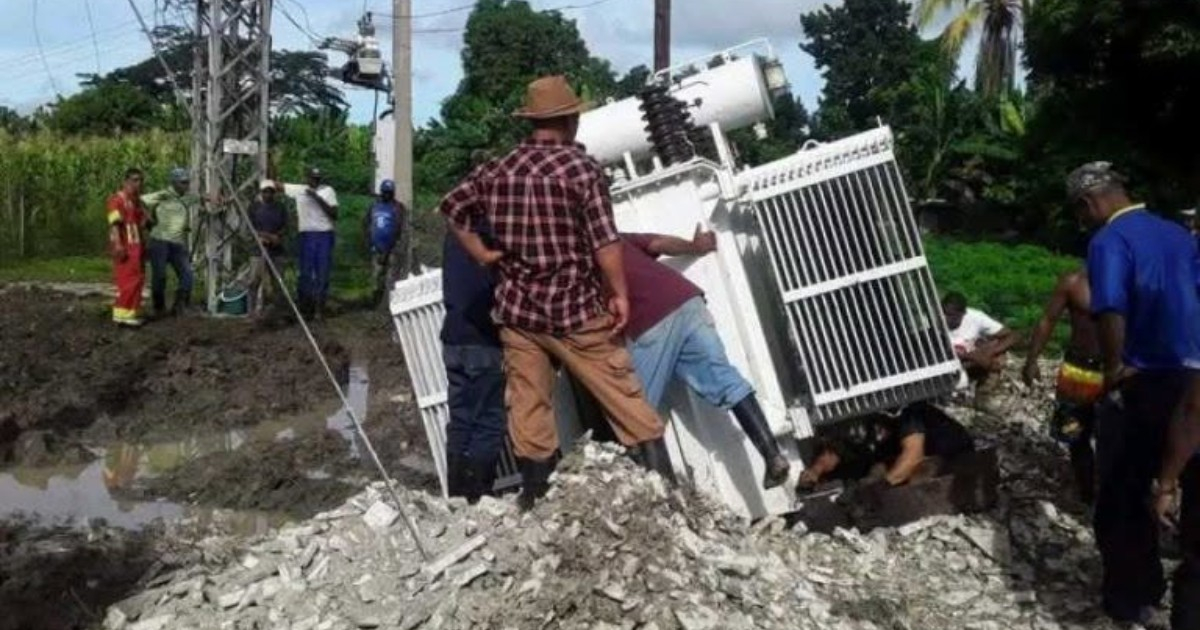
The Cuban government has chosen to handle the theft of dielectric oil from electrical transformers not as a simple theft but as an act of sabotage. This decision carries severe penalties ranging from seven to 30 years of imprisonment and can escalate to life sentences or even the death penalty in aggravated cases, as highlighted by the state-run newspaper Girón in an editorial released on Wednesday.
The legal framework for this classification is supported by the Supreme People's Court's Dictamen 475/2025, issued in May 2025. This directive instructs the courts to apply Article 125 of the Cuban Penal Code to those who damage or remove components of critical infrastructure, including the National Electroenergetic System.
The issue has grown to an alarming scale. In Matanzas province alone, over 90 transformers have been compromised due to this type of theft.
Impact and Incidents Across the Island
In San Luis, Santiago de Cuba, the theft of 300 liters of oil from a four megavolt-ampere transformer left approximately 17,000 residents without electricity. Meanwhile, in the Julia community of Bayamo, over five thousand customers lost power, resulting in an economic loss of 27,360 pesos.
This Wednesday, authorities reported the arrest of a man in Unión de Reyes, Matanzas, accused of stealing dielectric oil from an electrical substation. Law enforcement recovered 30 liters of the fluid; the suspect spilled another 20 liters upon noticing the police presence to avoid confiscation.
In Mayabeque, a gang of six individuals, operating in Güines and Melena del Sur, was dismantled. They employed sophisticated methods, such as climbing poles without ladders, prying open lids with bars or machetes, extracting oil with hoses, and transporting it in plastic tanks on bicycles.
In Holguín, more than 20,000 people were left powerless following the theft of oil from a transformer.
Economic Motivations and Severe Consequences
The primary motivation for these thefts is financial gain. Dielectric oil is sold on the black market as a substitute for fuel for tractors and trucks, fetching prices exceeding 600 pesos per liter. However, the impact is disproportionately destructive: each disabled transformer can cost between four and five million dollars on the international market.
Energy and Mines Minister Vicente de la O Levy reported to the National Assembly in late July that the volume of stolen oil was "nearly equivalent" to what was produced during the same period. Some communities have endured up to 105 days without power due to transformer damage that cannot be swiftly replaced.
Judicial Actions and Government Measures
The courts have already begun imposing harsh sentences. In May, a worker from the Electric Company of Isla de la Juventud was sentenced to eight years in prison for stealing 60 liters of oil. In Ciego de Ávila, several defendants received sentences ranging from seven to 12 years for similar offenses. In Artemisa, the prosecution requested a 12-year sentence for a man who stole 70 liters.
Matanzas authorities have activated Defense Zones to safeguard transformers and announced that offenders will face exemplary trials.
Frequently Asked Questions on Transformer Oil Theft in Cuba
Why is transformer oil theft considered sabotage in Cuba?
Transformer oil theft is classified as sabotage in Cuba due to its severe impact on critical infrastructure, specifically the National Electroenergetic System, leading to significant power outages and economic losses.
What are the penalties for stealing transformer oil in Cuba?
Penalties for stealing transformer oil in Cuba range from seven to 30 years of imprisonment, with the possibility of life sentences or the death penalty in aggravated scenarios.
How has transformer oil theft impacted Cuban communities?
Communities across Cuba have experienced prolonged power outages, with some areas remaining without electricity for up to 105 days, due to the theft of transformer oil and the ensuing damage to infrastructure.