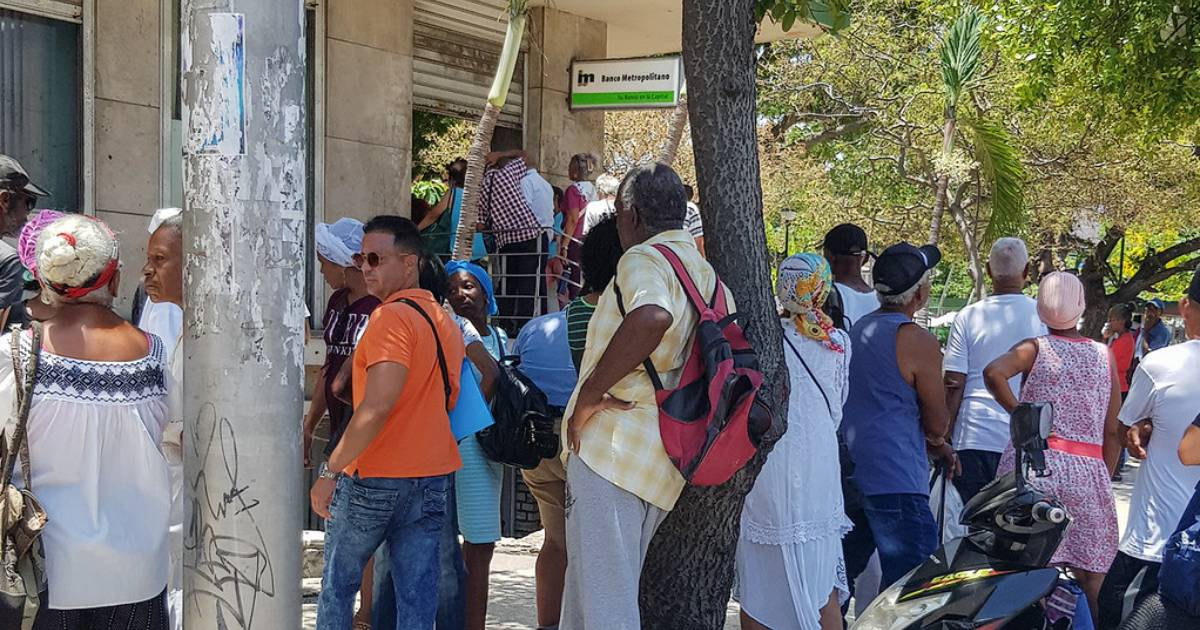
Cuban economist Pedro Monreal has criticized the socialist regime for subjecting the island's workers to what he describes as "legal plunder." This outcome, he argues, stems from economic policies that have diminished wages, pensions, and savings, while those in power sidestep the repercussions of their decisions.
In an analysis released Wednesday on the online platform Substack, Monreal outlines that Cuba is experiencing its second major governmental policy failure on pricing within just five years, following the inflation triggered by the 2021 "Tarea Ordenamiento" initiative.
The Return of Price Controls
The economist highlights a recent contradiction: the government announced the removal of price caps as part of a package of 176 measures governed by the Ministry of Finance and Prices' Resolution 150/2026. Yet, within two months, several provinces reinstated these controls.
Provinces like Villa Clara, Matanzas, Guantánamo, Santiago de Cuba, and Holguín have introduced "reference prices" or set limits on commercial margins for essential goods such as oil, eggs, powdered milk, sugar, chicken, and rice.
Central Government's Evasion
Monreal suggests that by shifting these decisions to local governments, the central power can distance itself from the failure of its policy.
"This is the new 'technical' ploy by the bureaucracy," Monreal claims, describing it as an updated version of the "design deviation" used as a cover in 2021. This allows the Cuban Communist Party (PCC), the presidency, and the Council of Ministers to theatrically pass on the responsibility of correcting the failure of the supposed 'liberalizing' policy to local authorities."
Wider Economic Implications
The issue, according to Monreal, extends beyond the debate of whether prices should be regulated or freed. He argues that the government treats prices as "political control variables" rather than using them as tools for economic adjustment and information.
Monreal draws parallels with the "Tarea Ordenamiento" policy, which in 2021 was accompanied by an official inflation rate of 77.33%. Back then, authorities blamed the issues on a "deviation from the original design." Five years later, Monreal sees the government repeating the same pattern: intervening in prices without first addressing the inadequate food production and supply.
"Attempting to alter relative prices without first reestablishing a real supply of food is like manipulating a thermometer while ignoring the fever," he warned.
Monreal asserts that setting prices without recovering supply doesn't eliminate scarcity or inflation but rather shifts products to the informal market, building pressures that manifest in other ways.
Investment and Economic Decline
He points to one of the structural causes of the problem: the minimal investment in agriculture. During the first seven years of the current government, this sector received an average of just 4% of total investment, compared to 7% from 2008 to 2017.
Impact on Wages and Pensions
The greatest cost of these decisions, Monreal warns, is borne by the Cuban people.
Following the "Tarea Ordenamiento," workers' compensation as a percentage of GDP fell to an average of 26.7%, compared to 35.6% recorded between 2003 and 2020. Monreal interprets this drop as "an intensification of surplus extraction in favor of state accumulation."
However, beyond these statistics, there are real consequences for families who have witnessed the erosion of their income's real value.
"The retiree who saved for years and relied on a pension, or the worker who earns a salary and now sees their purchasing power dissolve, are not abstractions. They are real people with families and concrete stories of contribution to society, watching their personal and familial well-being vanish," he stressed.
In a country where over 70% of household spending goes to food, the combination of low production, inflation, and devalued wages makes any new pricing policy a matter directly linked to daily survival.
Monreal holds both officials and parliamentarians accountable for economic decisions whose costs, he asserts, ultimately fall on the population.
"Cuban workers have been victims of a legal plunder resulting from the decisions of officials and parliamentarians who feel no accountability and who hide their blind obedience to the 'superior leading force' (the PCC) and their incompetence behind the technical term of the moment."
He concludes with a grim warning about the likelihood of accountability for these outcomes: "It is unlikely they will take responsibility for the disaster."
Understanding Cuba's Economic Challenges
What is the "Tarea Ordenamiento"?
The "Tarea Ordenamiento" is a set of economic reforms implemented in Cuba in 2021 aimed at unifying the currency and adjusting prices, wages, and pensions. It led to significant inflation and economic challenges in the country.
Why are price controls being reintroduced in Cuba?
Price controls are being reintroduced in several Cuban provinces as a response to economic instability and inflation, despite a previous announcement to remove them. This move is seen as a way for the central government to distance itself from policy failures.
How has the economic situation affected Cuban workers?
Cuban workers have experienced a decrease in the real value of their wages and pensions due to economic policies. This has resulted in diminished purchasing power and increased difficulty in affording basic necessities.