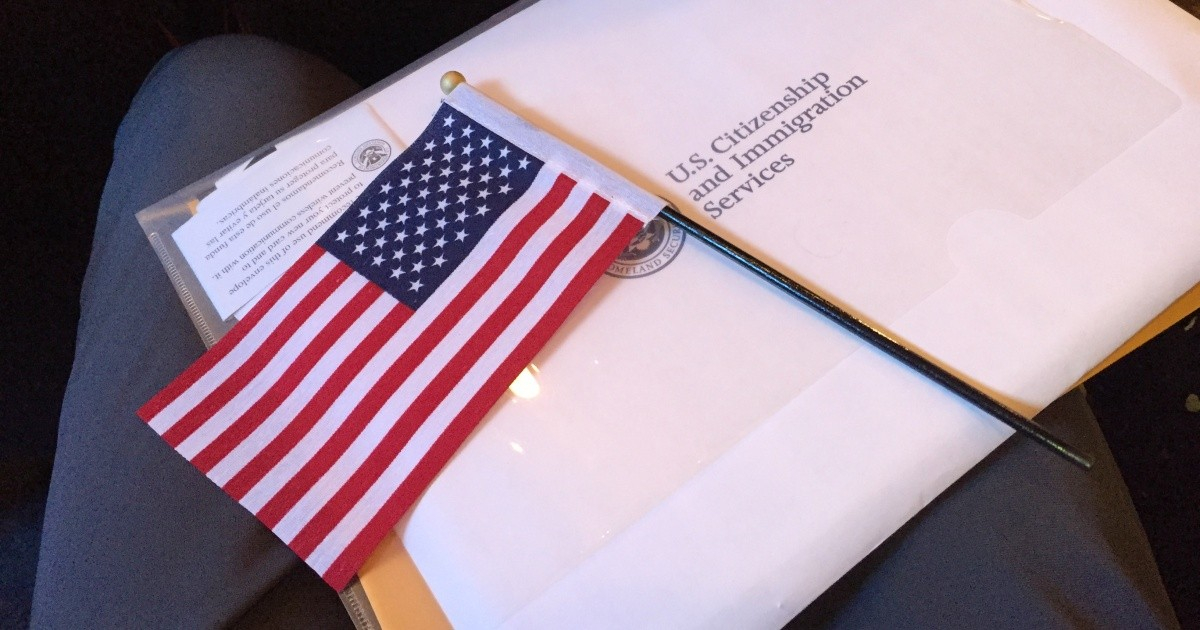
A federal jury in the Southern District of Florida has found Tania Rosa Rodríguez, a 57-year-old Cuban woman, guilty of illegally obtaining U.S. citizenship by hiding her involvement in a multimillion-dollar healthcare fraud scheme during her naturalization process.
Rodríguez applied for citizenship in 2017 and was naturalized in 2018. On her application forms, she falsely declared that she had never committed a crime for which she had not been arrested, a claim prosecutors proved untrue, according to the Department of Justice.
By that time, Rodríguez was already involved in a healthcare fraud conspiracy that began before she filed for naturalization and continued even after she became a U.S. citizen.
The conspiracy, which spanned seven years, resulted in approximately $4.6 million in fraudulent healthcare claims.
Rodríguez had previously been convicted in a federal court for her role in this scheme. The new proceedings focused on her failure to disclose this criminal conduct when she applied for U.S. citizenship.
Legal Consequences and Citizenship Revocation
"U.S. citizenship cannot be lawfully obtained through fraud and concealment. While engaged in a multimillion-dollar healthcare fraud conspiracy, this defendant applied for U.S. citizenship and hid her criminal conduct from the government," stated federal prosecutor Jason A. Reding Quiñones of the Southern District of Florida.
"A federal jury has held her accountable. Our office will rigorously enforce the laws that safeguard the integrity of our immigration and naturalization system," he added.
The crime of illegally obtaining citizenship or naturalization, for which Rodríguez has been found guilty, carries a maximum sentence of 10 years in federal prison.
The sentence will be determined by a district judge, who will consider the United States Sentencing Guidelines along with other factors outlined by federal law.
Apart from the potential prison sentence, a conviction under the statute applied in this case may lead to the revocation of the citizenship obtained unlawfully.
Ongoing Investigations and Similar Cases
The investigation was conducted by Homeland Security Investigations (HSI) in Miami, led by Special Agent José R. Figueroa. The case is being managed by the Border Crimes and Immigration Enforcement Section (BICE), established in November 2025 to strengthen the prosecution of immigration crimes and transnational networks in South Florida.
Rodríguez’s case is among several recent proceedings against Cubans accused of concealing criminal activities during their immigration processes.
In March, a federal court revoked the citizenship of Mirelys Cabrera Díaz, a Hialeah resident convicted in 2019 for her involvement in a Medicare fraud exceeding six million dollars. Authorities found she also hid her conduct when naturalizing.
In July, the Department of Justice initiated a civil denaturalization process against Yosmaikel Rodríguez Pérez, naturalized in 2018 and accused of concealing his alleged involvement in a Medicare fraud of nearly $886,000.
Currently, there are at least 29 pending cases related to the revocation of Cuban citizens' U.S. citizenship, as the Trump administration has ramped up actions against naturalized individuals who allegedly obtained their status by hiding crimes or other significant information.
For Rodríguez, the verdict now presents two potentially severe outcomes: a sentence of up to a decade in federal prison and the loss of the U.S. citizenship she acquired in 2018.
FAQs on Citizenship Revocation and Fraud
What are the consequences of citizenship obtained through fraud?
Obtaining U.S. citizenship through fraud can lead to a maximum prison sentence of 10 years and the revocation of the unlawfully obtained citizenship.
How does the U.S. government handle cases of immigration fraud?
The U.S. government rigorously enforces laws protecting the integrity of its immigration system, prosecuting individuals who obtain citizenship fraudulently and revoking their citizenship if necessary.
Are there ongoing investigations similar to Rodríguez's case?
Yes, there are currently at least 29 pending cases involving the revocation of U.S. citizenship from Cubans, as authorities continue to address issues of immigration fraud.