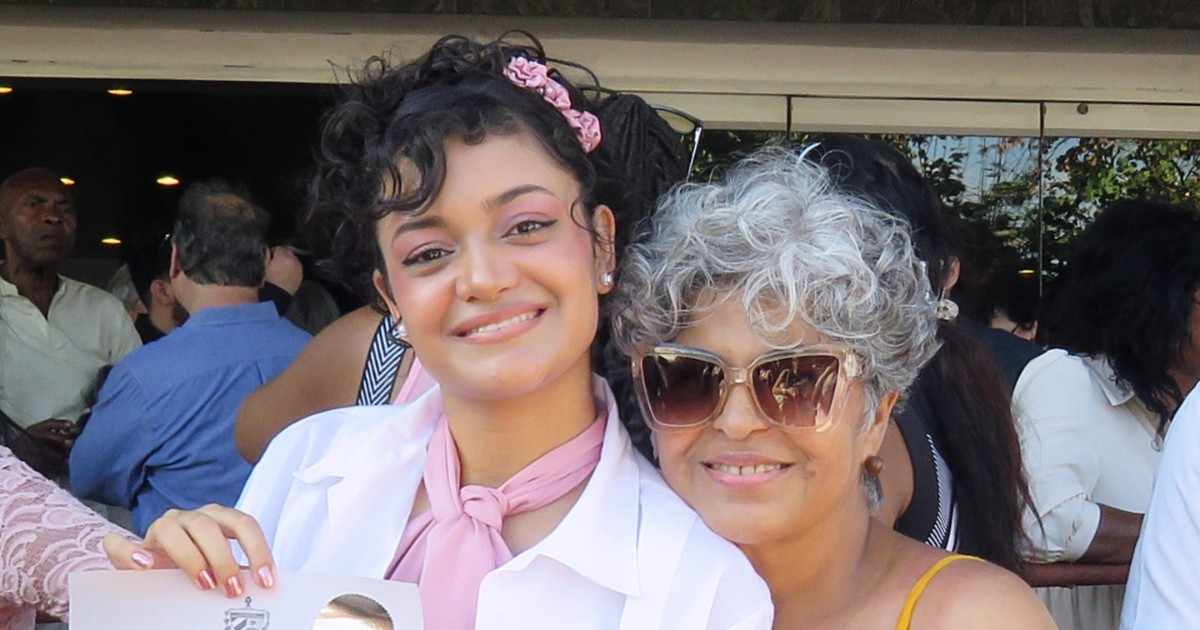
The Cuban judicial system has confirmed that activist Anna Sofía Benítez Silvente, known widely as Anna Bensi, along with her mother, Caridad Silvente, will face trial. The charges stem from recording and sharing on social media a visit by a MININT agent to their home. Bensi disclosed this development on Tuesday through her Facebook account, where she posted the official notification.
"The court has confirmed that my mother and I will be brought to trial, accused of violating personal and family privacy. The complaint was supposedly filed by the offended police officer, who visited our apartment on March 10 this year to deliver a State Security summons in my mother's name. Given the situation, we decided to record and post the encounter on social media as a safety measure," stated the 21-year-old activist.
Background of the Legal Proceedings
The legal battle dates back to March 10, when Yoel Leodán Rabaza Ramos, a MININT officer, arrived at their residence to hand over a State Security notice. Both mother and daughter chose to document the incident and share it online for protection, an act that authorities have used as the basis for a criminal charge.
The allegations are based on Article 393 of the Cuban Penal Code, which describes "acts against personal and family privacy," punishable by two to five years in prison.
Legal and International Repercussions
The case was initially dismissed in April when defense attorney Roberto Ortega Ortiz successfully argued that such offenses can only be pursued through a direct complaint from the offended party, not a police report. Nevertheless, the process was reignited when Rabaza Ramos filed a direct complaint in July, countering the defense's argument.
Since March 25, Anna Bensi and her mother have been under house arrest with a travel ban imposed on them.
The pressure on Bensi escalated in July when she was detained for nearly 11 hours at a National Revolutionary Police station in Alamar. She recounted that the purpose was to prevent her attendance at the U.S. Independence Day celebration at the residence of Mike Hammer, the chargé d'affaires at the U.S. Embassy. "They released me at nine at night, ensuring I couldn't attend. An absolute injustice," she remarked post-release.
Freedom of Expression and International Attention
During that interrogation, a police instructor issued a stark warning: "In your videos, you have incited, and if that incitement materializes, you're committing a crime, and we'll imprison you." Bensi summarized the encounter succinctly: "Ultimately, the message was clear: stay silent or create different content."
The human rights organization Cubalex has defended Bensi, asserting that filming public officials performing their duties is not a criminal act, but rather a citizen's right as per Cuba's 2019 Constitution. The case has garnered international attention, being reported by outlets like the Spanish newspaper El Mundo. Hammer condemned the situation, labeling it "unacceptable" for Bensi and other activists barred from the July 4th event.
Anna Bensi is affiliated with the youth collective Fuera de la Caja Cuba, established in early 2026 in El Cerro, Havana. This group of young individuals uses art, theater, and social media as tools to challenge state indoctrination. Senator Marco Rubio expressed his support for Bensi and her collective in May.
Caridad Silvente, undeterred by the July detention, articulated their stance: "I feel stronger to continue this fight. This proves they are a dictatorship, a regime that seeks to obscure and silence reality."
Understanding the Trial of Anna Bensi
What charges are Anna Bensi and her mother facing?
Anna Bensi and her mother are charged with violating personal and family privacy, based on a complaint by a MININT officer.
Why did Anna Bensi and her mother decide to record the visit?
They recorded and shared the visit on social media as a protective measure against potential repercussions from the authorities.
What role does the Cuban Constitution play in their defense?
The defense argues that filming public officials is a right under Cuba's 2019 Constitution, which supports citizens documenting official actions.
How has the international community reacted to this case?
The case has drawn international attention, with media coverage and condemnations from figures like Mike Hammer, highlighting the oppressive actions of the Cuban regime.