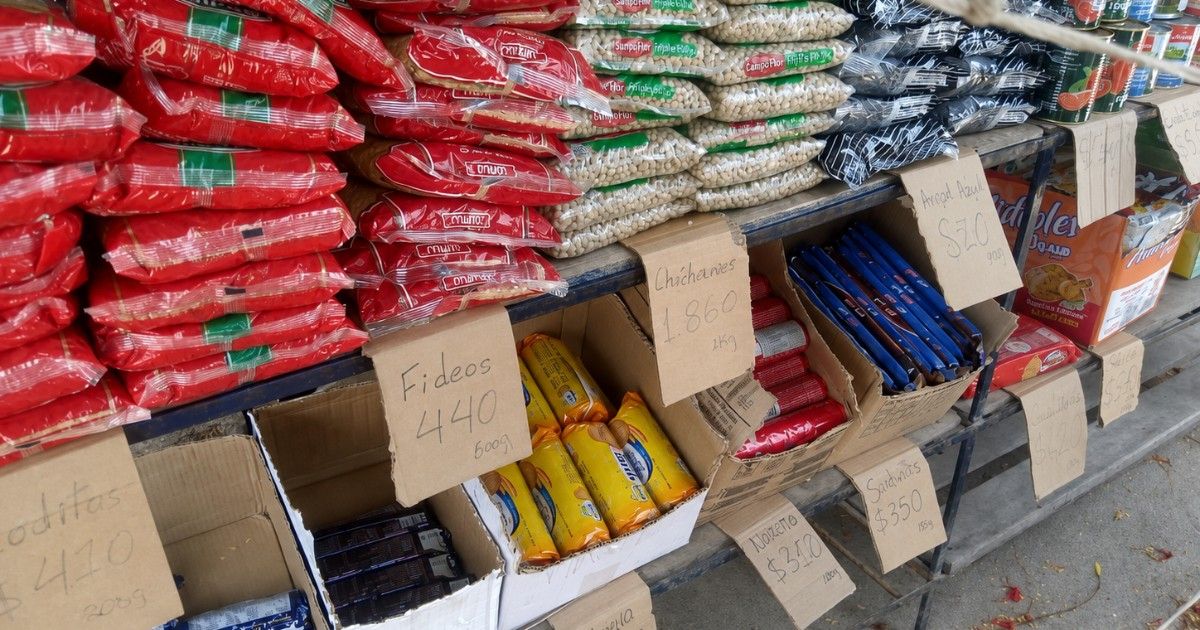
In a bid to curb the rising cost of living that is affecting citizens, Holguín's municipal authorities have announced the formation of committees aimed at ensuring the markup on essential goods does not exceed 30%. This initiative comes as a response to public outcry over soaring prices.
Announced on Tuesday via a statement from the Holguín Municipal Assembly and the Council of Administration, the measure followed an urgent meeting on Monday addressing community concerns regarding exorbitant price hikes.
The oversight will cover a range of essential items such as poultry, sausages, ground meat, eggs, powdered milk, pasta, imported beans, rice, sugar, as well as hygiene products like soap, detergents, and cooking oil.
Officials emphasized that this action "is not about price capping" since it does not set a fixed retail price for each item. "The Task Force does not impose a single sale price. Instead, it ensures that the profit margin on essential goods remains below 30%," the statement clarified.
Any profits exceeding this threshold will be deemed a breach of pricing policy and will face penalties "to the full extent of the law." However, the statement did not clarify how the public could verify the original cost declared by sellers or calculate if the applied markup complies with the rule.
This lack of transparency has sparked skepticism among citizens who responded to the announcement. "The public does not understand the concept of commercial margin, nor can they see purchase invoices," cautioned Dalis Espinosa Hernández.
Enoel Santana also questioned how consumers could determine if prices correctly include the 30% markup when they lack access to the invoice showing the product's original cost.
Other comments reflected doubt about the authorities' ability to enforce the decision effectively. "On paper, everything looks fine, but it's not just speculation; there's also corruption, starting with those who are supposed to enforce the rules," remarked Manuel Perdomo.
Several residents reported that prices remained high even after the announcement. Maritza Rodríguez mentioned that egg cartons were being sold for 5,000 pesos, packages of chicken for 8,000, and oil for over 3,000 pesos, while Roelkis Ochoa Cuello noted seeing oil priced at 4,000 pesos and egg cartons at 4,500 in the Las Baleares area.
Warnings also surfaced about the potential disappearance of goods. "Now sellers hide merchandise as they have in the past, and nothing happens," commented Rosabel González, while Ana Cruz Leyva predicted the products would vanish again.
Levis Luis Chacón Cisneros criticized the government's focus on pressuring the private sector, arguing that the State, still the owner of primary production means, should focus on "PRODUCING, PRODUCING, AND PRODUCING" to compete with better offerings and reduce speculation.
Holguín's decision is part of a broader wave of regional controls. Matanzas has set a maximum markup of 30% and reference prices for staple foods, while Villa Clara has established price ceilings, including 110 pesos per egg and 2,500 pesos per liter of oil.
These measures are being reintroduced less than two months after Miguel Díaz-Canel acknowledged that previous caps failed to halt inflation and led to product shortages, illegal market diversions, higher prices, and reduced tax revenue.
Cuban economists critical of these new controls have also pointed out the contradictions. Pedro Monreal summarized the setback by saying "they learned nothing," while Elías Amor warned that administratively limiting prices and margins could cause immediate shortages.
Understanding the Impact of Holguín's Pricing Strategy
What is the main objective of Holguín's new pricing strategy?
The primary goal is to prevent the markup on essential goods from exceeding 30%, aiming to control the soaring prices affecting citizens.
How will this measure differ from price capping?
Unlike price capping, which sets a fixed sale price, this measure ensures that profit margins stay below a set percentage without dictating specific sale prices.
What challenges do citizens face in verifying pricing compliance?
Citizens lack access to original cost invoices, making it difficult for them to verify whether the markup complies with the 30% limit.
What concerns have been raised regarding the implementation of this strategy?
Concerns include the potential for corruption, ineffective enforcement, and the risk of product shortages if prices and margins are administratively limited.