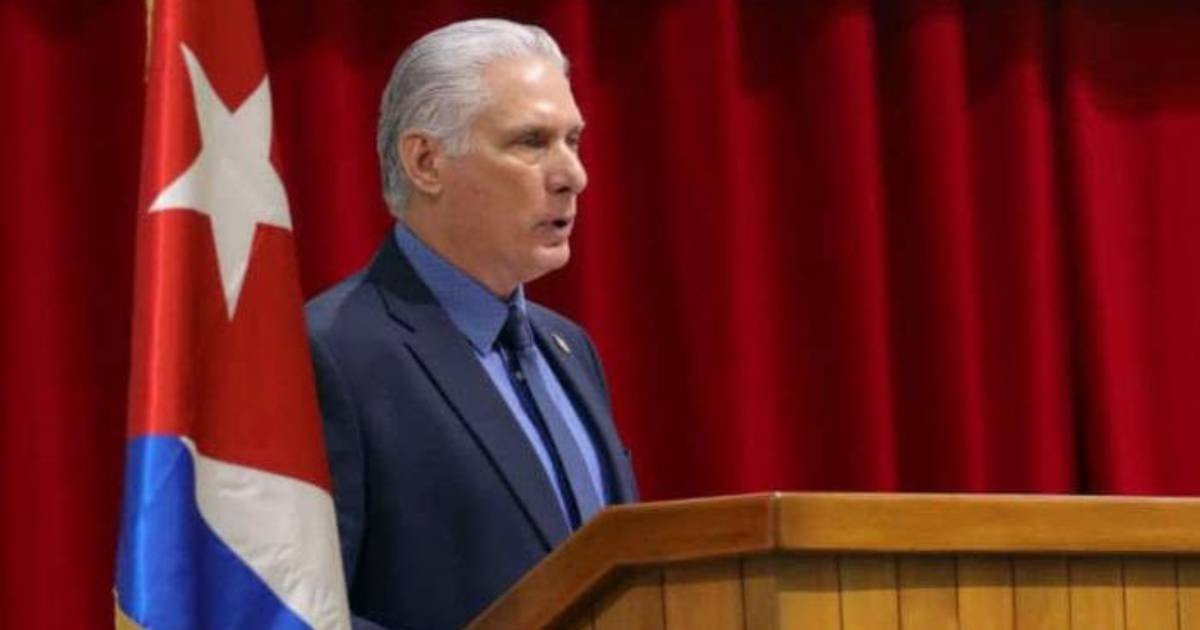
During the opening of the International Colloquium "Fidel: Legacy and Future," Cuban leader Miguel Díaz-Canel lashed out at U.S. Secretary of State Marco Rubio, labeling his recent remarks on heightened pressure against Havana as an "overt genocidal threat against an entire nation."
The event, held on Monday at Havana's Convention Palace, preceded the centennial of former dictator Fidel Castro. The Cuban president's criticism was directed at an interview Rubio gave to Axios on August 7, where he made it clear that the U.S. plans to continue tightening measures against the Cuban government, leaving them with no relief options.
"What we are trying to show them is that there are no escape valves," Rubio stated.
Díaz-Canel directly addressed Rubio's comments in his speech, criticizing the U.S. stance. "It's the height of cynicism for the U.S. Secretary of State to say, 'What we are trying to show them is that there are no escape valves,' when referring to the economic measures being imposed on Cuba," he declared, according to an official transcript.
According to Díaz-Canel, Rubio's statement represents "an open genocidal threat against an entire nation unwilling to bow to imperial designs."
U.S. Intensifies Pressure on Cuba
These verbal exchanges are occurring amidst a fresh wave of actions from Washington against the Cuban regime. Just a day before Rubio's interview, the State Department announced sanctions targeting five entities associated with Cuba’s military-industrial complex, including Tecnoimport, Duna S.A., and the Union of Military Industry, along with eight officials.
The sanctioned individuals include Álvaro López Miera, the Minister of the Revolutionary Armed Forces, and Roberto Legrá Sotolongo, the Chief of General Staff, due to their involvement in arms procurement and military cooperation with Russia and China.
Since January 2026, the Trump administration has launched over two dozen actions against Cuba, targeting more than 40 entities and at least 38 individuals with sanctions. In June, measures were specifically directed at Díaz-Canel and his wife, Lis Cuesta Peraza.
Centennial of Fidel Castro's Birth
The International Colloquium "Fidel: Legacy and Future" will continue until August 13, marking 100 years since Fidel Castro's birth. This significant date has been central to the government's political agenda throughout 2026, as Cuba remains engulfed in a severe economic, energy, and social crisis amid escalating tensions with the U.S.
Key Questions on U.S.-Cuba Relations
What was the context of Díaz-Canel's criticism of Marco Rubio?
Díaz-Canel criticized Rubio during the opening of the International Colloquium "Fidel: Legacy and Future," following Rubio's comments on continuing U.S. pressure against Cuba.
What actions has the U.S. taken against Cuba recently?
The U.S. has imposed sanctions on entities linked to Cuba's military-industrial complex and several officials, aiming to tighten the economic and diplomatic pressure on the Cuban government.