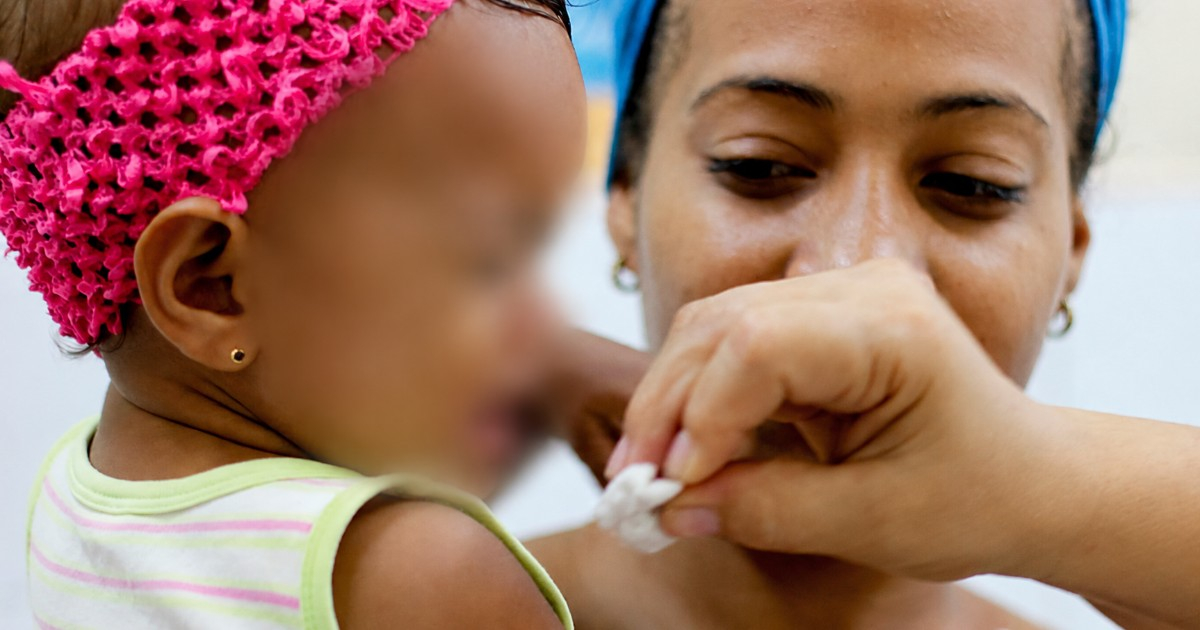
On Monday, Miguel Díaz-Canel admitted to an international audience gathered at Havana's Convention Palace that 67,000 infants under the age of one born in recent months lack an up-to-date vaccination schedule. This unprecedented situation for Cuba was acknowledged by the leader himself.
The admission came during the opening of the First International Colloquium "Fidel: Legacy and Future," held just days before what would have been Fidel Castro's 100th birthday. Díaz-Canel addressed delegates from 63 countries with a speech full of revolutionary fervor.
"There are 67,000 infants under one year old who were born in these months without an updated immunization schedule, despite Cuba's history of maintaining a current vaccination system," the leader admitted, emphasizing the exceptional nature of these statistics.
Other Alarming Indicators
The breakdown of the vaccination program was not the only concerning issue publicly acknowledged by the regime.
Díaz-Canel disclosed that 98,500 patients are on surgical waiting lists, including 12,000 children, due to a lack of resources and energy to keep operating rooms functional.
Additionally, 34,000 expectant mothers are not receiving necessary prenatal ultrasounds. Meanwhile, 117,000 adults and 1,200 children with cancer cannot access primary treatments and must settle for secondary or tertiary alternatives.
The shortage of medications has reached critical levels: only 30% of essential drugs are available, even though Cuba theoretically has the capacity to produce them.
Critical Infrastructure Failures
Ambulance services are severely hampered, with only 22% of technical availability due to a lack of spare parts. The country also faces challenges in acquiring cobalt-60 sources for cancer treatments.
The situation is further exacerbated by an energy crisis. Díaz-Canel admitted that 1,400 megawatts of installed capacity remain inactive due to fuel shortages, leading to power outages lasting 20 hours or more. These outages directly impact the cold chain for vaccines and the operation of surgical rooms.
Rising Infant Mortality Rates
One of the most striking admissions was regarding infant mortality, a statistic the regime has long touted as a symbol of its social achievements.
"We have always maintained infant mortality rates between 4 and 5, akin to developed countries, but in recent years, the rate has doubled and is now over 9.8, representing the loss of children who could have been saved," Díaz-Canel stated.
This figure aligns with official data from the Ministry of Public Health, which reported a rate of 9.9 per 1,000 live births by the end of 2025.
In Havana, the situation is even more dire: the rate reached 14 per 1,000 live births in the early months of this year, marking the highest in more than two decades.
Key Issues in Cuban Public Health
Why are 67,000 Cuban infants without an updated vaccination schedule?
The lack of an updated vaccination schedule for 67,000 infants is attributed to unprecedented breakdowns in Cuba's immunization program, a situation acknowledged by Cuban leader Díaz-Canel.
What other health services are impacted in Cuba?
Cuba is facing significant challenges in healthcare, including long surgical waiting lists, inadequate prenatal care, limited access to cancer treatments, and a severe shortage of essential medications.
How has the energy crisis affected healthcare in Cuba?
The energy crisis in Cuba has led to prolonged power outages, disrupting the cold chain for vaccines and the functionality of surgical rooms, further exacerbating healthcare challenges.