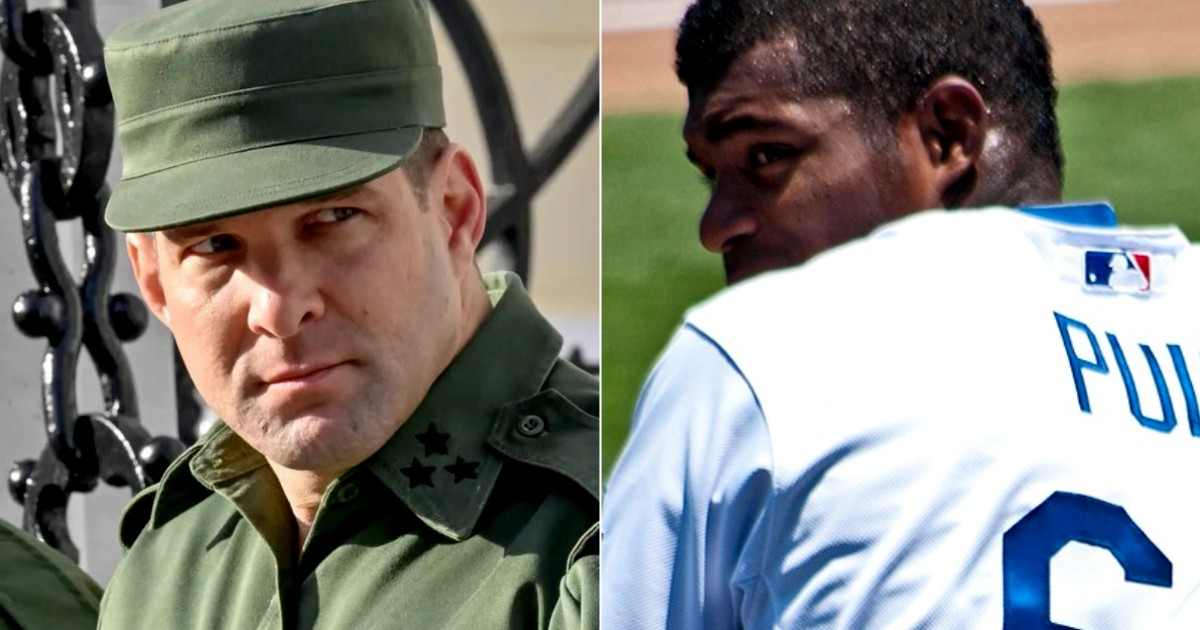
An investigation by The New York Times, published this Tuesday, uncovers that a criminal network dubbed the Cuban Mafia in Quintana Roo — the same group that secretly extracted baseball player Yasiel Puig from Cuba in June 2012 — is allegedly linked to "El Cangrejo."
Raúl Guillermo Rodríguez Castro, nicknamed "El Cangrejo" due to a unique feature of his fingers, is a colonel in Cuba's Ministry of the Interior and the grandson of Raúl Castro. In 2016, he was appointed by his grandfather as the head of his personal escort, leading the General Directorate of Personal Security under the MININT.
According to court records and interviews cited by the New York City publication, José Miguel González Vidal, one of the convicted leaders of the organization, confessed to authorities that he bribed Rodríguez Castro with a high-speed boat, a Rolex watch, a motorcycle, and luxury clothing to keep the Cuban Coast Guard and Customs at bay.
The FBI reportedly corroborated this testimony with text and voice messages extracted from the phones of network members.
González Vidal, a 38-year-old Cuban-Spanish citizen, pleaded guilty at the end of 2023 and received a 25-year prison sentence on conspiracy charges under the RICO Act. The U.S. Department of Homeland Security labeled him a "career criminal" with multiple prior convictions for theft, fraud, and illegal use of credit cards. A federal judge recently sealed his file, a move often seen when a defendant is cooperating with prosecutors.
Rodríguez Castro has not been formally charged in the United States. The Cuban regime dismissed the accusations as "slander," and "El Cangrejo" himself did not respond to the newspaper's requests for comment.
The High-Stakes Escape of Yasiel Puig
Puig's escape in 2012 was financially backed by Raúl Pacheco from Miami, who agreed to pay $250,000 to the smugglers for 20% of the player's future earnings.
After four unsuccessful attempts, Puig finally escaped on a speedboat with his girlfriend, boxer Yunior Despaigne, and a Santería priest. The group clandestinely arrived at Isla Mujeres, near Cancun's coast, where they were held in a motel for over 20 days.
The ransom demand escalated to $400,000, and the captors threatened to mutilate the player to ruin his career. Eventually, an armed team hired by Miami financiers stormed the motel and freed the group detained by the Cuban Mafia in Quintana Roo.
Weeks later, Puig signed a $42 million, seven-year contract with the Los Angeles Dodgers.
Wider Implications and Political Context
Operation Sisyphus, jointly conducted by the FBI and Homeland Security Investigations, concluded that the network had stolen more than 600 motors and vessels in southwest Florida since 2009 to transport thousands of Cuban migrants to Mexico.
Around 25 people perished during these journeys, as per court documents. Migrants unable to afford the $10,000 fee were detained and tortured; some women were forced into working at nightclubs.
"We applied physical punishment. Sometimes they were beaten with a wooden board or a Taser gun," stated convicted trafficker Reynaldo Crespo Márquez in a 2023 federal court in Miami.
Private investigator David Bolton, who alerted federal authorities about the operation, described the network's members as "the real pirates of the Caribbean" and branded them as "ruthless killers."
Among the Cuban players smuggled by the same network was shortstop Adeiny Hechavarría. In April 2026, Mexican authorities arrested 59-year-old Remigio Valdez-Lao, a key financier of the group, who is expected to be extradited to the United States.
The revelations gain particular significance given the increasing political prominence of "El Cangrejo" in 2026: the MININT colonel has met with Secretary of State Marco Rubio's team, a State Department delegation in Havana, and CIA Director John Ratcliffe this year, becoming an informal liaison between the regime and Washington.
Meanwhile, Puig is dealing with his own legal troubles: in February 2026, a federal jury in Los Angeles found him guilty of obstruction of justice and lying to federal agents in an illegal gambling case, charges that could result in a prison sentence of up to 20 years.
FAQs about Yasiel Puig's Escape and Related Criminal Network
What led to Yasiel Puig's escape from Cuba?
Yasiel Puig's escape from Cuba in 2012 was orchestrated by a criminal network known as the Cuban Mafia in Quintana Roo, financially backed by Raúl Pacheco from Miami. Pacheco agreed to pay $250,000 to the smugglers in exchange for 20% of Puig's future earnings.
How was the criminal network linked to Raúl Castro's grandson?
According to a New York Times investigation, the network allegedly bribed Raúl Guillermo Rodríguez Castro, Raúl Castro’s grandson, with luxury items to keep Cuban authorities at bay. Rodríguez Castro, referred to as "El Cangrejo," has not been formally charged but is linked through testimonies and evidence gathered by the FBI.
What were the consequences for the smugglers involved?
José Miguel González Vidal, a leader of the criminal network, pleaded guilty and was sentenced to 25 years in prison under the RICO Act. The operation, known as Operation Sisyphus, uncovered the theft of over 600 motors and boats used to transport Cuban migrants, resulting in the death of approximately 25 individuals during these dangerous trips.
What were the legal outcomes for Yasiel Puig?
In February 2026, a federal jury in Los Angeles found Yasiel Puig guilty of obstruction of justice and lying to federal agents in connection with an illegal gambling case. These charges could lead to a prison sentence of up to 20 years.