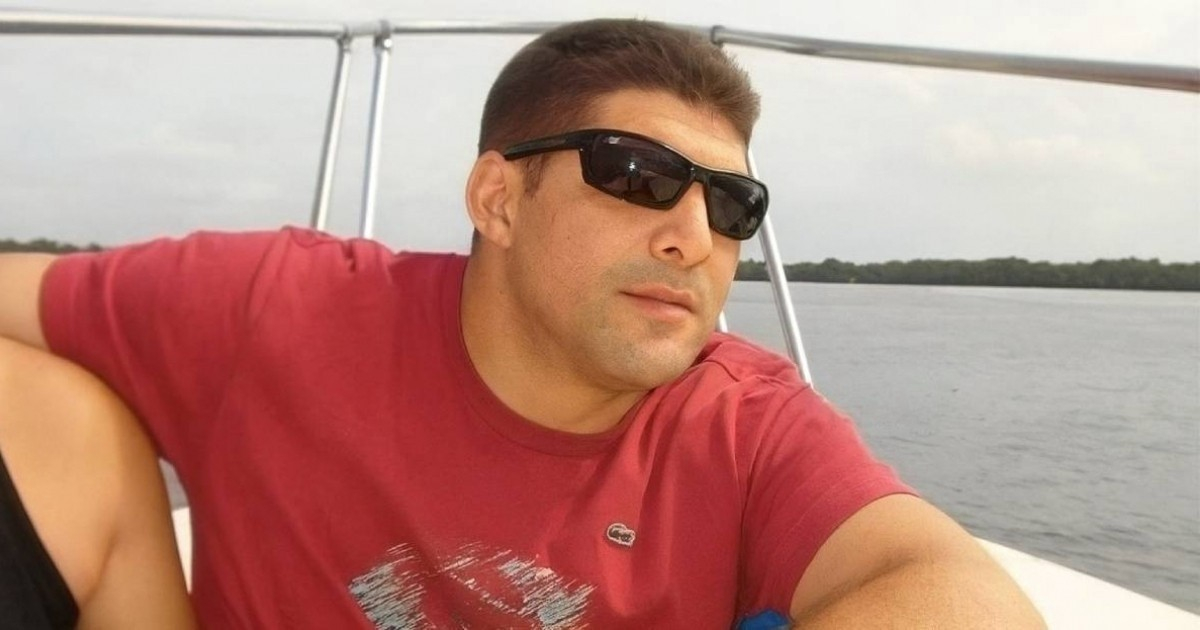
An investigative report released on Tuesday by The New York Times sheds light on how Raúl Guillermo Rodríguez Castro, known by the nickname "El Cangrejo," transitioned from being the anonymous bodyguard of his grandfather to becoming a key informal link between Havana and Washington. Despite no formal charges, his name is associated with a transnational smuggling network under FBI investigation.
Journalists David C. Adams and Frances Robles compiled the report, drawing on legal documents and interviews with nearly a dozen sources.
The Secret Diplomat
At 42, Rodríguez Castro, a colonel in the Ministry of the Interior (MININT), has never held a public office. This year, he engaged in covert discussions with CIA Director John Ratcliffe and Secretary of State Marco Rubio on behalf of Cuba during the Trump administration.
Opulence Amidst Hardship
In stark contrast to the Cuban people's hardships, Rodríguez Castro's lifestyle is marked by luxury. As the son of Déborah Castro Espín—Raúl Castro's eldest daughter—and the late General Luis Alberto Rodríguez López-Calleja, founder of the military conglomerate GAESA, his taste for designer clothing and private jet travels is well-known. Investigations document at least 23 trips to Panama between 2024 and late 2025 for luxury shopping, which he justifies by claiming wealthy friends and admirers foot the bill.
When questioned about inequality, he expressed, "It pains me that people can't live like I do. But I wake up every day to change that situation."
The "Cuban Mafia in Quintana Roo"
The most explosive part of the report links Rodríguez Castro to a criminal organization dubbed the "Cuban Mafia in Quintana Roo," based in southeastern Mexico. This group allegedly used stolen boats from Florida to smuggle Cubans into the country, where they were detained and tortured if they didn't pay the demanded fees.
Two accused individuals who pleaded guilty identified him as a collaborator. José Miguel González Vidal, sentenced to 25 years, stated that Rodríguez Castro facilitated the group's safe passage to and from Cuba. In exchange for allowing goods bought with stolen cards to pass Cuban customs, he allegedly received a Fountain 38 boat, a Rolex watch, a Suzuki motorcycle, and Louis Vuitton apparel. The FBI retrieved text and voice messages from the network's members' phones corroborating these claims.
The investigation resulted in the conviction of at least 21 people. Rodríguez Castro has not been formally charged, and the Department of Justice declined to confirm if he is actively under investigation.
From Bodyguard to Negotiator
A decade ago, during a state visit by Raúl Castro to Paris, the then-unknown bodyguard drew attention when he appeared in official photos at the Élysée Palace, prompting President François Hollande to gesture for him to step back. Now, sources close to negotiations describe him as a potential future leader of Cuba that the Trump administration might find acceptable, although it's unclear if he has the necessary internal support.
Tim Rieser, a foreign policy advisor to former Senator Patrick Leahy, who met Rodríguez Castro several times, candidly described him: "He embodies how that government operates. It's quite like a family business, and therefore, someone once known as President Castro's bodyguard has become, for whatever reason and by whatever means, much more than that."
In his first interview with a U.S. media outlet, given to USA Today in July, Rodríguez Castro did not hide his ambitions: "I can negotiate with anyone the U.S. designates. If given the opportunity, of course with Trump."
The Regime's Response
Carlos Fernández de Cossío, Deputy Foreign Minister, dismissed the accusations as "slander" in an interview with the NYT in Havana: "I have no doubt that there are organizations in Mexico, Central America, and other parts of Latin America involving Cubans who have been enriching themselves. But I can assure you there is no link to the Cuban government."
Juan Juan Almeida, the exiled son of a revolution hero with close ties to the Castro family, was more direct: "He is better known outside of Cuba than inside. Cangrejo and all the Castros know their power will only last until the day his grandfather dies."
Rodríguez Castro's name is absent from any U.S. sanctions list, which analysts interpret as a deliberate signal from Washington about their willingness to consider him as an interlocutor. Meanwhile, as revealed by the newspaper, the CIA has created a special covert unit to pressure Cuba into making political, economic, and leadership changes.
Understanding the Allegations and Political Implications
Who is Raúl Guillermo Rodríguez Castro?
Raúl Guillermo Rodríguez Castro, nicknamed "El Cangrejo," is the grandson of Raúl Castro. He has emerged as a significant informal liaison between Cuba and Washington, despite having no formal political position.
What are the allegations against Rodríguez Castro?
Rodríguez Castro is linked, although not formally charged, to a transnational smuggling network under investigation by the FBI. The network is accused of using stolen boats to smuggle Cubans into Mexico.
What is the "Cuban Mafia in Quintana Roo"?
The "Cuban Mafia in Quintana Roo" is a criminal organization based in southeastern Mexico, allegedly involved in smuggling Cubans using stolen boats from Florida.