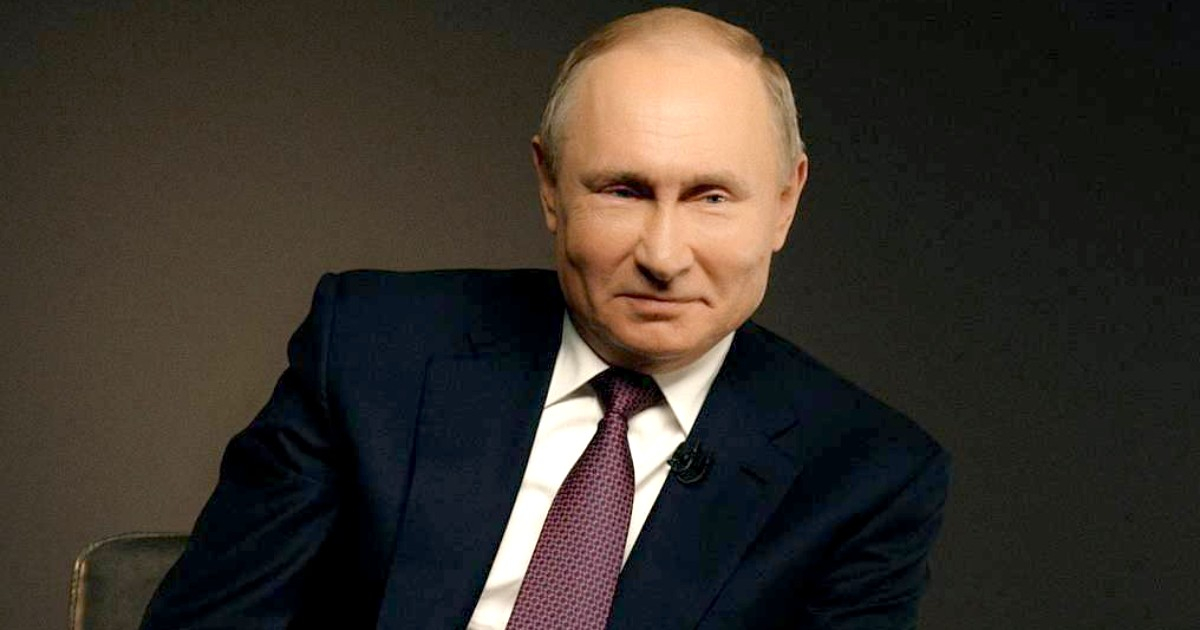
U.S. intelligence agencies have issued a warning that Russian President Vladimir Putin may authorize provocative actions within NATO territories. This information comes from officials who spoke with CBS News about the matter.
The assessment, initially reported by The Wall Street Journal last Thursday, suggests that Putin's objective isn't to incite a full-scale war. Instead, it appears to be a strategy to test the alliance's unity and the Trump administration's resolve to protect a NATO member under threat.
Rather than a conventional military campaign, the actions in question are expected to involve "hybrid operations, cyberattacks, and other deniable measures," according to sources. This marks a significant shift in the Russian president's risk assessment compared to just a few months ago.
Historical Context and Recent Incidents
The historical irony is palpable: Putin invaded Ukraine on February 24, 2022, citing the potential for Kyiv to join NATO as a "direct threat" to Russia—even though Ukraine was not a NATO member at the time.
Fast forward four years, and it's Moscow threatening military actions against countries that are full members of the alliance.
The warning from U.S. intelligence is supported by a series of specific incidents. Earlier this month, U.S. authorities determined that an explosive-laden drone found at the Leipzig airport in Germany was of Russian origin, although Berlin has not officially attributed blame. Russia dismissed the incident as a "fabricated provocation."
Escalating Tensions Across Europe
The German incident is part of a growing pattern of escalation, which includes a Russian Kh-101 missile striking Polish territory on July 31 in a Lublin farm field. This was described as the most severe breach of NATO soil since the start of the invasion. Romania has reported at least 18 Russian air incursions in 2026 alone.
In September 2025, Russian drones entered Polish airspace during attacks on Ukraine, marking the first time a NATO member shot down Russian aircraft over its own territory. Warsaw invoked Article 4 of the North Atlantic Treaty, prompting the alliance to launch Operation Eastern Sentinel to bolster its eastern flank.
NATO Secretary General Mark Rutte warned as early as December 2025, "We are Russia's next target and are already in danger," suggesting Moscow might be preparing to use military force against the alliance "within five years."
Trump's Stance on NATO's Collective Defense
The landscape is further complicated by President Donald Trump's expressed doubts about Article 5, the collective defense principle obligating NATO's 32 members to respond to an attack on any ally.
Trump stated in June 2025 that there are "numerous definitions" of the article and questioned whether European allies would defend the U.S. if attacked. While he has sometimes affirmed his commitment to protect NATO members, he has also threatened to withdraw thousands of troops from Germany and criticized allies for not increasing their defense spending.
Ongoing Conflict and Diplomatic Stalemate
Meanwhile, Russia continues to face heavy losses in Ukraine. CIA Director John Ratcliffe recently noted at a defense forum that new Russian recruits on the front lines survive only 20 to 30 minutes before being killed or wounded, largely due to Ukraine's use of AI-powered attack drones.
Russian casualties have reached approximately 30,000 soldiers per month, surpassing the country's recruitment rate.
Washington's diplomatic efforts to end the war have stalled, with no clear prospects for negotiation, leaving open the question of how far Putin is willing to go against an alliance whose unity he seems intent on testing.
Understanding the Current NATO-Russia Tensions
What types of actions might Russia take against NATO?
Russia might engage in hybrid operations, cyberattacks, and other deniable actions rather than conventional military campaigns.
How has Russia previously tested NATO's response?
Incidents such as the explosive-laden drone in Germany and the missile strike in Poland represent Russia's efforts to test NATO's cohesion and response.
How does President Trump's stance affect NATO's collective defense?
Trump's skepticism about Article 5 and his criticism of allies' defense spending could undermine confidence in NATO's collective defense commitment.