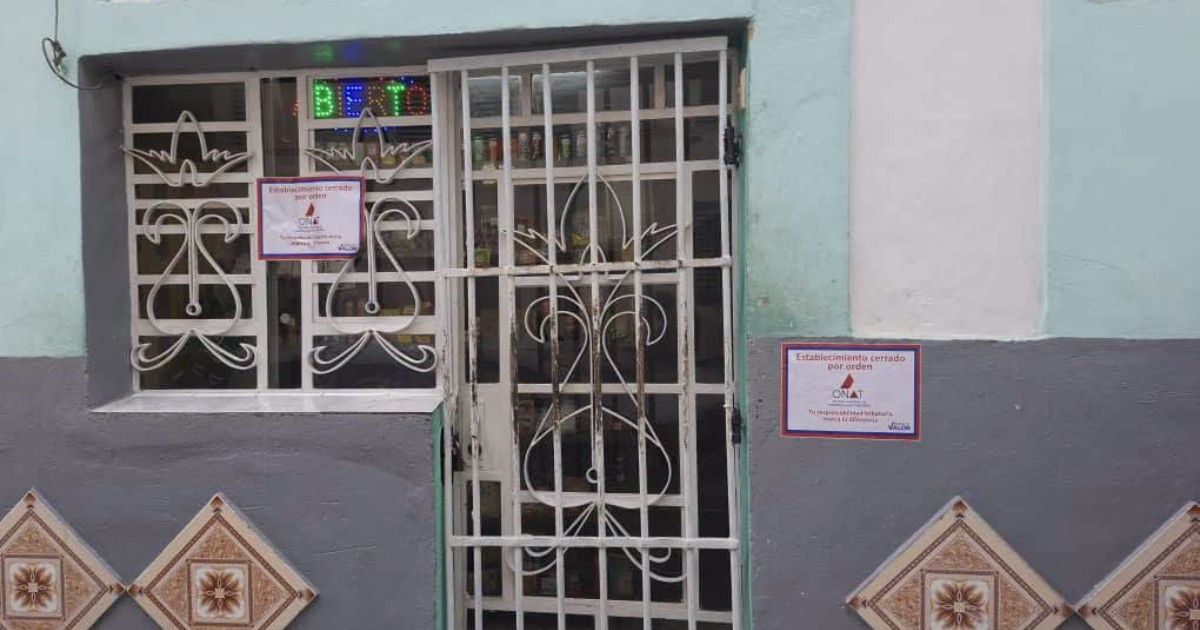
This past Monday, several businesses in Central Havana were forced to close after they refused to accept electronic payment transfers. This move is part of the regime's latest crackdown on businesses that fail to comply with tax regulations.
The National Office of Tax Administration (ONAT) in Havana announced the closures, stating that actions are being taken against "illegalities and indiscipline" in the capital.
The ONAT did not disclose specific details such as the number of businesses affected, their names, locations, or the length of the imposed sanctions.
The municipal office of ONAT in Central Havana executed this measure, issuing a stern warning to other businesses. According to the state agency, willfully refusing to accept electronic transfers is considered a tax evasion offense, violating current tax laws and infringing on consumers' rights to choose their preferred payment methods.
The ONAT emphasized, "Compliance is the key to protecting your business," directing this message towards private workers in the capital.
A similar closure occurred the previous Friday when the ONAT shut down a business located on Neptuno Street, between Aramburu and Soledad, in Central Havana. The authorities claimed that this establishment lacked the necessary documentation and refused to accept electronic payments, thereby infringing on consumer rights, which dictate that the consumer decides how to make their payment.
ONAT reiterated its position in a threatening tone, asserting that the closure adhered to existing tax regulations and ended their statement with another warning: "Complying with the law, respecting the consumer, and maintaining proper documentation is essential for the continuity of the business."
These actions were anticipated as they follow the Havana government's threats last Thursday to impose fines, confiscations, forced sales, and closures of up to three months on private businesses amidst a wave of inspections.
Moreover, the pressure extends beyond Havana. In Bayamo, five other businesses were closed last week for not accepting electronic payments and are now subject to ONAT's scrutiny as part of a national campaign pushing for the adoption of electronic transactions.
Despite advancing this campaign, challenges persist due to connectivity issues and difficulties voiced by merchants who require cash for operations, as many suppliers also refuse electronic transfers.
Understanding Cuba's Electronic Payment Mandate
Why are businesses in Cuba being shut down for refusing electronic payments?
Businesses are being closed for not accepting electronic payments as part of a government initiative to enforce tax compliance and consumer rights. Refusing electronic payments is considered tax evasion under current regulations.
What are the consequences for businesses that do not comply with electronic payment mandates?
Non-compliant businesses may face closures, fines, forced sales, and confiscations, as well as inspections that could lead to shutdowns of up to three months.
Are these measures affecting only Havana?
No, the pressure is nationwide. Other cities, like Bayamo, have also seen closures as part of the broader campaign to enforce electronic payments across Cuba.