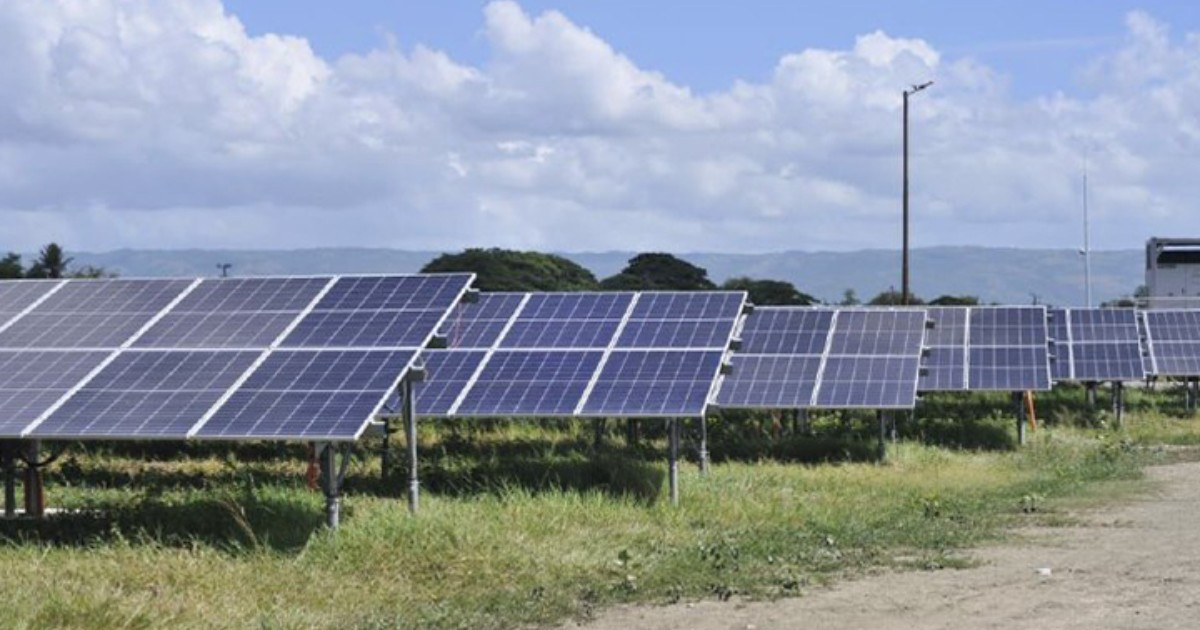
Cuba's state-run media has hailed the synchronization of the El Algarrobo photovoltaic park in Guantánamo as a national triumph, following the unexpected withdrawal of foreign investors involved in the project. Despite the fanfare, the facility is not yet fully operational.
The Cuban News Agency (ACN) reported this as the first instance where a solar park has been synchronized entirely with Cuban expertise.
Specialists from the Guantánamo Electric Company and the Information Technology and Automation branch of the Electric Union in Santiago de Cuba took part in the efforts.
The team dedicated almost a month to the intensive task of synchronizing the first inverter. Currently, they are working on adjusting three out of the park's seven inverters, which accounts for roughly 50% of the automatic area, as detailed in the official report.
Technicians relied on programming and software to interact with the Chinese technology installed, although they acknowledged the complexity of the process, which involved numerous failed attempts before achieving the initial connection.
Rusel Ramos Leliebre, the principal engineer of the park, stated that the team puts in about ten hours daily to complete the synchronization of the remaining inverters. The group consists of around ten workers, mostly young, supported by more experienced professionals.
"We never gave up; we built the process step by step until everything worked out," said Ramos, 26, who has led the project since its inception in 2025.
The Cuban specialists' efforts prevented the investment from stalling after foreign advisors exited.
However, the official announcement touts the park's synchronization while some inverters remain unconnected and parameters need fine-tuning for efficient operation.
The state-run publication does not disclose the specifics behind the "unexpected departure" of the investors.
Energy Challenges and Future Prospects in Guantánamo
El Algarrobo is located approximately ten kilometers east of Guantánamo City, on the road to Baracoa. It is the province's second solar park and is expected to have a capacity of 21.8 megawatts peak.
Authorities project that the facility will meet about 25% of Guantánamo's daily demand and help reduce power outages during daylight hours. This outcome hinges on the successful synchronization and operation of all inverters with the correct parameters.
Guantánamo currently generates just over 15% of its electricity from renewable sources and aims to increase this share to at least 37% by 2030.
The promotion of the solar park contrasts sharply with the severity of the region's energy crisis. Authorities are constructing more than 15 community stations for cooking and charging equipment, an emergency measure for residents enduring prolonged power outages.
Furthermore, the supposed technological autonomy coexists with a reliance on foreign resources. China recently provided Cuba with an additional 5,000 photovoltaic systems for rural homes and essential services.
In this emergency context, the Cuban government has extended the duty exemption for importing solar panels, parts, and other renewable energy equipment until December 31, 2027, underscoring the depth of the current energy crisis, which is far from being resolved.
Understanding Cuba's Solar Energy Developments
What is the significance of El Algarrobo solar park?
El Algarrobo solar park is significant because it represents a step towards increasing renewable energy capacity in Guantánamo, aiming to cover 25% of the province's daily electricity demand once fully operational.
Why did foreign investors withdraw from the project?
The official reports do not provide details on the reasons for the unexpected withdrawal of foreign investors from the El Algarrobo solar park project.
How is the energy crisis affecting Guantánamo?
The energy crisis in Guantánamo has led to the construction of community stations for cooking and charging devices as residents face extended periods without electricity.