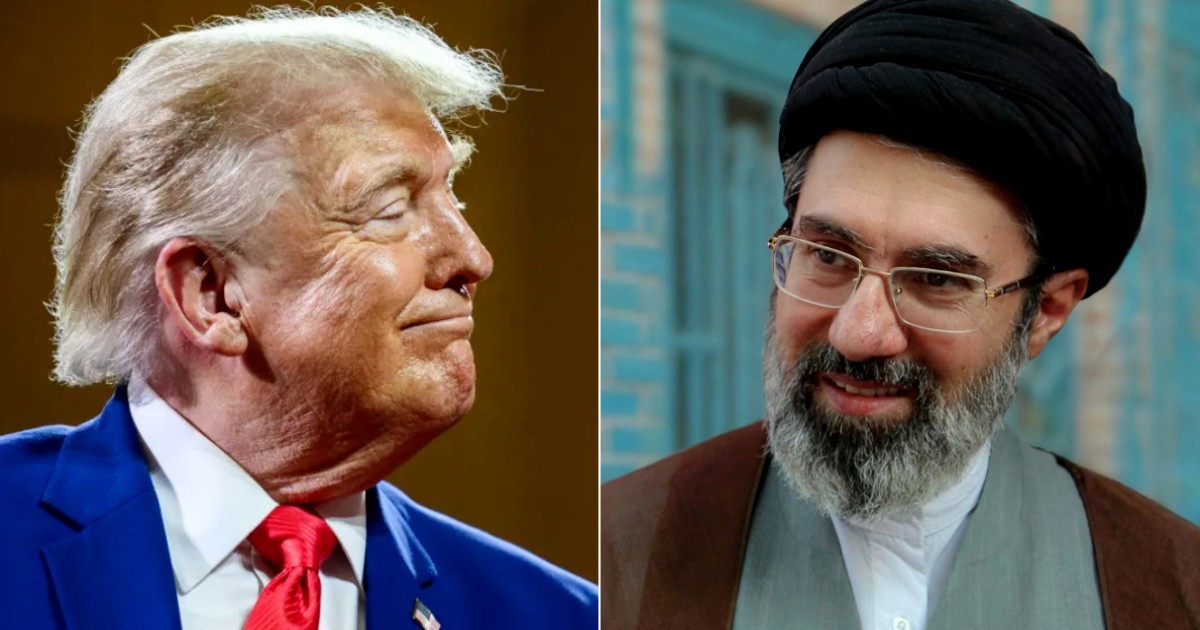
On Monday, Donald Trump announced that the United States is currently prioritizing economic pressure over launching a large-scale military operation against Iran. This strategy was revealed during an interview with Axios.
"We're taking it easy," the president remarked during a brief phone call. "We're only partially negotiating with them. We're just watching Iran with its massive inflation and their lack of funds."
This statement marks a shift from Trump's position just a week ago, when U.S. officials indicated that he was on the brink of ordering the resumption of large-scale combat operations against the Iranian regime but was persuaded to de-escalate.
Trump emphasized that economically, Iran "is in very bad shape" and lacks the money to pay its troops, a situation exacerbated by the naval blockade imposed by Washington. With oil prices hovering around $75 per barrel, the president noted that American consumers are feeling less impact from the conflict.
"It's going to work out. It always does. It's like a chess game," Trump commented on the ongoing tensions with Tehran.
Strategic Calculations and Geopolitical Tensions
An American official elaborated on the rationale behind this approach: while Iran is at war, the regime can sidestep the consequences of the conflict and the economic crisis it has sparked. Without active combat, it must face a reality without viable solutions.
The backdrop is the Strait of Hormuz, which remains partially closed. A negotiated agreement between Iran, Oman, and the United States has been pending announcement for several days. Mediators from Qatar and Pakistan had hoped to finalize it last Wednesday, but prospects have since faded.
Under the agreement, Iran would gain partial control over the traffic in the strait, a concession not granted before the conflict began.
Iran's Escalating Demands
On Saturday, Iran's Supreme National Security Council chief, Mohammad Bagher Zolghadr, presented a new list of demands that extend far beyond previous negotiations: the United States must "never threaten or insult Iran in any language," permanently end the war against Iran and its allies in Lebanon, Gaza, Yemen, and Iraq, and lift the naval blockade.
Additionally, he demanded that Washington withdraw its military forces from the region, pay war reparations, lift all sanctions, and release frozen Iranian assets. Conditions that were once prerequisites for a nuclear deal are now seen as minimal requirements just to reopen the strait.
A diplomat from one of the mediating countries attributed this declaration to internal struggles within the Iranian regime. Iranian President Masoud Pezeshkian is pushing for an agreement to avoid economic collapse, while the commander of the Islamic Revolutionary Guard Corps, Ahmad Vahidi, opposes any concessions.
Meanwhile, approximately 8 million barrels of oil are being exported nightly through the southern route of the strait in coordination with the U.S. Navy, and Washington aims to increase this flow in the absence of an agreement.
The conflict began on February 28 with Operation Epic Fury, a joint offensive by the United States and Israel targeting Iranian nuclear and military facilities. Since then, the situation has oscillated between aerial offensives, partial ceasefires, and announcements of agreements that have not materialized.
"This isn't over. We're obviously not at the beginning. We're mid-game, and we're employing a range of tools—diplomatic, economic, military—to ensure the best outcome for the American people," Vice President JD Vance stated on Fox News on Saturday.
Understanding the U.S. Strategy in Iran
What is the current U.S. strategy towards Iran?
The United States is opting for economic pressure rather than launching a large-scale military offensive against Iran. This approach is meant to force Iran to confront its economic challenges without the distraction of active combat.
How has Iran responded to U.S. strategies?
Iran has issued a list of extensive demands, including the end of U.S. military presence in the region and the lifting of sanctions. These demands reflect internal disagreements within the Iranian leadership on how to proceed.