Miguel Díaz-Canel has added fuel to the fire for the U.S. Department of State's recent report on Cuba, providing public validation for one of its key assertions.
The report, titled "Cuba: The Capital of 21st Century Communism," argues that Havana's regime is not content with confining its political ambitions to its own shores. Instead, it actively seeks to extend its ideological reach and influence through leftist movements and organizations in other nations.
Global Communist Strategy in the Making
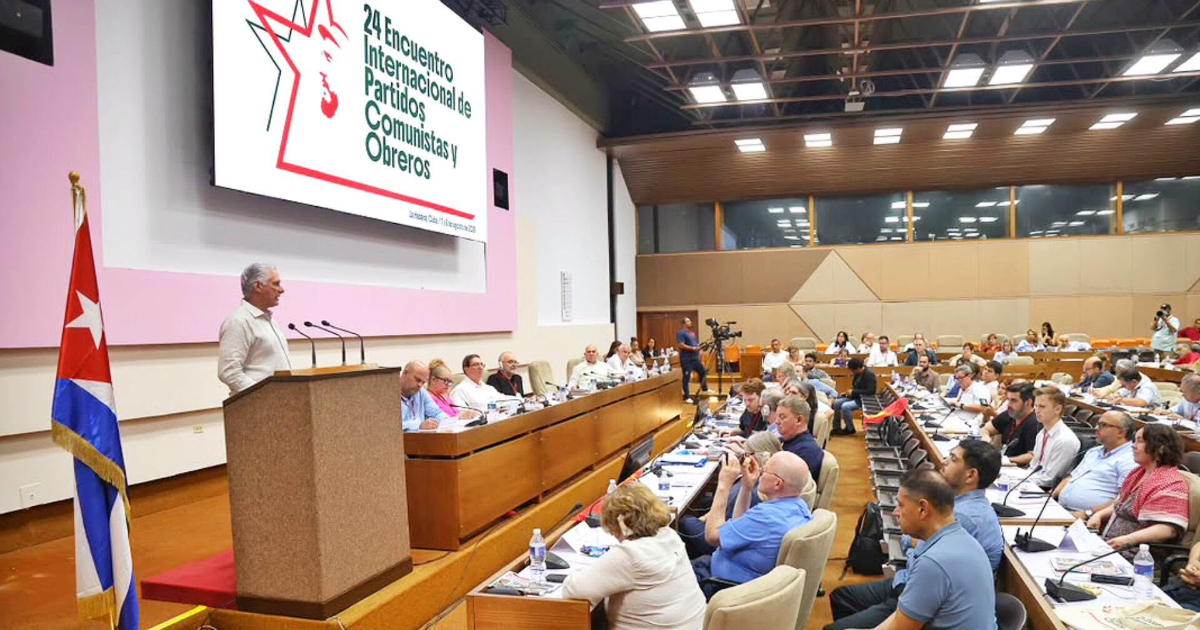
During a speech to communist and labor party representatives gathered in Havana, Díaz-Canel went beyond seeking mere solidarity with Cuba. He explicitly called for enhancing international coordination and translating it into tangible political actions.
"The current situation demands more than just declarations of principles. It requires a qualitative leap in our international articulation and coordination," he asserted.
The Cuban leader emphasized that communist and labor parties have a "historical duty" to "weave a network of effective solidarity" that transcends mere statements and manifests in "concrete actions."
Concrete Actions Outlined
Díaz-Canel did not shy away from detailing these actions. He urged the use of digital platforms to "break the media blockade," mobilize "parliaments, unions, and social movements" in support of the Cuban regime, and strengthen cooperation mechanisms between countries and organizations.
Furthermore, he called for "building grassroots power" and "winning the streets, neighborhoods, factories, and schools."
"Unity is not uniformity; unity is the will to fight and to win together," he proclaimed.
Organizing and Mobilizing at the Forefront
Díaz-Canel was even more explicit in defining the role he believes communist and labor parties should play in other countries. He stated that they are called to take on a "vanguard role," not just in electoral or institutional realms, but "especially" in the "organization, politicization, and mobilization of the working class."
The Cuban leader also emphasized the need to "strengthen the unity of the international communist movement" against what he termed as a "common enemy: imperialism, fascism, and monopolistic capital."
He added another particularly significant goal: "Deepen political and ideological work, contest cultural hegemony, and confront the misinformation machinery that seeks to portray capitalism as the only possible horizon."
Washington's Perspective
The remarks come just weeks after the U.S. Department of State released the report "Cuba: The Capital of 21st Century Communism," a detailed 100-page document portraying the Cuban regime as an actor that has, for decades, developed networks of espionage, propaganda, infiltration, and political influence beyond its borders.
The report claims that Havana has played a pivotal role in revolutionary and far-left movements throughout the Western Hemisphere and pays special attention to Cuban influence within the United States.
According to Washington, this strategy evolved over time from supporting revolutionary movements and militant organizations to establishing political, ideological, and social networks adapted to Western democracies.
Secretary of State Marco Rubio summarized this thesis by accusing the Cuban regime of having constructed an "intelligence and ideological network" historically linked to radical movements both within and outside the United States.
Contradictions and Doubts
However, the report has faced criticism. U.S. left-wing organizations mentioned in the document have rejected the accusations, asserting that their political positions are self-determined and not directed by the Cuban government.
Analysts have similarly questioned Washington's conflation of ideological links, political solidarity, and Cuban influence with more severe allegations of infiltration or subversion.
While Díaz-Canel's speech doesn't directly prove these more severe accusations, it undeniably confirms that Havana sees the organization and coordination of foreign communist forces as part of its own international political strategy.
The Double Standard
There is a striking contradiction as well. In the same speech, Díaz-Canel accused the United States of waging a "psychological war against Cuba" through "digital subversion," "media smear campaigns," and "networks of influence."
Yet, he shortly thereafter urged his international allies to expand their coordination, utilize digital platforms, mobilize unions and social movements, engage with parliaments, and challenge "cultural hegemony."
The regime denounces external actions aimed at influencing Cuba as interference and subversion while simultaneously advocating for international solidarity through the organization of foreign political forces to defend its positions and push a common ideological agenda.
From Havana to the World
For decades, the Cuban regime has dismissed accusations of its international influence as U.S. propaganda intended to justify a hostile policy toward the island. However, this time it's not Washington outlining what international communist movements should do; it's Díaz-Canel himself.
"Coordinate actions," "weave a network," "mobilize" unions and social movements, "win the streets," "organize," "politicize," "contest cultural hegemony," and strengthen "the unity of the international communist movement" were all publicly stated by the Cuban leader.
This doesn't prove that every foreign leftist organization answers to Havana, but it does make it significantly harder to argue that the Cuban regime's international ideological outreach is merely a figment of Washington's imagination. Díaz-Canel has openly described it from Havana and, far from hiding it, has called for its deepening, coordination, and transformation into action.
Understanding Cuba's Global Influence
What is the main claim of the U.S. Department of State's report on Cuba?
The report claims that Cuba aims to expand its communist ideology beyond its borders, influencing leftist movements and organizations in other countries.
How did Díaz-Canel respond to the accusations in the U.S. report?
Díaz-Canel called for increased international coordination among communist parties, urging concrete actions such as digital media use, mobilization of social groups, and cultural influence to support Cuba.
What contradiction exists in Díaz-Canel's speech regarding U.S. actions?
While accusing the U.S. of psychological warfare and subversion against Cuba, Díaz-Canel simultaneously called for international solidarity movements to influence and support Cuba's agenda.