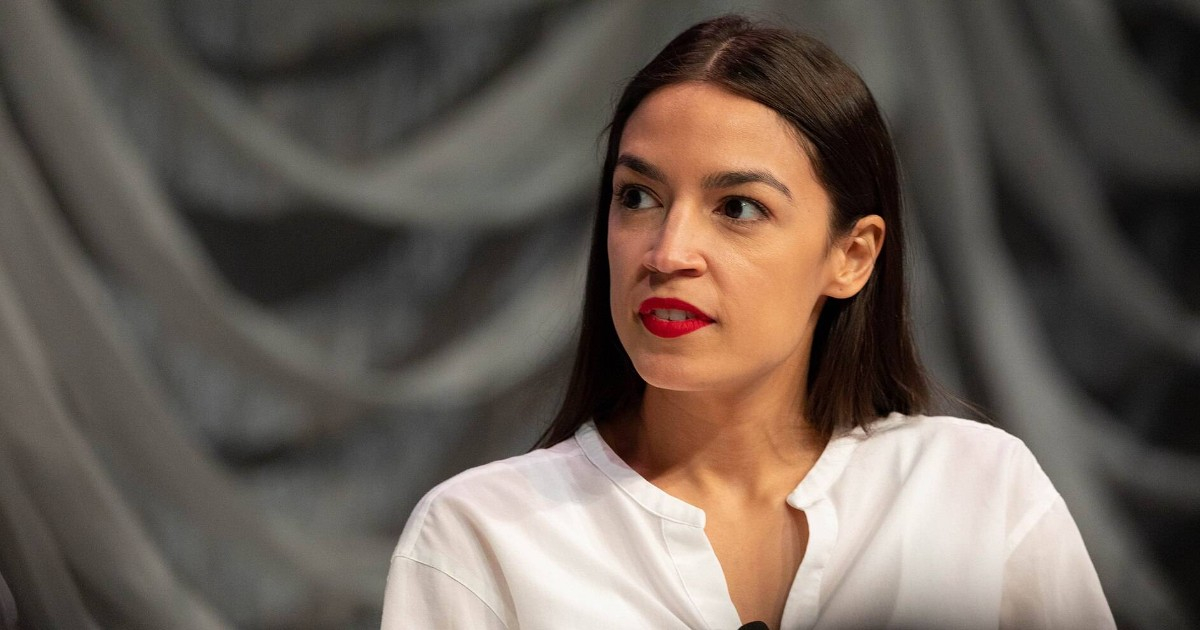
Democratic Congresswoman Alexandria Ocasio-Cortez revealed on Sunday that she is not dismissing the idea of running for her party's presidential nomination in the 2028 elections. During an interview on ABC News' This Week, she also expressed openness to a potential Senate bid.
When pressed by journalist Jonathan Karl about her future plans, the New York representative left all options on the table, stating, "I haven't ruled it out. I'm honored to feel such support out there."
Regarding a possible Senate campaign, AOC maintained the same openness: "At this point, everything remains a possibility."
Midterm Elections: AOC's Immediate Focus
At 36, Ocasio-Cortez emphasized that her current priority is the upcoming midterm elections in November, remarking, "For now, I'm focusing on winning the midterms."
This is not the first occasion the congresswoman has hinted at higher aspirations. Last month, she told Politico during a campaigning event in Michigan that a presidential run was still on the table.
Progressive Momentum in the Democratic Party
Her comments surface amid the growing momentum of the Democratic Party's progressive wing. Recently, former health official Abdul El-Sayed, who was backed by Ocasio-Cortez and Senator Bernie Sanders, emerged victorious in Michigan's Democratic Senate primary, narrowly defeating moderate Representative Haley Stevens with a margin of roughly 14,893 votes out of over 1.5 million ballots counted.
AOC viewed this victory as indicative of a generational shift within the party. "I believe we're witnessing a renewal within the Democratic Party, which is incredibly exciting, ensuring the party remains a coalition of diverse voices," she said.
She also highlighted the rise of "a youthful electorate with inspiring, passionate ideas, and a wave of galvanizing candidates who I believe are truly energizing the party anew."
Potential Senate Challenge and Presidential Prospects
If Ocasio-Cortez decides to pursue a Senate seat in New York, she might face Democratic Minority Leader Chuck Schumer, who plans to seek reelection in 2028. A Data for Progress poll from April 2025 already suggested she holds a hypothetical lead of 55% to 36% against Schumer among the state's Democratic voters.
On the presidential front, surveys place her among the leading figures in the Democratic field. A University of New Hampshire poll showed her at 22%, ahead of Pete Buttigieg at 21%, while AtlasIntel positioned her at 26%, followed by Buttigieg (22%) and Gavin Newsom (21.2%).
The political space for AOC has expanded following Sanders' virtual withdrawal from the 2028 presidential race, making her the most prominent figure of the party’s left wing for the upcoming election cycle.
Personal Decisions and Political Implications
During the interview, Ocasio-Cortez also addressed her personal choice to freeze her eggs, a decision she publicly shared on Instagram. She linked this choice to the political discourse surrounding reproductive health access, stating, "In today’s political climate, where the current federal administration seeks to deny reproductive healthcare to women nationwide, it's crucial for public figures to have these discussions and share them, to normalize them."
The Democratic Party is urgently seeking clear leadership for 2028, as Donald Trump, currently in his second term, is constitutionally barred from running again, though he has suggested otherwise multiple times.
Key Questions About Alexandria Ocasio-Cortez's Future Plans
What are Alexandria Ocasio-Cortez's plans for the 2028 elections?
Alexandria Ocasio-Cortez has not ruled out running for the Democratic presidential nomination in 2028 and is also open to a Senate bid.
How does Alexandria Ocasio-Cortez view the current state of the Democratic Party?
Ocasio-Cortez sees the Democratic Party as experiencing a generational renewal, with a rising young electorate and invigorating candidates energizing the party.
What personal decision did AOC discuss in her recent interview?
AOC discussed her decision to freeze her eggs, highlighting the importance of normalizing conversations about reproductive health in the current political climate.