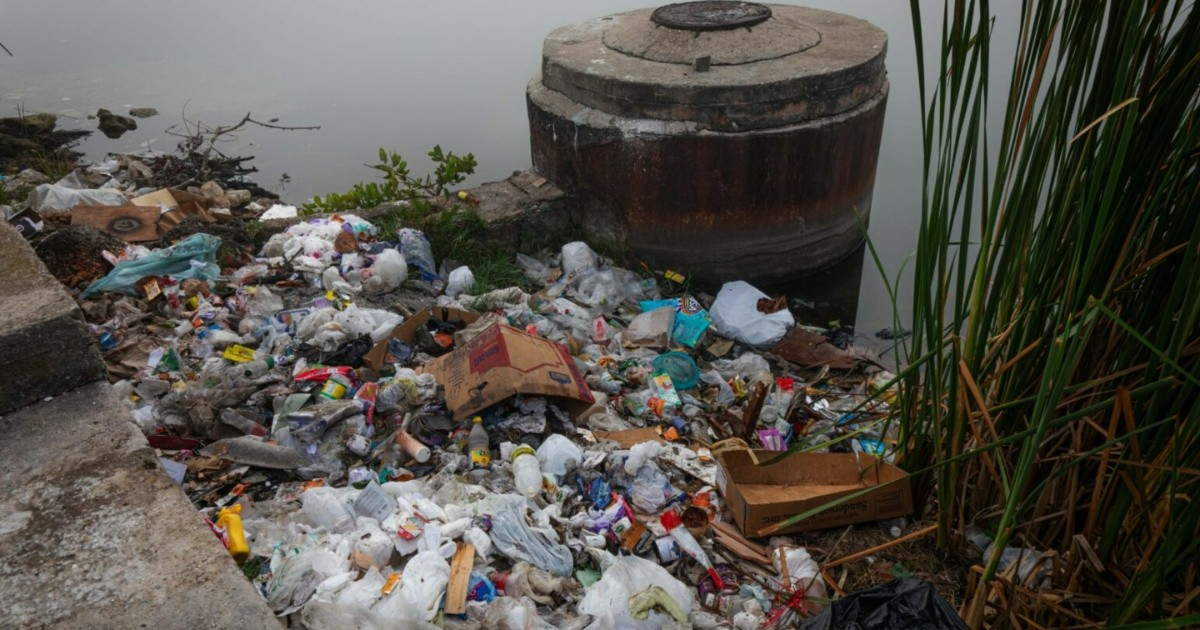
A recent photo report by the newspaper Girón, published on Sunday, starkly illustrates the aftermath of heavy rainfalls in Matanzas. As torrents of rainwater flow through the streets, gutters, and avenues, they drag along bags, bottles, containers, and accumulated waste, ultimately depositing them into the city's rivers and bay.
The images captured by photojournalist Raúl Navarro González provide a vivid account of the recurring pollution process: while some of the debris vanishes down the drains, the rest follows the flow to the water bodies. The report highlights, "The rain doesn't create the trash. It merely shows where it ends up."
The Bay's Perspective
From the vantage point of the bay, the situation is even more telling. A fisherman who deems it the most beautiful in Cuba witnessed the rainwaters arriving laden with refuse. "For some, rain seems to cleanse the streets; for those who rely on the river and bay, it marks the start of yet another cycle of waste accumulation," the Girón article notes.
Underlying Sanitation Crisis
What the photos depict is not an isolated incident but the visible outcome of an ongoing sanitation crisis that has been worsening for months. The Municipal Community Services Company operates with only 11 out of its 24 garbage trucks, many sidelined due to a diesel fuel shortage: daily allocations range from 300 to 550 liters, far short of the over 2,700 needed for full operations. Of roughly 1,400 workers, only 930 are currently active.
This deficit has led to the proliferation of micro-dumps throughout the city. Neighborhoods like Versalles, Embarcadero, and La Marina are burdened with trash and sewage, with no solutions from authorities. As the rainy season approaches, these wastes find a direct path to the San Juan and Yumurí rivers, and subsequently, the bay.
Health Implications
The health repercussions are already being documented. In early June, authorities reported an outbreak of hepatitis A, with seven new positive cases and 49 suspected ones within just one week, primarily concentrated in the Versalles neighborhood, from the Plácido pharmacy area to the Yumurí river. Over 300,000 residents in the province lack a reliable supply of potable water.
The problem runs deep. Academic studies have identified 45 pollution sources in the Matanzas bay — 34 indirect and 11 direct — and the contributing rivers deliver 61 tons of organic load daily. As far back as 2018, the Yumurí was described as a dumping ground for solid waste, with agricultural, domestic, and industrial residues discharging into its lower section.
In May, Girón itself warned that "what's at stake is no longer just Matanzas' image, but the health and future of its inhabitants." This Sunday's photo report confirms that nothing has changed.
The report from the official Matanzas media concludes, "The bay remains beautiful, yet it continues to bear the brunt of what happens inland with each downpour," an admission that underscores the regime's failure to ensure basic sanitation for its citizens.
Understanding the Environmental Crisis in Matanzas
What is causing the pollution in the Matanzas rivers and bay?
The pollution is primarily caused by accumulated waste that is swept into the rivers and bay during heavy rains. Additionally, there are numerous direct and indirect pollution sources contributing to the environmental degradation.
How is the local government addressing the sanitation crisis?
The local government's response has been inadequate, with a significant shortage of garbage collection resources and personnel. This has resulted in widespread micro-dumps and a lack of effective waste management solutions.
What are the health impacts of the pollution in Matanzas?
The pollution has led to health issues, including an outbreak of hepatitis A, affecting the communities near the contaminated water bodies. Additionally, a large population lacks access to clean water, exacerbating health risks.