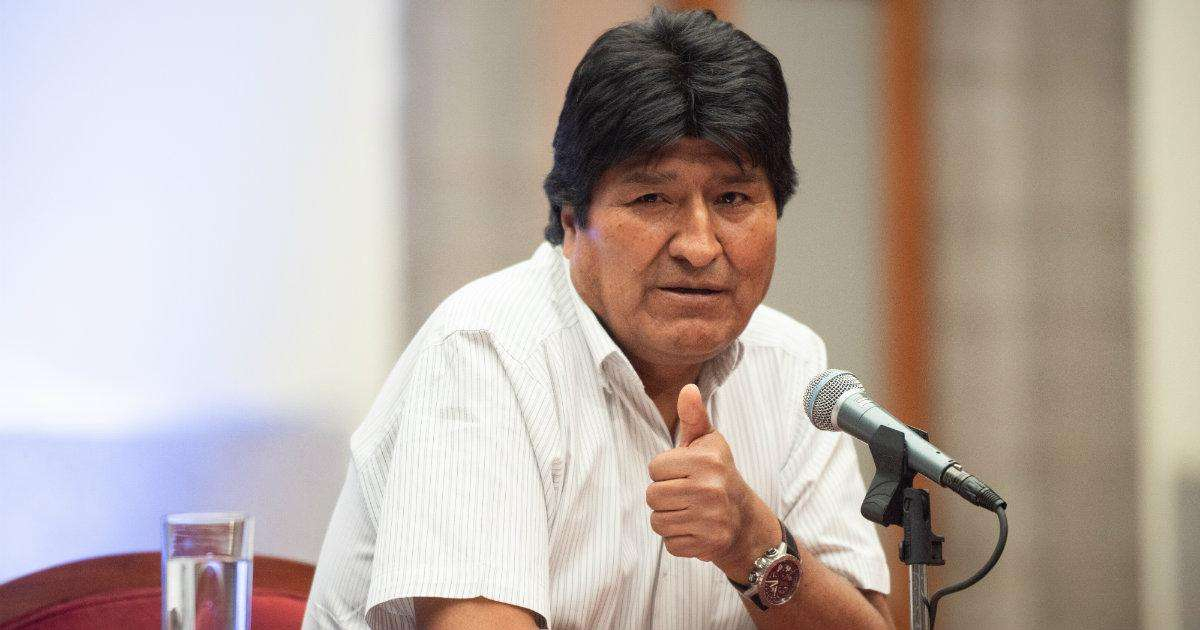
Former Bolivian President Evo Morales faces two active arrest warrants—one for aggravated human trafficking and the other for terrorism and armed uprising—yet neither has been enforced.
An analysis by EFE published on Sunday points to a key reason: his supporters control access points to Cochabamba's Tropic, where Morales has taken refuge since late 2024.
Legal Challenges and Political Refuge
The initial warrant was issued in October 2024 by the Tarija Prosecutor's Office, accusing Morales of aggravated human trafficking. This charge is linked to an alleged relationship with a minor during his presidency in 2016, with whom he reportedly has a daughter. The investigation claims the young woman was "recruited" by the so-called Youth Guard, and her parents allowed her "direct contact" with Morales, making her "available" to him across Bolivia and abroad. In May 2026, when Morales failed to appear for the start of the oral trial, a court declared him a fugitive and issued another immediate arrest order, stalling the process until he complies or is apprehended.
Allegations of Terrorism and Armed Uprising
The second warrant was issued on July 29, when the Santa Cruz Prosecutor's Office called for his arrest on charges including terrorism, armed uprising against state security, and public incitement to crime. These charges are linked to the road blockades in May and June 2026.
The protests, led by farmers and groups loyal to Morales demanding the resignation of President Rodrigo Paz, resulted in 16 deaths—13 of whom died due to lack of medical care during the roadblocks—and caused economic losses exceeding $3 billion.
Resistance and Political Implications
Morales denied urging Paz to resign. However, on May 24, he posted on X that the president had "two options" in response to the protests: "militarize the country" or call elections within 90 days.
Since October 2024, Morales has been residing in Lauca Ñ, within Cochabamba's Tropic, a stronghold of his political and union support. Hundreds of supporters maintain constant vigilance with multiple security rings controlling area access. In October and November of that year, they blocked roads for weeks to prevent police entry. On at least two occasions in the last two years, police have retreated in the face of threats from Morales's sympathizers.
Controversy and Legal Defense
The internal tension within law enforcement was highlighted when police commander Mirko Sokol stated to local media that arresting Morales "is not a priority," citing thousands of outstanding arrest orders. This claim was immediately countered by Government Minister Marco Antonio Oviedo, who labeled capturing Morales as a "priority task."
Morales fueled the debate two weeks ago by posting a video on social media showing him talking with two police officers at a checkpoint while driving. The Ministry of Government initiated disciplinary proceedings against the officers for "failing" to enforce police resolutions.
In response to the charges, Morales and his lawyers argue that the legal actions are politically motivated attempts to disqualify him as a candidate. In the trafficking case, the defense claims "there is no victim," referencing affidavits the alleged victim submitted to the court and prosecutor in May and June, stating no crime was committed against her. Morales insists, "No one should be condemned for political reasons with false accusations, fabricated with invented evidence."
The alleged victim, her mother, and her daughter were granted diplomatic asylum in Argentina in September 2025, citing persecution by Morales's circle and officials of the government led by Luis Arce, who was arrested in December of that year for alleged misuse of public funds.
Understanding Evo Morales's Legal Predicament
What charges is Evo Morales facing?
Evo Morales faces charges of aggravated human trafficking, terrorism, armed uprising against state security, and public incitement to crime.
Why haven't the arrest warrants been executed?
The arrest warrants have not been executed largely because Morales's supporters control the access points to Cochabamba's Tropic, where he is in refuge, making it difficult for law enforcement to apprehend him.
What impact did the protests have on Bolivia?
The protests led to the deaths of 16 people and caused economic losses of over $3 billion, as road blockades prevented access to medical care and disrupted commerce.
How does Morales's defense respond to the charges?
Morales's defense argues that the charges are politically motivated to disqualify him as a candidate. They claim there is no victim in the trafficking case, and that accusations are based on false evidence.