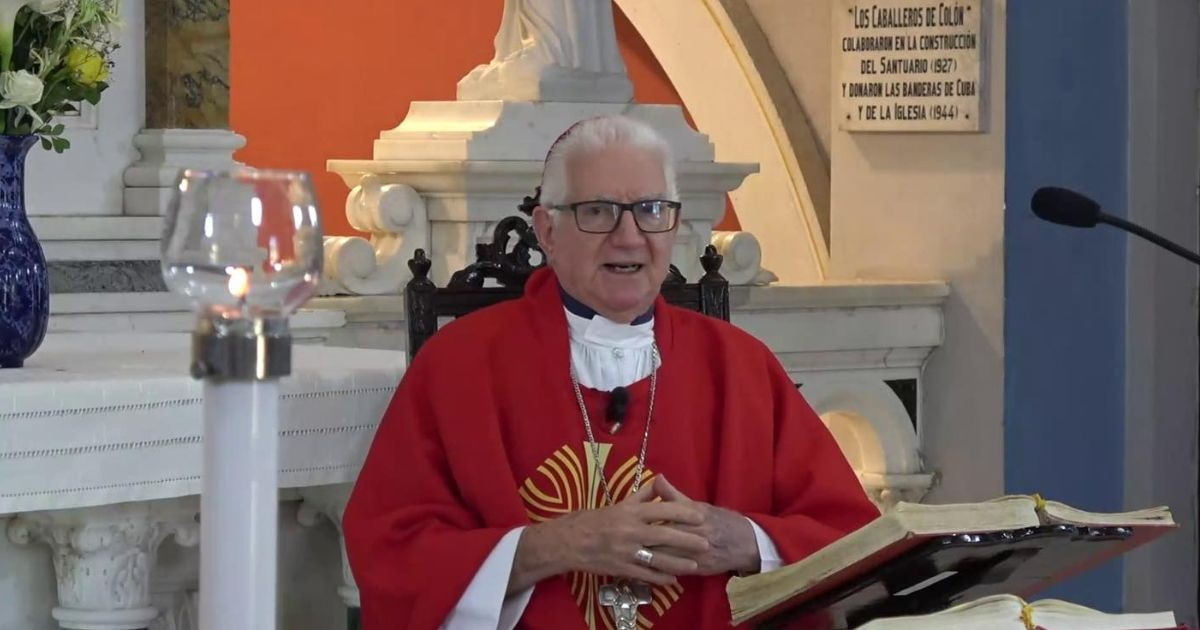
On Sunday, Archbishop Dionisio García Ibáñez of Santiago de Cuba emphasized the urgent need for Cubans to live "decently" and with "dignity." His remarks, delivered from the altar, addressed the "dramatic situations" the country is currently facing, along with the uncertainty surrounding its future.
During his homily at the Basilica Shrine of Our Lady of Charity in El Cobre, marking the Nineteenth Sunday in Ordinary Time, the archbishop connected biblical readings with the hardships confronting the Cuban people today.
"How can we, brothers, be confused in such dramatic circumstances as those we are experiencing, often unable to see the future?" García Ibáñez stated, referencing the story of the prophet Elijah.
He underscored the necessity for basic conditions to lead a dignified life: "We need to live with decency, to have what is necessary, what everyone needs to live with dignity, both materially and spiritually."
Further reflecting on the need to hear the "whisper of God," the archbishop contrasted this with the noise of grand speeches: "Not the boasting, not the loud voices, not the false promises," he said, stressing the importance of listening to what God's word may reveal to each individual.
His statements from Sunday add to a series of increasingly critical pronouncements he has made throughout 2026. In May, for instance, he declared that "Cuba must change" and called for "measures to alter the country's situation."
In June, he cautioned against those who "believe they have the right to do anything because of power," noting the harm such behavior causes. By July, he revisited the crisis, acknowledging the "oppression" of a populace where "so many people are asking for help" and "the aid is not enough."
Later that month, he lamented the exodus of young people from Cuba, questioned who would farm the fields, and described a nation forced to live "day by day" concerning essential needs like food, water, and money.
The archbishop's declarations align with a broader stance of the Catholic hierarchy regarding Cuba's national crisis. Early in 2026, the Conference of Catholic Bishops of Cuba demanded increasingly urgent changes and spaces for dialogue in response to the worsening economic and social conditions and the growing hopelessness among Cubans.
Understanding the Archbishop's Call for Change in Cuba
What did Archbishop García Ibáñez emphasize in his homily?
He stressed the need for Cubans to live "decently" and with "dignity," addressing the dramatic situations and uncertainty facing the country.
How does the archbishop view grand speeches and false promises?
He contrasts the "whisper of God" with the noise of grand speeches, emphasizing not to rely on boasting, loud voices, or false promises.
What broader stance does the Catholic hierarchy in Cuba take regarding the national crisis?
The Conference of Catholic Bishops of Cuba has called for urgent changes and dialogue in light of the worsening economic and social conditions.