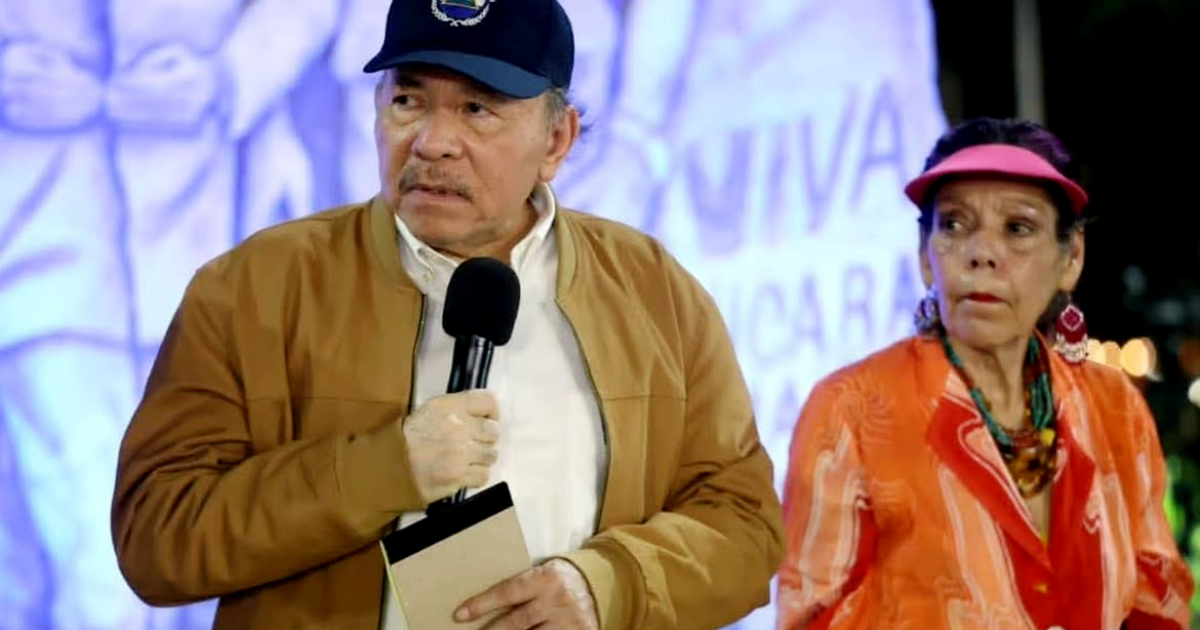
The United States Embassy in Nicaragua has raised alarms over efforts by Daniel Ortega and Rosario Murillo to modify the nation's Constitution, aiming to extend their grip on power while limiting political involvement from broad sectors of the population.
"Ortega and Murillo are rewriting Nicaragua's Constitution yet again to lengthen their rule and exclude significant portions of the Nicaraguan populace from political life," declared the U.S. diplomatic mission in a statement shared on the social media platform X.
Washington further criticized these actions, describing them as a reinforcement of the authoritarian regime spearheaded by Ortega and Murillo.
"This is not reform; it is the entrenchment of authoritarianism," the Embassy stated, urging an international response to the Nicaraguan regime's maneuvers. "Nations across our hemisphere must take meaningful actions to address this situation," it added.
Mounting Tensions Following Ortega's Warnings
The U.S. denunciation follows a series of political maneuvers and statements from Ortega that have sparked concerns regarding the future of Nicaragua’s electoral processes. In July, Ortega asserted he would not allow elections to facilitate the return of opposition groups to power.
Subsequently, Nicaraguan authorities announced that electoral processes would proceed but proposed excluding individuals and groups labeled by the government as "coup plotters" or "traitors to the homeland."
The National Assembly, dominated by the ruling party, confirmed it was working on constitutional changes related to the electoral system.
The United States responded with strong criticism. Secretary of State Marco Rubio openly challenged Ortega's actions and defended Nicaraguans' right to select their leaders freely.
Power Consolidation by Ortega and Murillo
These recent developments follow a sweeping constitutional reform driven by the Nicaraguan government between late 2024 and early 2025, which restructured the country’s institutional framework and solidified Rosario Murillo's role as co-president alongside Ortega.
Those changes expanded presidential powers over state institutions and extended the presidential term amid international accusations of increasing power concentration.
Washington's latest warning suggests these constitutional and electoral amendments might further restrict political competition and ease the continued rule of Ortega and Murillo.
During 2026, U.S. pressure on the Nicaraguan regime has also escalated. In June, Rubio labeled the Ortega-Murillo government as an "enemy of humanity," and Washington has imposed sanctions on officials and individuals linked to the power structure in Managua.
Through this latest pronouncement, the United States seeks to bring Nicaragua's case back into the regional spotlight, calling for other governments in the hemisphere to take concrete steps in response to the deterioration of political freedoms in the Central American nation.
U.S. Response to Nicaragua's Political Crisis
How is the U.S. responding to Nicaragua's constitutional changes?
The U.S. has condemned the constitutional changes as a move towards authoritarianism and has called for international action. Additionally, sanctions have been imposed on officials associated with the regime.
What are the implications of the constitutional changes proposed by Ortega and Murillo?
The changes aim to prolong Ortega and Murillo's stay in power and restrict political participation from diverse groups within Nicaragua, potentially solidifying their authoritarian control.
What has been the reaction of the Nicaraguan opposition to these changes?
The opposition has strongly criticized the changes, viewing them as a threat to democratic processes and a means to suppress dissent and political competition.