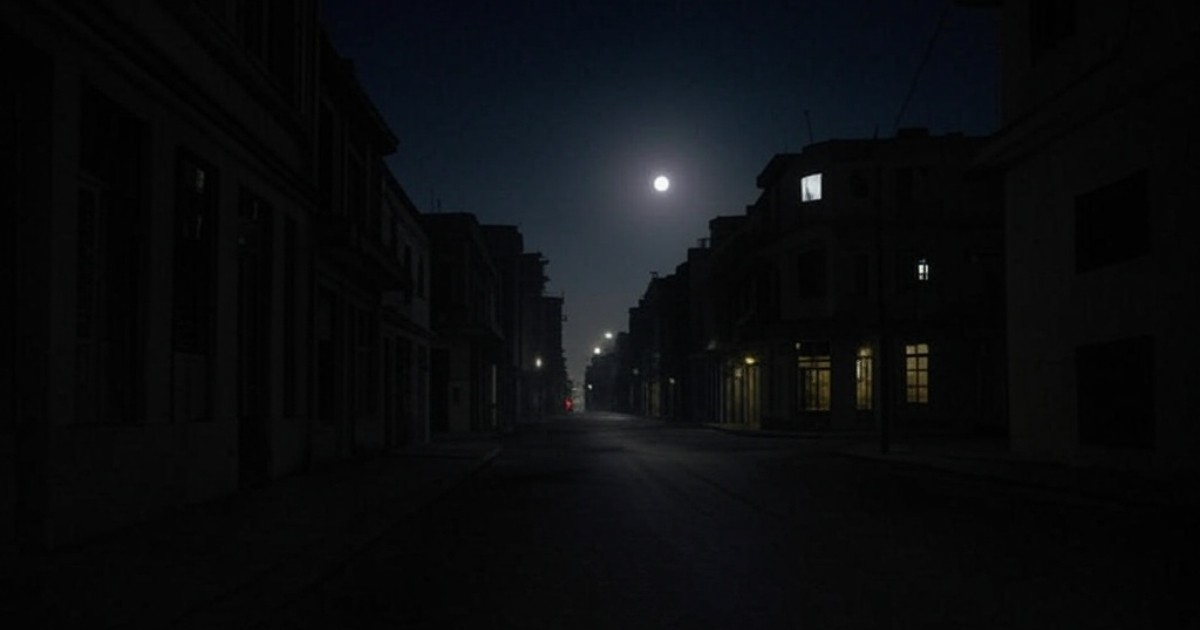
For three weeks, several towns in the Caimito municipality, located in Artemisa province, endured a power outage due to the theft of dielectric oil from transformers. This incident prompted a fiery public outcry from Cuban journalist and troubadour Fidel Díaz Castro, known on social media as "Eldiablo Díaz." He called for life imprisonment for those responsible.
In a Facebook post, Díaz Castro—former editor of the magazine El Caimán Barbudo and participant in the state TV program La Pupila Asombrada—detailed the collective anguish he witnessed firsthand during repair efforts in the area.
"They should be executed. I'm not saying this literally, to avoid spending time on replies, but they deserve 30 years or life imprisonment, with the confiscation of all property and personal effects (even their toothbrush), for stealing transformer oil. They should be tried for theft, wartime sabotage, treason, and near-genocide," the journalist wrote.
The Turmoil of Repair Efforts
Díaz Castro described the scene of linemen, local authorities, and residents from Caimito and nearby towns gathering at dawn around trucks bringing the much-needed oil to restore service. The event was surrounded by rumors, endless technical debates, prayers, and curses.
The wait stretched on for hours, complicated by an afternoon thunderstorm and the explosion of at least one transformer, which some had already predicted.
Living Conditions During the Outage
The journalist painted a stark picture of the conditions families endured during the outage: "Families with children spent more than 20 days under mosquito nets, without even a rechargeable fan, no cold water, buying light meals for the day... what we typically experience for 15 to 20 hours a day turned into an endless ordeal."
Díaz Castro also mentioned rumors about the arrest of suspects, noting that one allegedly left a note with names and details of the operations before committing suicide. This claim cannot be independently verified.
Broader Implications of Oil Theft
This theft has pushed even those who are typically aligned with the government to their breaking point, as demonstrated by Díaz Castro's harsh demands. The problem is not confined to Caimito. Vicente de la O Levy, the Minister of Energy and Mines, admitted before the National Assembly on July 29 that "the amount of oil stolen is nearly equivalent to what we produce during the period they steal," warning that some communities have gone up to 105 days without electricity due to damage to specialized, hard-to-replace transformers.
Earlier in May, a 36-year-old man in the same province of Artemisa received a 12-year prison sentence for stealing 70 liters of dielectric oil from a substation in Cayajabos, an act that could have left around 4,000 people without service. In Holguín, oil theft led the list of crimes against the electrical system until the end of July, accounting for more than half of the 42 incidents recorded in that province.
The stolen oil is resold on the black market as a substitute fuel for tractors, fetching between 500 to over 1,000 Cuban pesos per liter. Depending on its capacity, a transformer can cost anywhere from $1,000 to over $6,000 on the international market.
Despite Supreme Court Ruling 475/2025—which mandates classifying these acts as sabotage against the National Electro-Energetic System, with penalties ranging from seven to 30 years, life imprisonment, or even the death penalty in severe cases—the thefts continue to multiply, leaving entire communities in the dark for weeks or months.
Understanding the Impact of Transformer Oil Theft in Cuba
Why is dielectric oil theft a significant issue in Cuba?
Dielectric oil theft is significant because it disrupts electrical service, leaving communities without power for extended periods. It also represents a considerable economic loss as the oil is resold on the black market, and replacing damaged transformers is costly and challenging.
What are the consequences of stealing transformer oil in Cuba?
The consequences include legal penalties, such as imprisonment ranging from 7 to 30 years, life sentences, or even the death penalty in extreme cases. These acts are considered sabotage against the National Electro-Energetic System.
How does the theft of transformer oil affect Cuban communities?
Communities suffer from prolonged power outages, affecting daily life and economic activities. Families are forced to endure harsh living conditions, with limited access to essential services like refrigeration and cooling.