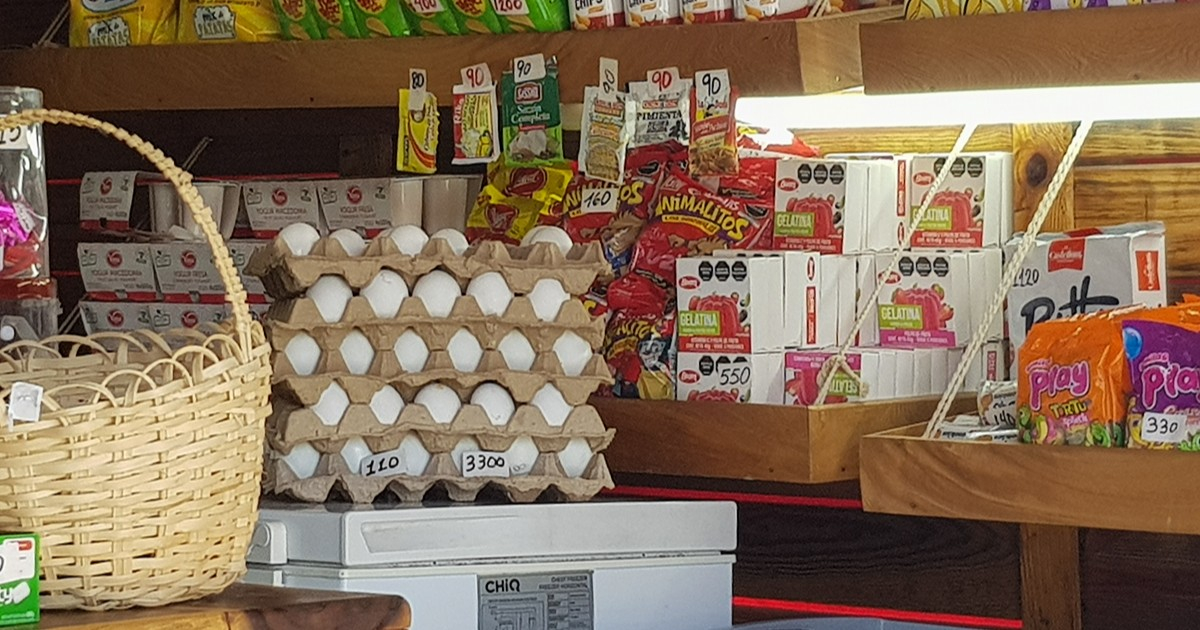
Cuban economist Pedro Monreal released a scathing critique this Sunday regarding the package of 176 economic measures approved by the National Assembly in June 2026. He asserted that the so-called liberalizing focus quickly unraveled within two months, as provinces swiftly reinstated price caps and "reference prices."
On his Facebook page, "El Estado como tal," Monreal summed up his analysis with a blunt statement: "176 policies and one lesson learned—nothing."
Rapid Reinstatement of Controls
The immediate trigger for Monreal's critique was the wave of provincial controls reintroduced in early August, only weeks after the national government had removed similar restrictions. For instance, Villa Clara set maximum prices on August 7 through Agreement No. 127 of the Provincial Council of People's Power: eggs at 110 pesos each, oil at 2,500 pesos per liter, and powdered milk at 3,465 pesos per kilogram. On the same day, San Luis in Santiago de Cuba established "reference prices" with oil at 2,200 pesos and eggs at 120 pesos, following similar actions by Guantánamo and Holguín just days before.
However, these price caps were immediately ignored in some areas. In Placetas, almost simultaneously with Villa Clara's announcement, oil was sold for 4,000 pesos per bottle, and eggs ranged between 150 and 160 pesos each. Cuban internet users responded with skepticism, with one commenting, "I'll believe it when I see it," and another noting, "There's a long way from saying to doing. Let's see if it holds true not only in San Luis but throughout Santiago de Cuba."
Structural Rigidities and Inflation
For Monreal, this reversal was not unexpected but rather the logical outcome of a design flaw. "The quick return to price caps or 'reference prices' confirms a failure in sequencing and diagnosing the supply side," he wrote. He argued that the regime liberalized prices without first addressing the structural rigidity of supply: "Liberalization occurred without first reducing the structural rigidity of supply stemming from depressed national production and shortages of inputs and currency. The foreseeable result was an inflationary spike with devastating effects on citizen welfare, forcing a reversal and repeating the same cycle observed since 2021."
The economic situation is dire, with concrete figures illustrating the escalation: oil prices surged from about 1,500 pesos in April to over 4,000 pesos in August, peaking at 7,000 pesos per liter. This is in stark contrast to a minimum wage of 3,210 pesos monthly against a basic basket estimated at around 96,000 pesos per month—a gap of about 30 times. Official inflation reached 18.27% year-on-year in June 2026, according to the National Office of Statistics and Information.
Lessons from Past Failures
Monreal draws a parallel with the failed 2021 "Tarea Ordenamiento," highlighting that the current situation is even more severe in terms of planning: "The previous failure with the 'ordenamiento' prices at least had an explicit and quantified design for correcting relative prices. Now there is not even public evidence of a quantified prior design of relative prices for the package of 176 measures." That reform led to a Consumer Price Index inflation of 77.3% in 2021, far exceeding the 40% projected by the regime.
He clarifies that the rollback does not mean price liberalization is unnecessary, but rather that the approach was flawed: "The change in direction does not invalidate the need to abandon price liberalization, but it highlights, once again, that doing so abruptly and without a productive cushion or sufficient social protection creates more distortion than solution."
Monreal places the blame squarely on the upper echelons of power. "What happened can be interpreted as an indicator of technical weaknesses in the design and execution of economic policy, particularly the difficulties of the Political Bureau of the PCC, the Council of Ministers, the Council of State, and the National Assembly in adequately internalizing evident lessons," he stated. An internet user summed it up succinctly: "They created the problem by liberating prices and establishing free supply and demand."
Monreal concluded his analysis with a warning about the institutional consequences of the turnaround: "I am unsure if these institutions understand the negative impact this could have on the credibility of the entire package of 176 measures."
Understanding Cuba's Economic Challenges
Why did the Cuban government reintroduce price controls so quickly?
The reintroduction of price controls was a response to the inflationary spike caused by the abrupt liberalization of prices without addressing underlying supply issues, leading to unsustainable living costs for citizens.
What were some of the consequences of the failed economic measures?
The failed measures resulted in skyrocketing prices for essential goods, a significant gap between wages and the cost of living, and eroded public trust in the government's economic policies.
How does the current situation compare to past economic reforms in Cuba?
The current situation is more severe than past reforms, such as the 2021 "Tarea Ordenamiento," as the recent measures lacked a clear and quantified plan for adjusting relative prices, leading to greater economic instability.