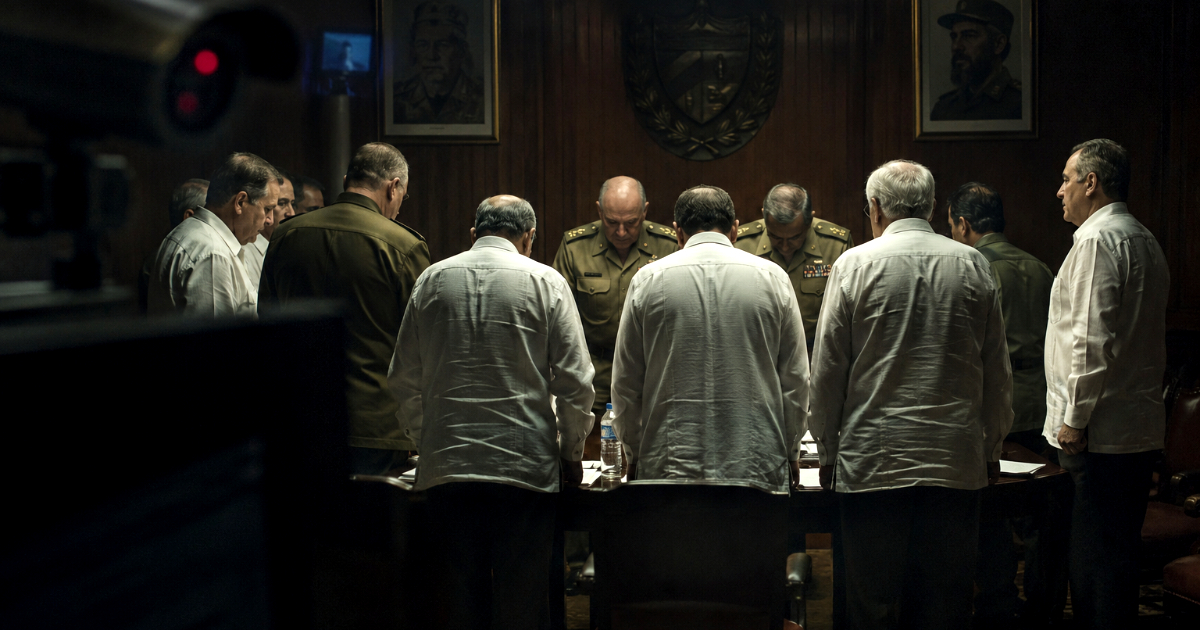
The Central Intelligence Agency is launching a thorough investigation into the obscure financial channels and business dealings of Cuba's political leaders, both within the island and internationally, as reported by The New York Times. This comes with the creation of a new special task force by the agency dedicated to focusing on Cuba.
Officials within this unit are tasked with analyzing newly gathered intelligence from the United States, aiming to uncover internal insights into the activities of the Cuban leadership. They are particularly focused on tracking opaque financial flows and business operations, both domestically and abroad, according to the newspaper.
This revelation touches on a particularly sensitive area for a regime known for its lack of transparency regarding the wealth of its leaders and the economic structures tied to its power.
While The Times does not specify individuals under investigation, nor does it claim that the CIA has already uncovered hidden fortunes, it does reveal that Washington is allocating intelligence resources to determine the whereabouts of the money, the businesses involved, and the movement of these resources in and out of Cuba.
GAESA: A Key Player in Cuba's Financial Landscape
The main focus of attention is the Grupo de Administración Empresarial S.A. (GAESA), a military-controlled conglomerate that dominates crucial sectors such as tourism, finance, foreign exchange commerce, real estate, and other businesses.
Financial documents leaked in recent years have shed light on billions of dollars accumulated within GAESA's structures while Cuba endures a severe economic crisis. Washington has further accused this military conglomerate of managing an extensive network of foreign assets valued in the billions.
The exact scale, ownership, and ultimate destination of these assets remain subjects of investigation, but GAESA exemplifies the significant opacity surrounding the finances of the Cuban elite.
Independent Journalism's Role
For years, independent journalists have endeavored to piece together other aspects of this intricate network.
Investigations reported by CiberCuba have uncovered foreign companies linked to family members of the late General Luis Alberto Rodríguez López-Calleja, who was Raúl Castro's former son-in-law and head of GAESA until his death in 2022.
Various properties and businesses connected to descendants of the elite have also come to light. For instance, CiberCuba documented Vilma Rodríguez Castro, Raúl Castro's granddaughter and López-Calleja’s daughter, being associated with the rental of a luxury residence in Havana through international platforms.
Independent media and social media posts have consistently highlighted businesses, properties, automobiles, travel, and the lavish lifestyles of the children and grandchildren of generals, ministers, and other high-ranking officials.
Many of these cases provide merely indications or information insufficient to prove the existence of hidden fortunes or, moreover, their illicit origins.
Implications of U.S. Intelligence Efforts
The United States is stepping up its efforts to uncover these financial mysteries with resources unavailable to media outlets, aiming to reconstruct corporate structures, identify real beneficiaries, and track assets and financial transactions.
The most explosive part of the strategy disclosed by The Times is that the gathered information may not remain classified. The CIA might eventually release details about these financial flows and business operations to influence both the Cuban leadership and public opinion, employing a strategy it has used against other adversaries, including Russia.
This financial investigation is part of a broader intelligence initiative. The Trump administration recently elevated Cuba to a "Priority 1" status within its National Intelligence Priorities Framework, alongside nations like China, Russia, and Iran.
Agencies such as the NSA and the National Geospatial-Intelligence Agency have begun dedicating increased resources and collection methods, including satellites, towards Cuba. This influx of new information will also support the work of the CIA's special task force.
The longstanding opacity of the Cuban system has made it exceedingly difficult to distinguish rumors about the purported fortunes of the ruling class from what can be proven with documentation.
The New York Times does not claim that the CIA has all the answers yet. What is new is that the United States has decided to pursue them and may eventually make them public.
Understanding the CIA's Investigation into Cuban Elite Finances
What is the CIA's new task force in Cuba focusing on?
The CIA's new task force is concentrating on uncovering and tracking opaque financial flows and business dealings of the Cuban elite, both within the island and internationally.
Why is GAESA a significant focus in the investigation?
GAESA is a significant focus due to its control over strategic sectors in Cuba and its accumulation of billions of dollars in assets, contributing to the opacity of the Cuban elite's finances.
How can the CIA's findings impact the Cuban regime?
The CIA's findings could be publicly disclosed to influence the Cuban leadership and public opinion, potentially using a strategy applied previously against other adversaries.