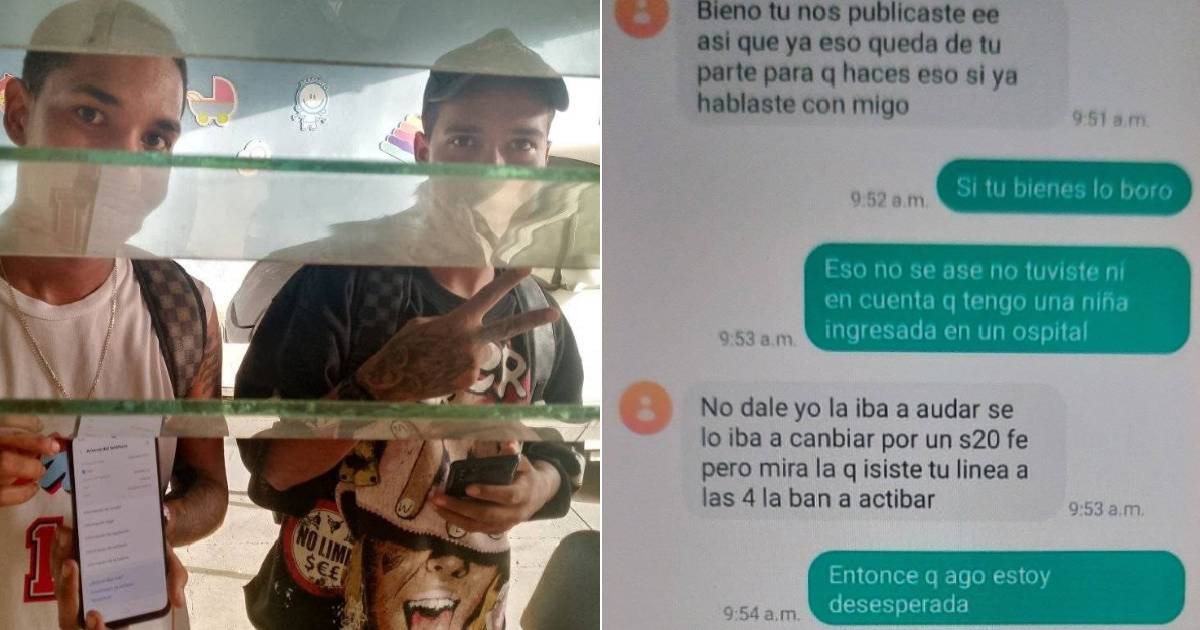
A woman in Cuba shared her ordeal on a Facebook group for buying and selling used phones in Havana after discovering she had been duped into purchasing a stolen Samsung A17. The device was subsequently blocked by the state-run telecommunications monopoly, Empresa de Telecomunicaciones de Cuba (Etecsa).
Marimar Rial Molina, who has been staying at a Havana hospital with her baby, decided to buy the phone as her old Samsung J2 was unreliable. With no family or friends in the city, she needed a reliable means of communication.
Rial recounted how the sellers delivered the phone to the hospital, aware of her circumstances. However, the day after the purchase, her new line was blocked. An Etecsa employee informed her that the phone had been reported stolen.
The Police's Inability to Act
Attempting to file a complaint, Rial approached the police, only to be told that they couldn't process her report due to a lack of system and connectivity. Frustrated, she returned to the hospital and tried reaching out to the sellers.
In her post, she mentioned that one of the sellers initially answered but hung up once he understood her grievance. Subsequently, their phone was turned off, prompting Rial to take her story to social media.
Community Reactions and Accusations
After sharing her experience, another woman accused Rial of falsely claiming phones were stolen after purchasing them. Rial investigated the sellers' profiles and alleged that they were involved in selling stolen phones, though she lacked independent verification for these claims.
The post attracted numerous comments criticizing the police's response. Some users argued that a report should be accepted regardless of connectivity issues, while others advised Rial to return to the authorities with evidence like photos and documentation.
Comments also included similar accusations against the sellers and references to a location in Lawton known for such activities. One user recounted buying a stolen phone and being detained, though this account also lacked independent confirmation.
Escalating Crime and Energy Crisis
This incident highlights the rising crime rates in Cuba, with the Cuban Citizen Audit Observatory (OCAC) documenting a dramatic increase in verified crimes. In 2025, 2,833 crimes were reported, a 115% increase from 2024 and a staggering rise of 337% from 2023.
Robberies, especially of cell phones, are particularly concerning as mobile phones often serve as the sole link for Cuban families to their relatives abroad and a crucial means for receiving remittances.
The ongoing energy crisis exacerbates these issues, with power outages exceeding 20 hours daily, forcing citizens to gather near windows and doorways for signal or fresh air, thus becoming targets for theft.
In areas like Vedado, the frequency of cell phone thefts has led residents to form nighttime patrols due to inadequate police intervention.
Although there is a legal framework intended to curb the resale of stolen devices, including a 2016 resolution requiring Etecsa to blacklist stolen phones based on their IMEI, citizens claim the system is ineffective and rarely enforced.
Understanding the Surge in Cell Phone Thefts in Cuba
Why are cell phone thefts increasing in Cuba?
Cell phone thefts are on the rise due to the economic crisis, which has made phones a valuable commodity. Additionally, the energy crisis leads to more opportunities for theft as people gather in vulnerable locations seeking connectivity.
What steps can be taken to prevent buying a stolen phone?
To avoid purchasing a stolen phone, buyers should request proof of purchase or ownership from the seller, verify the IMEI with Etecsa for any theft reports, and ideally, buy from reputable sources or individuals.
How does the energy crisis contribute to crime in Cuba?
The energy crisis exacerbates crime by causing frequent and prolonged power outages. These outages force people to seek fresh air or connectivity in public spaces, increasing their exposure to potential thefts and assaults.