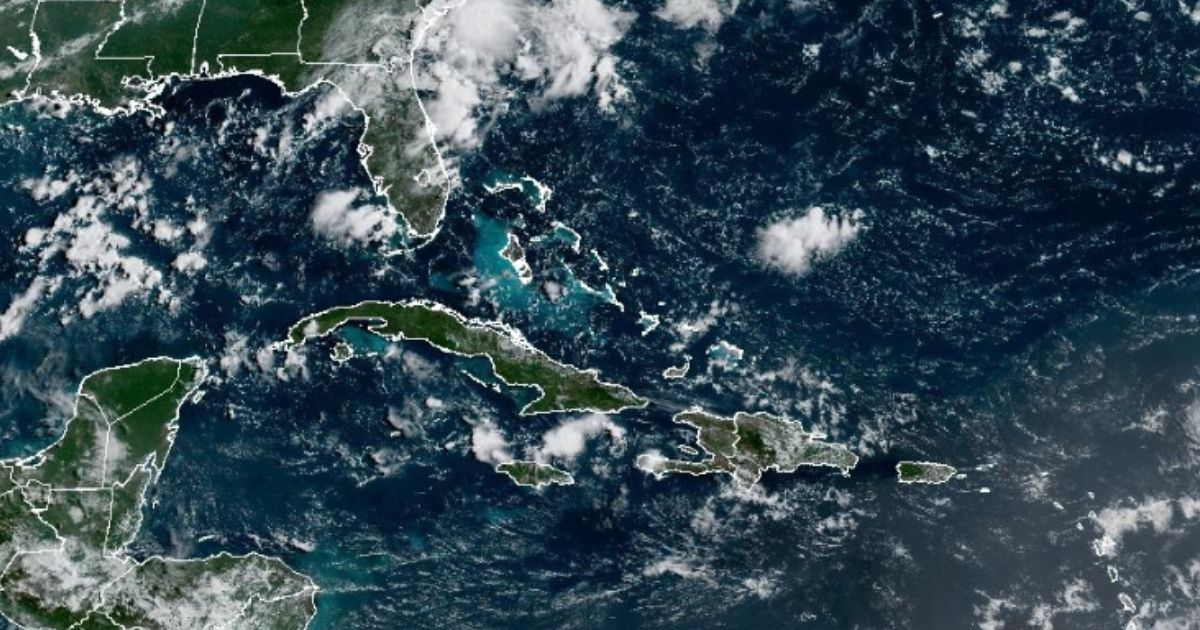
The 2026 Atlantic hurricane season is predicted to end with between two and six hurricanes, according to a recent update from the U.S. National Oceanic and Atmospheric Administration (NOAA). The agency continues to predict a season with below-average activity.
In its latest report released last Thursday, NOAA adjusted its forecast to expect between seven and 13 named storms, of which two to six may become hurricanes.
Among these, up to two could escalate into major hurricanes, characterized by winds reaching at least 111 miles per hour.
The agency now estimates a 75% chance that the cyclone activity will remain below normal levels, compared to a 20% likelihood of a near-average season and only a 5% chance of an above-normal season.
This updated forecast strengthens the scenario suggested in May, when NOAA first projected a less intense-than-usual season.
At that time, the expectation was for eight to 14 named storms, three to six hurricanes, and one to three major hurricanes.
As of August 6, only two named tropical storms, Arthur and Bertha, had formed, neither of which had intensified to hurricane strength.
Both are included in the revised forecast range of seven to 13 storms for the entire season, running from June 1 to November 30.
Despite the relative calm observed so far, the danger has not passed. The National Hurricane Center warned at the beginning of August that this month typically sees a rise in tropical activity, with the peak of the Atlantic season occurring around September 10.
NOAA attributes the limited formation and strengthening of cyclones in the Atlantic to El Niño.
The phenomenon emerged in the equatorial Pacific in June, increasing wind shear, a condition that hinders the organization and intensification of tropical storms.
On average, the Atlantic experiences 14 named storms, seven hurricanes, and three major hurricanes. The figures projected for 2026 fall below these averages.
However, NOAA emphasized that a forecast of reduced activity does not eliminate the risk for regions that could be impacted by a cyclone.
The agency also noted that rainfall associated with tropical storms can cause significant damage, even if the system does not develop into a hurricane.
Furthermore, NOAA clarified that its seasonal forecast measures expected overall activity across the Atlantic basin and does not specify where a cyclone might make landfall.
The potential paths and impacts are determined in the short term through advisories and forecasts from the National Hurricane Center.
Questions About the 2026 Atlantic Hurricane Season
What is the predicted number of hurricanes for the 2026 Atlantic season?
The NOAA predicts between two and six hurricanes for the 2026 Atlantic season.
How does El Niño affect hurricane activity in the Atlantic?
El Niño increases wind shear, which makes it difficult for tropical storms to organize and intensify, thus limiting hurricane activity in the Atlantic.
Why is a lower activity forecast still a concern?
Even with a forecast of reduced activity, regions can still be at risk from cyclones, and tropical storm-associated rainfall can cause significant damage.