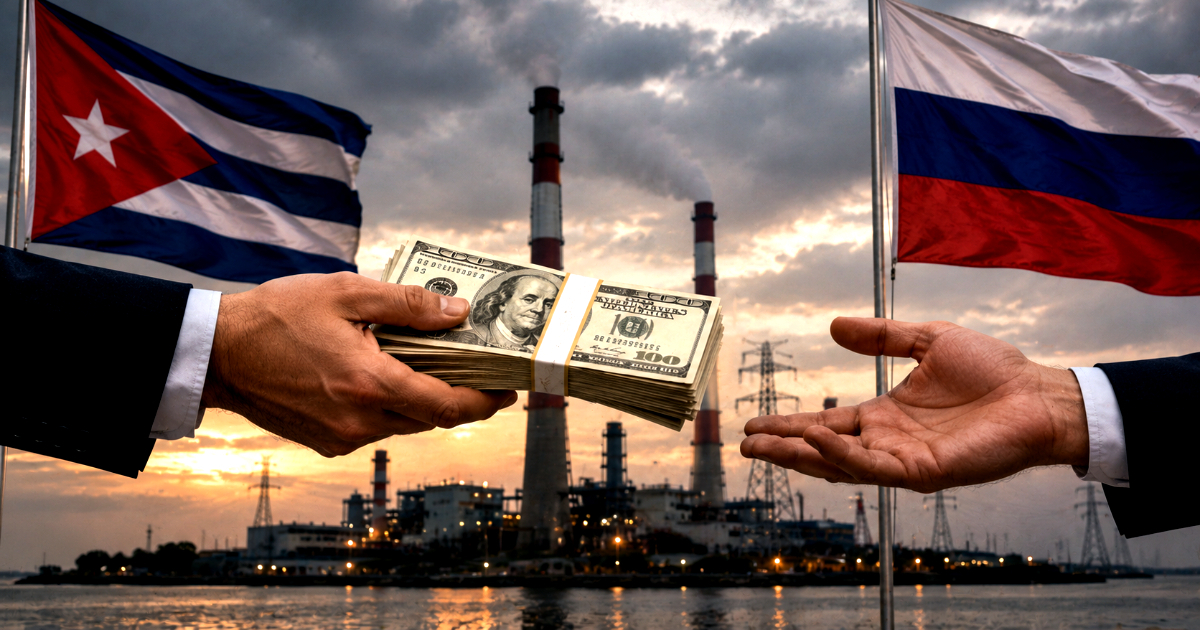
A Russian energy expert has highlighted a key obstacle preventing Moscow from stepping in to rescue Cuba amidst its severe National Electric System (SEN) crisis: the lack of funds to pay for the required investments.
"Cuba is financially insolvent. They need to find a way to pay us first. Then we can discuss further," stated Igor Yushkov, an expert from the Financial University under the Russian government, as quoted by Finanzas Mail and reported on Friday by Gazeta.Ru.
Yushkov asserted that Russia possesses the technical capability to help modernize Cuba's energy infrastructure, but he emphasized that any cooperation of such magnitude must be commercially viable for Moscow.
The Deteriorating Cuban Energy System
The Cuban energy system is severely outdated, leading to frequent power outages on the island. At the same time, energy consumption continues to rise, with no significant modernization efforts or new power generation capacities being added," he explained.
This analysis aligns with the daily struggles faced by Cubans: an aging electrical grid plagued by frequent breakdowns at thermoelectric plants, insufficient generation capacity, and a critical dependency on imported fuel.
Potential for Technical Cooperation
According to Yushkov, there are extensive possibilities for technical collaboration.
"Russian companies could construct power plants in Cuba, arrange gas or coal supplies, and even consider a nuclear power project. However, it is crucial to first determine how the republic would compensate for these costs," he noted.
This warning is significant because the Cuban regime has been attempting for months to attract Russian capital, especially in the energy sector.
Efforts to Attract Russian Investment
In June, during the St. Petersburg International Economic Forum, Cuban Deputy Prime Minister Óscar Pérez-Oliva Fraga invited Russian companies to explore business opportunities in power generation and distribution, energy efficiency, renewable sources, and refineries.
Havana even offered incentives to attract Russian capital into the fuel sector, including the potential for direct sales in both wholesale and retail markets.
During the same event, Russian Deputy Prime Minister Dmitri Chernishenko conveyed a considerably more optimistic message, assuring that Russian companies were willing to invest in Cuban projects for the long term, "despite external pressure."
Yushkov's statements now introduce a critical question into these cooperation promises: who will ultimately finance the investments?
Challenges in Russian Energy Assistance
In recent months, Moscow has served as one of Havana's primary energy lifelines, yet Russian shipments have not resolved the structural deficit.
The 100,000 tons of crude oil donated by Russia and received in late March provided temporary relief to the electrical system. Once that oil was consumed, blackouts surged again.
The situation worsened when the Russian tanker Universal spent weeks at sea without completing its anticipated journey to Cuba, coinciding with one of the most critical fuel shortages on the island.
Adding to Moscow's challenges, on August 3, CiberCuba reported that Ukrainian attacks on Russian refineries were reducing Russia's capacity to maintain fuel shipments to Cuba.
A day earlier, Russia had announced its decision to extend until 2027 the existing diesel and gasoline export restrictions, precisely due to the fuel crisis stemming from Ukrainian attacks on its energy infrastructure.
Political Risks and Russia's Own Energy Issues
Yushkov also mentioned the risk posed by dialogues between Cuban and U.S. authorities.
According to the expert, a shift in Havana's political alignment could prevent Russia from recouping its investments in major energy projects.
The political dimension is not new. Moscow has acknowledged that the Cuban situation is part of its conversations with Washington, while publicly maintaining its alliance with Havana.
The specialist added that Russia has its own energy challenges, highlighting electricity shortages in certain regions of the country, including the south and the Far East.
Therefore, he suggested that unless Cuba presents a convincing payment mechanism, it would be more rational for Moscow to allocate those resources toward modernizing its own infrastructure.
These statements contrast with the repeated political promises of cooperation between Havana and Moscow and expose a problem that goes beyond Russia's technical capacity to assist Cuba: the island's economic deterioration and its limited ability to finance the multi-billion-dollar investments needed for its electrical system.
Key Questions on Russia-Cuba Energy Relations
Why is Russia hesitant to help Cuba with its energy crisis?
Russia is hesitant to assist Cuba due to the island's financial insolvency and lack of funds to pay for necessary investments. Any cooperation must be commercially viable for Moscow.
What are the potential areas of cooperation between Russia and Cuba in energy?
Potential areas of cooperation include constructing power plants, providing gas or coal supplies, and exploring nuclear power projects. However, financial compensation from Cuba is a prerequisite.
How do political dynamics affect Russia's energy assistance to Cuba?
Political dynamics, including dialogues between Cuba and the U.S., could affect Russia's ability to recover investments. A shift in political alliances could jeopardize Russia's financial interests.