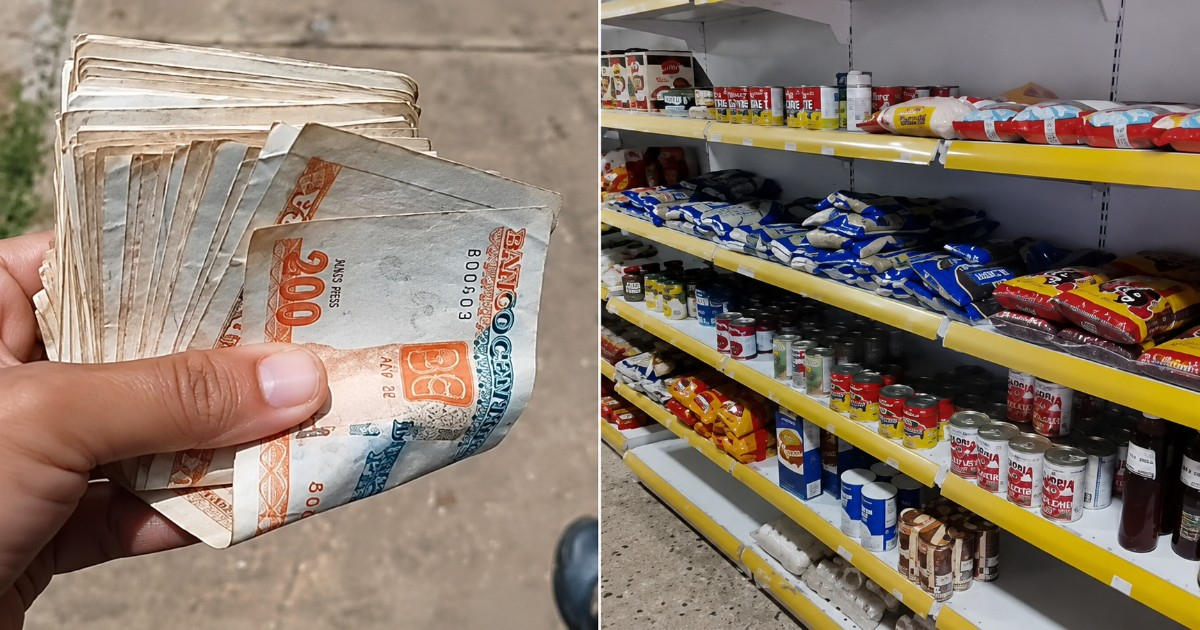
On Friday, the Municipal Administration Council of San Luis, located in Santiago de Cuba, revealed new reference prices for essential retail goods. This announcement comes after an extraordinary session held in response to what the official statement described as "the indiscriminate rise in prices of oil and other products like rice, chicken, and eggs in retail markets," according to CMKC Radio Revolución.
The agreed-upon prices are as follows: oil capped at 2,200 pesos per unit, chicken at a maximum of 600 pesos per pound, imported rice up to 750 pesos per kilogram, domestic rice at 250 pesos per pound, and eggs at a limit of 120 pesos each.
The authorities were quick to clarify the nature of these prices, noting, "These are not fixed prices but rather the result of an economic assessment of marketing costs and expenses." In simpler terms, while these are not strict price ceilings, selling above these rates could result in temporary closure of the business for up to three months, product confiscation and forced sale, and fines as per existing laws. Essentially, the difference seems to be in name only.
Public Skepticism and Historical Context
Social media reactions have ranged from cautious optimism to outright skepticism, reflecting the Cuban public's general sentiment towards such announcements. "I'll believe it when I see it," commented one user. Another expressed doubt, saying, "From words to action is a long journey, let's see if it's enforced not just in San Luis but throughout Santiago de Cuba." A third user demanded, "It must be implemented and not just remain rhetoric, because the people can't take it anymore."
Skepticism is deeply rooted in history. In June 2026, President Miguel Díaz-Canel himself acknowledged that previous price caps led to shortages, increased illegal activities, and reduced revenue. By July 2023, Vladimir Regueiro Ale, the Minister of Finance and Prices, admitted to Parliament that such measures had failed amidst an annual inflation rate of 45%.
Root Causes of the Price Surge
Ironically, the price surge San Luis is trying to curb was sparked by a regime decision: the Ministry of Finance and Prices' Resolution 150/2026, which was published on June 20, removed retail price caps for imported edible oils and repealed the previous limit of 990 pesos per liter. Since then, oil prices have spiraled out of control, jumping from around 1,500 pesos in April to over 4,000 pesos in August, with peaks reaching as high as 7,000 pesos. A resident from the provincial capital bluntly stated, "And what about Santiago de Cuba's capital? I've been eating boiled food for days, here a bottle costs 6,000."
Similar Measures Across Regions
San Luis is not acting alone, though its approach lacks originality. On August 5, Guantánamo set an identical reference price of 2,200 pesos for oil using the same "not a cap but a cost reference" formula, and Holguín followed suit days later in Moa and Banes. One social media user noted, "It feels like a copy-paste of the official note from Guantánamo, just changing the phone numbers."
The Guantánamo precedent doesn't inspire confidence either: in February 2026, a similar effort there led to 1,538 fines and 162 forced sales without achieving lasting price stabilization.
Numerous commentators are calling for these measures to extend to Santiago de Cuba's capital, Palma Soriano, Granma, and Cienfuegos, while pointing out that even these "reference" prices are unaffordable. A carton of 30 eggs at 120 pesos each would cost 3,600 pesos, exceeding a minimum monthly salary. "Everything is still too expensive, not in line with salaries and pensions," noted one user. Another was blunt about the root of the problem: "They created this issue by freeing prices and establishing a free market system." A commentator cautioned about the risk of history repeating itself: "Now it needs to be enforced systematically so it doesn't end up like always, where actions fade and even inspectors get corrupted."
FAQs on Price Control in San Luis, Cuba
What are the new reference prices set in San Luis, Cuba?
The new reference prices are 2,200 pesos for oil, 600 pesos per pound for chicken, 750 pesos per kilogram for imported rice, 250 pesos per pound for domestic rice, and 120 pesos per egg.
Why are people skeptical about these price controls?
There is historical skepticism because past price controls have led to shortages, illegal activities, and were ultimately deemed unsuccessful, as admitted by government officials.
What triggered the recent price surge in San Luis?
The price surge was triggered by a government resolution that removed price caps on imported edible oils, leading to unchecked price increases.