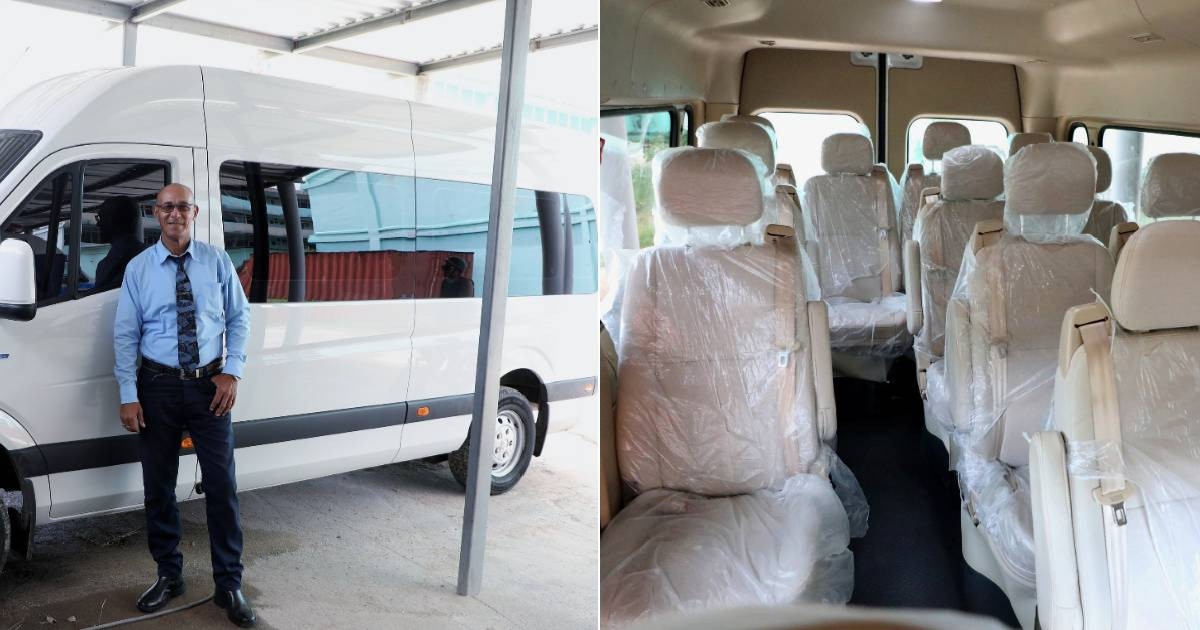
In a bid to address the severe transportation crisis, the Public Bus Company of Isla de la Juventud has initiated the rental of electric vehicles to individuals, businesses, and organizations. This comes at a time when the island is grappling with fuel shortages, reduced bus routes, and frequent power outages.
Pablo Martínez Pérez, the director of the company, revealed to Radio Caribe that the municipality has received a fleet comprising five electric tricycles, two cargo vans, a large van, and a 14-seat air-conditioned bus.
The vehicles are set to serve various purposes. The cargo vans are already being used for bread distribution, while the larger bus is available for rental by the general public, particularly on weekends.
Additionally, the large van can be rented for small moving jobs or transporting household appliances, as reported by the official newspaper Victoria.
These vehicles are also utilized by Public Health services to transport doctors to different communities on Tuesdays and Thursdays, where they provide specialized care to the elderly and children.
Rentals can be arranged directly at the Public Bus Company, located opposite the main bus stop in Nueva Gerona, with costs varying based on the distance traveled, although no specific rates were disclosed.
Electric Vehicles as a Solution Amid Crisis
The introduction of these electric rental vehicles coincides with a critical situation in the island's public transportation system. Since February, the main land routes have been heavily reliant on fuel availability, and service to Cocodrilo has been cut to just once a week.
The maritime transport situation is no better. In late May, the local government made an urgent appeal on social media, requesting state enterprises, private actors, and the general public to contribute an electric motor or wiring needed to repair the ferry Perseverancia and restore the maritime link between Nueva Gerona and Batabanó.
Meanwhile, the Ministry of Transportation reduced maritime services to a single weekly trip starting June 20.
Energy Shortages Exacerbate Mobility Challenges
Energy shortages have further strained mobility on the island. In May, residents faced up to 18 hours of power outages daily, and by July, they were left with just two hours of electricity each day.
This decline is part of a nationwide crisis. In January, the government admitted that public transportation was meeting only 42% of its planned targets.
By July, train operations had plummeted by 74%, and in Camagüey, state-run transportation services dropped from serving 350,000 passengers daily to just 15,000.
In response, Transport Minister Eduardo Rodríguez Dávila introduced new measures this week, which include lifting the limit on purchasing more than six vehicles over five years and allowing non-state entities to assemble electric vehicles.
This proposal has been met with skepticism among Cubans, who question how these vehicles will operate given the island's electricity scarcity.
This concern is particularly relevant in Isla de la Juventud, where the new electric vehicles depend on the very electricity that is in short supply.
Thus, the availability of electric vehicles for rent emerges as a novel mobility option in a region where the fundamental challenge remains accessing transportation and the energy needed to power it.
Understanding the Transportation Crisis in Isla de la Juventud
What types of electric vehicles are available for rent in Isla de la Juventud?
The island offers five electric tricycles, two cargo vans, a large van, and a 14-seat air-conditioned bus for rent.
How has the transportation crisis affected daily life in Isla de la Juventud?
The crisis has led to reduced bus routes, a decrease in maritime services, and severe electricity shortages, impacting the island's mobility and daily activities.
What measures has the Cuban government taken to address the transportation issues?
The government has lifted restrictions on purchasing multiple vehicles and permitted non-state entities to assemble electric vehicles, though doubts remain about how they will be powered amid electricity shortages.