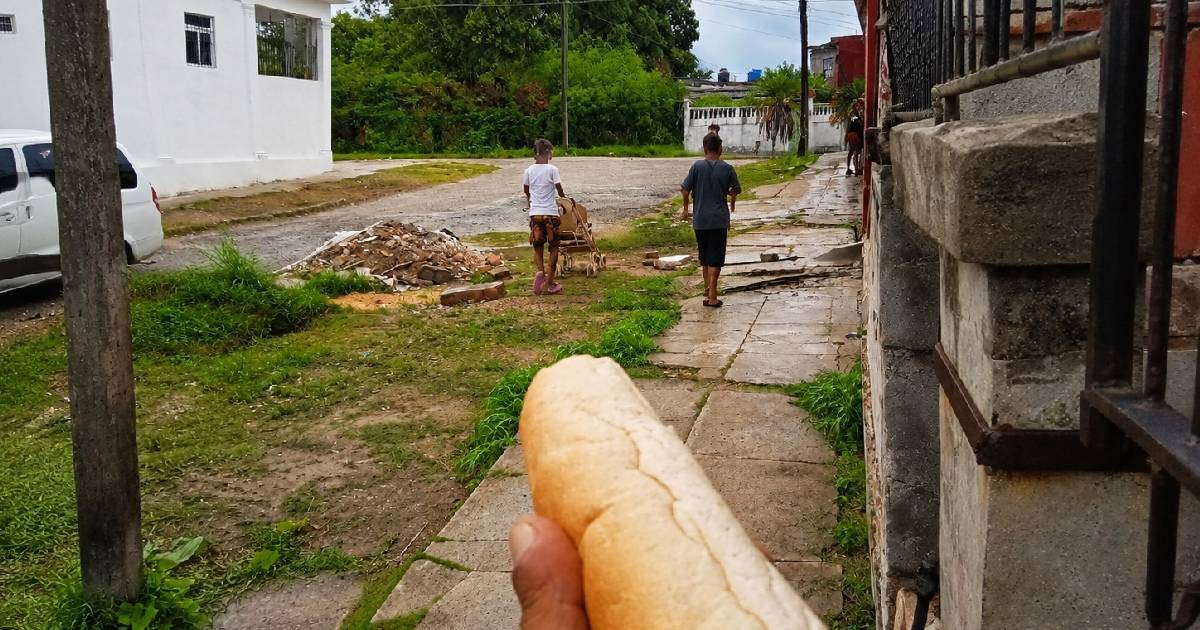
A photograph shared on Facebook by Yoel Cruz casts a spotlight on one of the harsh realities of Cuba's ongoing crisis: two young boys, ages 13 and 11, walk the streets of a modest neighborhood selling baguette-style bread to support their mothers.
The image, circulated with the hashtag #SOScuba, has sparked outrage on social media, reigniting discussions about the rise of child labor on the island.
"Why do two kids, aged 13 and 11, have to worry about supporting their moms?" Cruz questioned in a post titled, "Cuba Hurts. The Little Bread Sellers."
Increasing Reports of Child Labor in Cuba
This incident is far from isolated. The Cuban Conflict Observatory (OCC) recorded 71 reports of child labor and begging in Cuba by 2025, and cases documented in 2026 have surged across various provinces.
Earlier this year, a teenager was seen selling bread for 200 pesos per loaf in a Havana building. In June, a 10-year-old ventured out to sell coconuts to help provide for his mother and siblings.
Children Forced into Work Amid Economic Struggles
In July, another young boy explained his actions with a poignant statement: "My mom is sick, I do this to help her." Similarly, in May, a 14-year-old sought work under the same premise: "I work to help my mom." The following month, an 11-year-old was collecting cans on the street to contribute to his family.
These cases have been reported in Havana, Santiago de Cuba, Las Tunas, Camagüey, and Sancti Spíritus. In June, the Food Monitor Program warned about the increasing phenomenon, noting children engaged in street vending and even operating pedicabs.
Legislation vs. Reality
Despite Cuban laws—such as the Labor Code and Law 178 of 2025—prohibiting the employment of minors under 17 and classifying child begging as exploitation, necessity often overrides regulation. In June, the Union of Young Communists (UJC) denied the existence of child labor in Cuba, a statement that fueled public outrage online.
The economic downturn is a significant factor in this issue. Since 2020, Cuba's economy has shrunk by 15%, with an additional 5% decline in 2025 alone.
As of July this year, meeting basic needs required approximately 96,060 pesos monthly—around 14 times the official average salary. A typical pension is about 3,000 pesos, while a carton of 30 eggs costs 3,600 pesos.
According to UNICEF, 9% of Cuban children suffer from severe food poverty, and 33% of those under five experience moderate food poverty. The Cuban Observatory of Human Rights (OCDH) estimates that 89% of Cuban families live in extreme poverty.
Yoel Cruz concluded his post with a somber reflection: "I only feel that the light at the end of the tunnel is the true utopia drifting away without making any progress."
Understanding Child Labor and Poverty in Cuba
What is the current state of child labor in Cuba?
Child labor in Cuba is rising, with numerous reports of children engaging in street vending and other activities to support their families, despite laws prohibiting such practices.
How is the economic crisis affecting Cuban families?
Cuba's economic crisis has led to a significant decline in living standards, with basic needs costing far more than the average salary or pension, pushing many families into extreme poverty.
What measures are in place to prevent child labor in Cuba?
Cuban laws, including the Labor Code, prohibit the employment of minors under 17. However, enforcement is lacking due to the overwhelming economic needs of families.