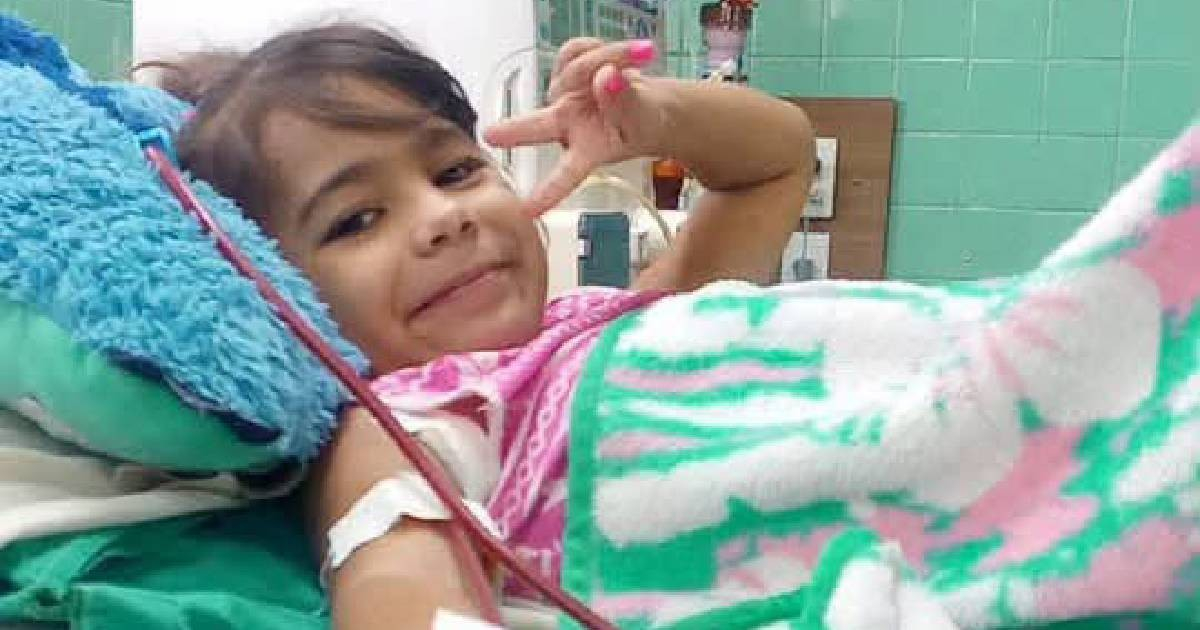
A nine-year-old girl from Santa Clara, Villa Clara, is in urgent need of pediatric dialyzers to continue her crucial hemodialysis treatment.
Her mother has made a heartfelt appeal on Facebook, seeking assistance from anyone who can provide the necessary supplies, as the Cuban healthcare system is unable to fulfill this need.
This situation highlights a growing pattern where Cuban families resort to social media to address urgent medical needs, due to the state's failure to provide essential hemodialysis supplies.
The Struggle for Pediatric Dialyzers
The "José Luis Miranda" Pediatric Hospital in Santa Clara serves as the provincial nephrology and hemodialysis center for children. The dialyzers required for this young patient are specific to her age group and cannot be substituted with adult-sized ones, complicating their acquisition in a nation where nephrology supply shortages are systemic.
Widespread Shortages and Their Impact
This scarcity is neither new nor isolated. In July, MediCuba reported that five containers of critical nephrology supplies—such as dialyzers, arteriovenous lines, and fistula needles—were stuck at the port of Kingston, Jamaica, affecting over 3,000 hemodialysis patients across the island.
In Camagüey, patients at the Manuel Ascunce Domenech Hospital went nearly a week without hemodialysis in mid-June due to a lack of acid concentrate and bicarbonate. Meanwhile, in Santiago de Cuba, sessions were cut from four hours to two to conserve available resources.
The High Cost of Medical Supplies
Villa Clara has not been spared from this crisis. The Arnaldo Milián Castro Provincial Hospital serves 144 hemodialysis patients on a weekly schedule of five shifts. In April, it was reported that dialyzers and arteriovenous lines cost between $12 and $15 each, a sum that many families cannot afford.
Even when the government announces solutions, they often fall short. In June, the Provincial Transport Directorate of Villa Clara confirmed that only 10 out of 20 electric vehicles intended for transporting hemodialysis patients had arrived.
Recurring Issues Among Minors
Unfortunately, this is not an isolated case involving children. In January, an eight-year-old girl in Santiago de Cuba also faced a critical need for a 6.5 pediatric catheter for her hemodialysis, which was not available within the country.
Those wishing to support the family of this little girl can reach out to her mother directly via her Facebook profile.
FAQs on Hemodialysis Supply Shortages in Cuba
Why are pediatric dialyzers hard to find in Cuba?
Pediatric dialyzers are scarce due to systemic shortages in Cuba's healthcare system, exacerbated by logistical challenges and economic constraints.
How are families managing medical supply shortages in Cuba?
Many families are turning to social media platforms like Facebook to seek assistance from the public when the state is unable to meet their medical needs.
What other areas are affected by the shortage of hemodialysis supplies?
Besides Villa Clara, regions like Camagüey and Santiago de Cuba are also experiencing significant impacts, with patients facing reduced treatment times or delayed sessions.