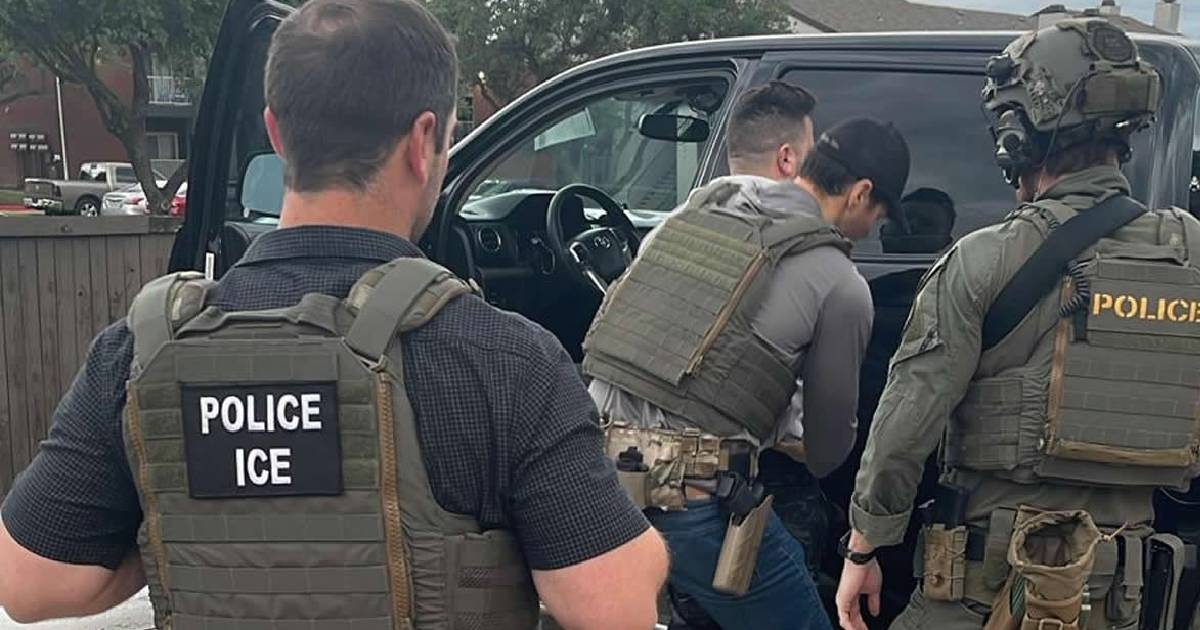
The U.S. Immigration and Customs Enforcement (ICE) is set to equip its agents with body cameras within the next two months, but the policy regulating these recordings has sparked debate. The rule states that footage of serious incidents will only be released to the public if it serves the "best interest of the agency."
In February 2025, the internal directive ICE 19010.3 mandated that agents wear cameras during arrests, raids, and other immigration enforcement operations. Despite this, implementation lagged. By March 2026, Todd Lyons, the interim head of the agency at the time, admitted to Congress that only about 3,000 of the 13,000 agents—less than a quarter—were complying with the requirement.
The urgency to expedite the rollout increased after two fatal shootings occurred within one week. On July 7, ICE agent killed Lorenzo Salgado Araujo, a 52-year-old Mexican resident of nearly 35 years in the United States and father to three U.S. citizen children, during an operation in Houston, Texas, where he was not the target. His death was ruled a homicide by the Harris County coroner.
Six days later, agent David Brouillette shot and killed Joan Sebastián Durán Guerrero, a 26-year-old Colombian with a valid work permit and father of a three-year-old girl, in Biddeford, Maine. He was also not the target of the operation. Brouillette was suspended, and a federal investigation was launched.
In both cases, the agents were not equipped with body cameras, despite the existing directive.
Body Camera Policy Sparks Controversy
On July 19, Tom Homan, the so-called "border czar," announced on Fox & Friends Weekend that ICE would require agents to wear body cameras during all traffic stops. "They exonerate more law enforcement officers than they convict, and I want officers to wear body cameras so the American public can see what the officers saw when they took that action," Homan remarked.
However, the accompanying disclosure policy has stirred the most controversy. According to the directive, a committee of high-ranking ICE officials and attorneys must review footage of incidents involving severe injuries or fatalities and decide whether to release it, with approximately 72 hours to approve disclosure. Additionally, the ICE director can delay or indefinitely block publication due to "specific and compelling circumstances," a term left undefined by the policy.
Before any release, videos must be edited to remove identifying features of agents, such as faces, names, and badge numbers. Footage not used as evidence can be deleted after just 60 days. Christopher Schneider, an academic specializing in body cameras, warned that the policy turns these devices into image management tools, allowing ICE to selectively publish favorable recordings while keeping others hidden.
An analyst highlighted that taxpayers spent over $30 million on acquiring the cameras, yet they might still lack access to footage of high-profile confrontations.
Institutional Context and Political Reactions
The institutional climate was also turbulent. Markwayne Mullin, Secretary of Homeland Security, suspended nearly all traffic stops on July 14 to review protocols, but former President Trump reversed the pause the very next day, expressing dissatisfaction with the suspension.
The Department of Homeland Security reported that over half of regional offices had received the equipment by mid-July, with the remainder slated to receive it within 60 days. Republican Senator Susan Collins of Maine called for an independent investigation and full distribution of cameras before the end of August.
Key Questions About ICE's Body Camera Policy
What is the main controversy surrounding ICE's body camera policy?
The main controversy lies in the policy allowing ICE to release footage of serious incidents only if it benefits the agency. This has raised concerns about transparency and accountability.
How soon are ICE agents expected to receive body cameras?
ICE plans to equip its agents with body cameras within the next two months, with over half of the regional offices having already received the equipment.
What happened to the agents involved in the fatal shootings mentioned?
In both fatal shooting incidents, the involved agents were not wearing body cameras as required. One agent was suspended, and both cases are under federal investigation.