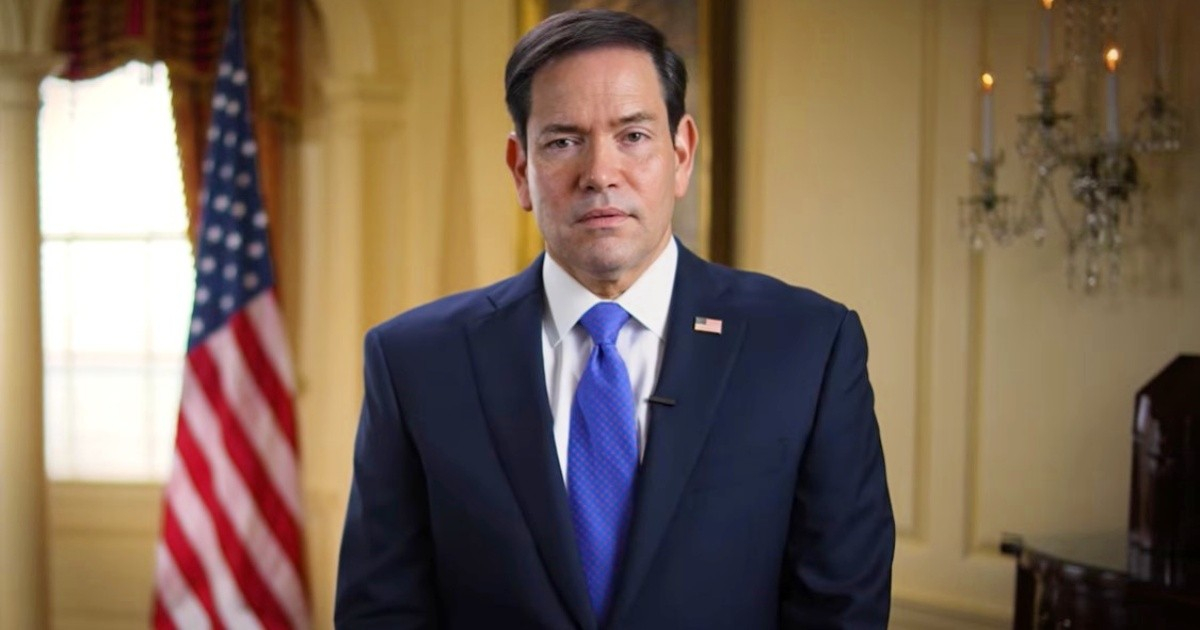
On Friday, Secretary of State Marco Rubio shared insights into the Trump administration's strategy to increase pressure on the Cuban regime during an exclusive interview with Axios. The approach involves systematically dismantling every mechanism Havana attempts to use to circumvent sanctions.
“Our goal is to show them that there are no escape valves,” Rubio explained to the U.S. media outlet.
Over Two Dozen Actions in Seven Months
Since January 2026, Washington has implemented over 24 distinct measures targeting Cuba. These include sanctions against at least 40 entities, ranging from foreign businesses operating on the island to state conglomerates involved in fuel, banking, and mining. Furthermore, economic restrictions, visa limitations, and residency revocations have targeted at least 38 individuals.
On Thursday, the administration unveiled a new set of sanctions against five Cuban military entities and eight officials, including Álvaro López Miera, the Minister of the Revolutionary Armed Forces, due to their ties with arms purchases from Russia and China.
John Kavulich, president of the U.S.-Cuba Trade and Economic Council, praised the effectiveness of the program: “Trump and Rubio have initiated the most effective sanctions program against a target country that we’ve ever seen. We've been around since 1994, and nothing compares,” he told Axios.
Maduro’s Downfall and the Energy Collapse
Rubio identified the capture of Nicolás Maduro by U.S. forces on January 3 as the most significant blow to the Cuban economy. Venezuela had been supplying up to 100,000 barrels of oil daily to the island. Following Maduro's detention, this flow halted, and Cuba lost the revenue from selling approximately half of that oil on the global market.
“For the first time in Cuba's history, the island lacks two things it has always relied on: an external sponsor and the lack of U.S. attention as a priority,” stated the Secretary of State. “They won’t find a sponsor in the next two and a half years. It has placed them in a very challenging situation.”
In this void, U.S. fuel exports to Cuba soared to $96 million during the first half of the year—more than half of that in June alone—sparking a budding capitalist black market. An industry insider told Axios that some Cuban businesses resorted to sending “human mules” to Miami carrying gold chains to use as currency, unable to operate through banks.
Cosmetic Reforms and the Channel with Raulito Castro
Prime Minister Manuel Marrero recently announced the largest opening to the private sector since the 1959 Revolution, with Decree 160/2026 effective since August 4. Rubio, however, dismisses this as a genuine change.
“Every time they create a new mechanism to escape the bind, we shut it down,” he stated to Axios. “They can’t wait us out. This won’t disappear in the next two and a half years.”
According to Axios, Rubio is in talks with Raulito Castro—the grandson of former leader Raúl Castro—regarding potential transition scenarios. The viability of this channel raises questions within the U.S. government itself: “When Raúl is gone, what is his status? Who protects him?” an anonymous official inquired to the media outlet.
The Report Setting the Stage for Further Actions
On July 20, the State Department released the report “Cuba: The Capital of 21st Century Communism,” which documents decades of Cuban espionage and ideological influence in the United States. Officials acknowledged to Axios that the document “lays the groundwork” for further actions, though Rubio did not specify what those might be.
Cuban historian and University of Miami professor Michael Bustamante criticized its analytical value: “It’s a political document. It’s not a great historical analysis. It lacks a lot of context,” he told Axios.
Rubio concluded the interview with a statement summarizing the campaign's goal: “I am confident that by the end of this administration, at the very least, Cuba will be on an irreversible path towards a different future.”
Understanding the U.S. Strategy on Cuba
What is the core strategy of the Trump administration against Cuba?
The core strategy is to apply maximum pressure through systematic dismantling of mechanisms that Cuba uses to evade sanctions, ensuring there are no escape routes.
How has the capture of Nicolás Maduro affected Cuba?
The capture led to the cessation of Venezuelan oil supplies to Cuba, significantly impacting its economy and removing a major source of revenue from oil resale.
What are the implications of U.S. fuel exports to Cuba?
The rise in U.S. fuel exports to Cuba has created a nascent capitalist black market, with some businesses resorting to alternative means, such as gold chains, for transactions.