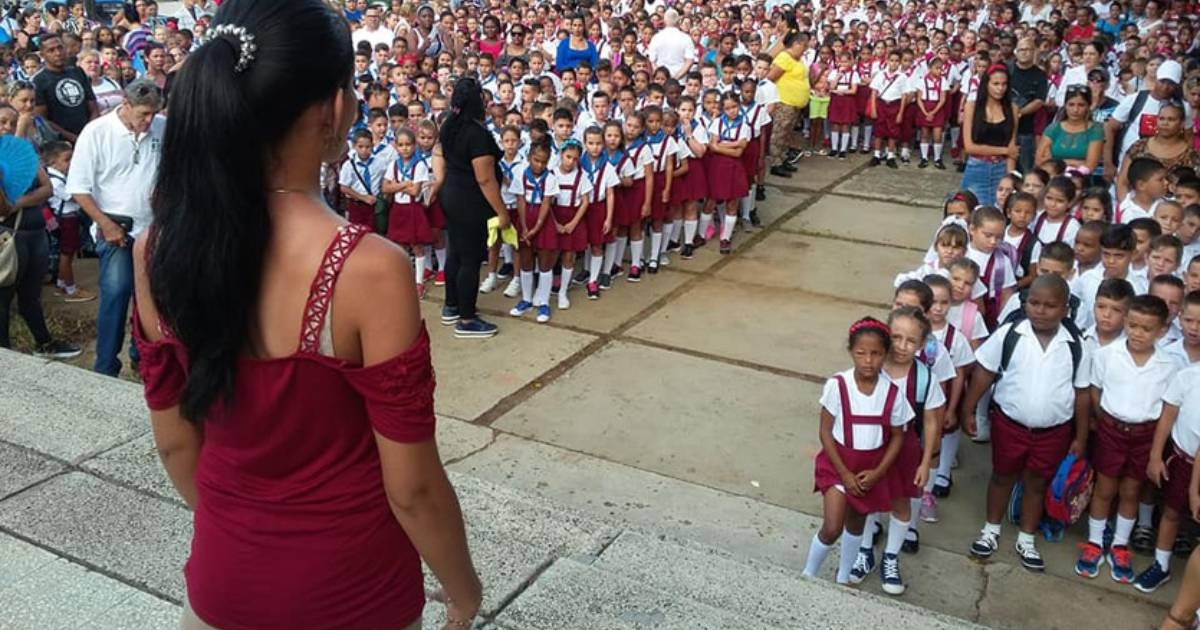
Educational authorities in Cárdenas, a city in the Matanzas province, have firmly denied circulating rumors on social media about a potential delay in the start of the 2026-2027 school year. They confirmed that classes will begin as scheduled on September 1st.
In a statement released on Wednesday, the municipality's General Directorate of Education was unequivocal: "There is no change in this date."
This refutation wasn't limited to Matanzas alone. On the same day, the General Directorate of Education in the Guantánamo province also dispelled similar speculations about any calendar changes, reiterating September 1st as the unchangeable start date and urging families to rely solely on official channels.
The notice from Cárdenas acknowledged that unsupported claims had spread "across social networks and public spaces," and advised parents and guardians to begin preparations for their children now, including checking supplies, uniforms, sleep schedules, and study habits.
"We dismiss any unofficial information and urge citizens to verify sources," the institution stated, promising to keep the community informed through official channels and local media.
The credibility of these rumors stems from recent history of forced adjustments to the Cuban academic calendar.
In May 2026, the Cuban government moved the end of the 2025-2026 school year to between June 15th and 30th—from its originally planned conclusion in July—due to fuel shortages, power outages, and transportation challenges.
Education Minister Naima Ariatne Trujillo Barreto justified the decision by citing "limitations in logistical and support conditions," a phrase that thinly veiled the deep-rooted crisis plaguing the educational system.
Back in May, the Matanzas Education Directorate had also clarified rumors of an early end to the then-current school year, asserting it would conclude in July per the official calendar—a promise that the government eventually did not uphold.
The teacher shortage exacerbates the situation. In Matanzas alone, the 2025-2026 school year began with over 2,000 teaching positions unfilled; only 7,478 out of the required 9,511 were staffed.
Nationally, the minister admitted in August 2025 that the country faced the "largest teacher deficit" in the western region, describing the situation as "extremely complex."
The start of the school year on September 1st is established in the Official Gazette under Resolution No. 43-2025 by the Ministry of Education.
Projections for the new 2026-2027 school year include over 1.5 million students nationwide, a figure that starkly contrasts with the material and human resource shortages acknowledged by the authorities themselves.
"Regular and punctual attendance from day one is crucial for successful learning and the cohesion of the school community," concluded the Cárdenas Education Directorate in its statement.
Understanding Cuba's Educational Challenges
Why were there rumors about a delay in the Cuban school year?
Rumors likely arose due to recent history of unexpected changes to the academic calendar, driven by logistical issues such as fuel shortages and transportation challenges.
What measures are being taken to ensure the school year starts on time?
Authorities have reaffirmed the start date and are urging parents and guardians to prepare their children by organizing school supplies, uniforms, and study routines.
What has been the impact of teacher shortages in Cuba?
Teacher shortages have significantly impacted the education system, with thousands of positions remaining unfilled, affecting the quality of education delivery.