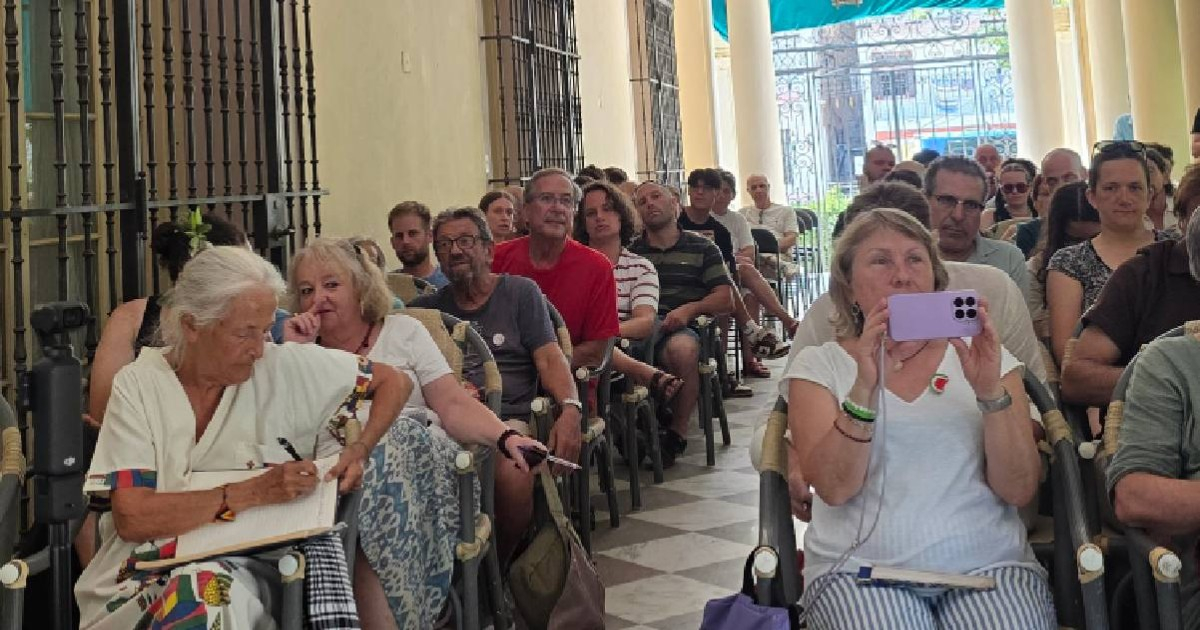
As millions of Cubans endure weeks—sometimes even more than three months—without electricity, the government launched the Fourth Continental Assembly of ALBA Movements in Havana this Thursday. This gathering, which brought together 188 delegates from 27 countries, was organized to promote socialism as an "alternative for the people" and to build a "regional anti-imperialist front."
The opening ceremony, held at the University of Havana, was attended by prominent figures such as Miguel Díaz-Canel, Prime Minister Manuel Marrero Cruz, Central Committee Organization Secretary Roberto Morales Ojeda, and Foreign Minister Bruno Rodríguez Parrilla, as reported by the state-run Canal Caribe.
Running through August 8th, the event, themed "For Socialism, One Hundred Years Walking with Fidel," honors the 100th anniversary of Fidel Castro's birth and brings together around 400 organizations from 25 countries that align with the political vision of ALBA Movements.
Power Outages Highlight Stark Reality
The stark contrast between the assembly and the everyday lives of ordinary Cubans is staggering. On the same day as the assembly's start, the projected electricity deficit during peak hours was 2,305 MW, according to the National Electric System (SEN). A day prior, available power generation stood at a mere 926 MW against a demand of 3,210 MW, creating a shortfall of over 2,100 MW.
The SEN experienced its seventh total blackout of the year on August 4th, just 24 hours after the sixth blackout occurred on August 3rd at 10:43 PM. This outage left approximately nine million people without power, with only about 14% of service restored in Havana, as reported by El País.
In provinces like Holguín, some circuits experienced outages of 66 to 74 consecutive hours during the early days of August.
Government Narratives vs. Energy Crisis
Energy and Mines Minister Vicente de la O Levy informed the National Assembly on July 30th that "there are communities with up to 105 consecutive days without electricity" and that the crisis "lacks a short-term solution."
During the assembly, speakers blamed the energy disaster on the U.S. embargo, describing executive orders from January and May as part of a "genocidal energy blockade."
One panelist stated, "The United States cannot allow a people just over 300 kilometers from Miami to dare to think about their own destiny."
However, Minister De la O Levy had admitted in May that the Russian oil donation received in late March was already depleted and that blackouts sometimes exceeded 20 hours per day in Havana, highlighting a structural collapse that anti-imperialist rhetoric cannot conceal.
The regime continues to hold Washington accountable for a crisis that its own officials describe as unsolvable in the near term, all while diverting resources and political focus to hosting hundreds of foreign delegates in the name of a revolution that, for most Cubans, translates into darkness and despair.
A Cuban citizen consulted this week summed up the situation bitterly: "Fix it with someone else, because I can't do anything about it."
Understanding Cuba's Power Crisis
What is causing the power outages in Cuba?
The Cuban government attributes the power outages to the U.S. embargo, but internal structural issues and management failures are significant factors.
How long have some areas been without electricity?
Some communities in Cuba have reported being without electricity for up to 105 consecutive days.
What was the purpose of the ALBA Movements Assembly in Havana?
The assembly aimed to promote socialism as an alternative for the people and to establish a regional anti-imperialist front.