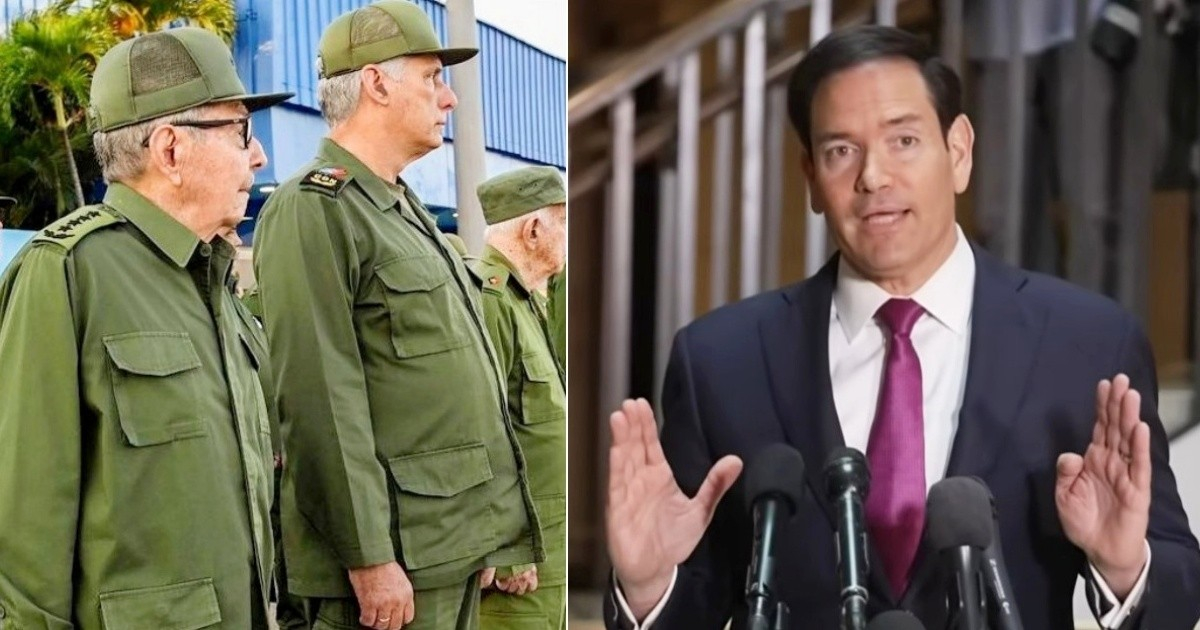
The Trump administration escalated its strategy of maximum pressure against Havana on Thursday, imposing sanctions on five Cuban entities and eight individuals involved in procuring foreign weaponry for Cuba's Ministry of the Revolutionary Armed Forces (MINFAR) and the regime's security apparatus.
Secretary of State Marco Rubio revealed the measures through an official State Department statement and reiterated them on his X account, characterizing the Cuban communist regime as a "state sponsor of terrorism that spies on the United States, arms violent leftist radicals, spreads toxic Marxist ideology, and acts as a launching pad for Russia, China, and Iran just 90 miles from our shores."
Legal Basis for the Sanctions
The sanctions were issued under Executive Order 14404, signed by President Donald Trump on May 1, 2026, titled "Imposing Sanctions on Those Responsible for Repression in Cuba and Threats to U.S. National Security and Foreign Policy."
This executive order allows for extensive sanctions against individuals who support the regime’s security apparatus, contribute to repression on the island, or pose other threats to U.S. national security. Thursday’s actions are also supported by Executive Order 14380 and National Security Presidential Memorandum 5, which direct the Executive to promote human rights, the rule of law, free markets, and democracy in Cuba.
Washington's Accusations
The State Department’s statement paints a stark picture of the Cuban regime's role in regional and global security. The official text states, "The Cuban communist regime is a state sponsor of terrorism that utilizes its military and intelligence apparatus to spy on the United States, provide material support to violent radicals and terrorist groups, and spread toxic Marxist ideology within our borders and political system. It also serves as a launch platform for other U.S. adversaries like Russia, China, and Iran."
The statement specifically targets the military-run conglomerate GAESA (Grupo de Administración Empresarial S.A.) as a key enforcer of repression and kleptocracy: "Cuba’s military and intelligence institutions are also the principal enforcers of domestic repression and nodes of kleptocracy, particularly through the military-led conglomerate GAESA."
Warning to Foreign Banks and Companies
Rubio was explicit in cautioning international financial actors about the repercussions of continuing to engage with the sanctioned entities: "Anyone who supports, sponsors, or provides services to these sanctioned actors risks facing sanctions themselves. Foreign banks and other companies that offer services or maintain funds for these entities must cease such activities immediately."
This warning activates the secondary sanctions mechanism enabled by EO 14404, extending beyond the traditional embargo and potentially affecting financial institutions from third countries that continue business with the blocked entities.
A Sustained Pressure Campaign
Thursday's sanctions are the latest link in a chain of measures the Trump administration has applied against Cuba throughout 2026. In May, the U.S. directly sanctioned GAESA and its executive president. In June, the Office of Foreign Assets Control (OFAC) designated MINFAR, Miguel Díaz-Canel, and other senior officials.
In July, ten more entities were added, including the Rapid Response Brigades, Territorial Troops Militias, and the Association of Combatants of the Cuban Revolution. Just a day before this announcement, the U.S. formalized in the Federal Register the sanctions adopted on June 4.
The State Department emphasized Washington's steadfast determination: "The Trump administration will continue to use all available tools to address the national security threats posed by the Cuban communist regime and to promote economic and political reforms that offer the Cuban people a better future. As President Trump has stated, his resolve is unwavering: The United States will not tolerate a pariah state harboring hostile military, intelligence, and terrorist operations just ninety miles from U.S. territory."
Understanding the U.S. Sanctions on Cuba
What entities and individuals have been sanctioned by the U.S.?
The U.S. has sanctioned five Cuban entities and eight individuals involved in acquiring foreign weapons for the regime's Ministry of the Revolutionary Armed Forces.
What is the purpose of Executive Order 14404?
Executive Order 14404 authorizes sanctions against individuals who support the Cuban regime’s security apparatus, engage in repression on the island, or pose threats to U.S. national security.
Why does the U.S. consider the Cuban regime a threat?
The U.S. sees the Cuban regime as a threat due to its sponsorship of terrorism, espionage activities, support for violent radicals, and its role as a launch platform for adversarial nations like Russia, China, and Iran.