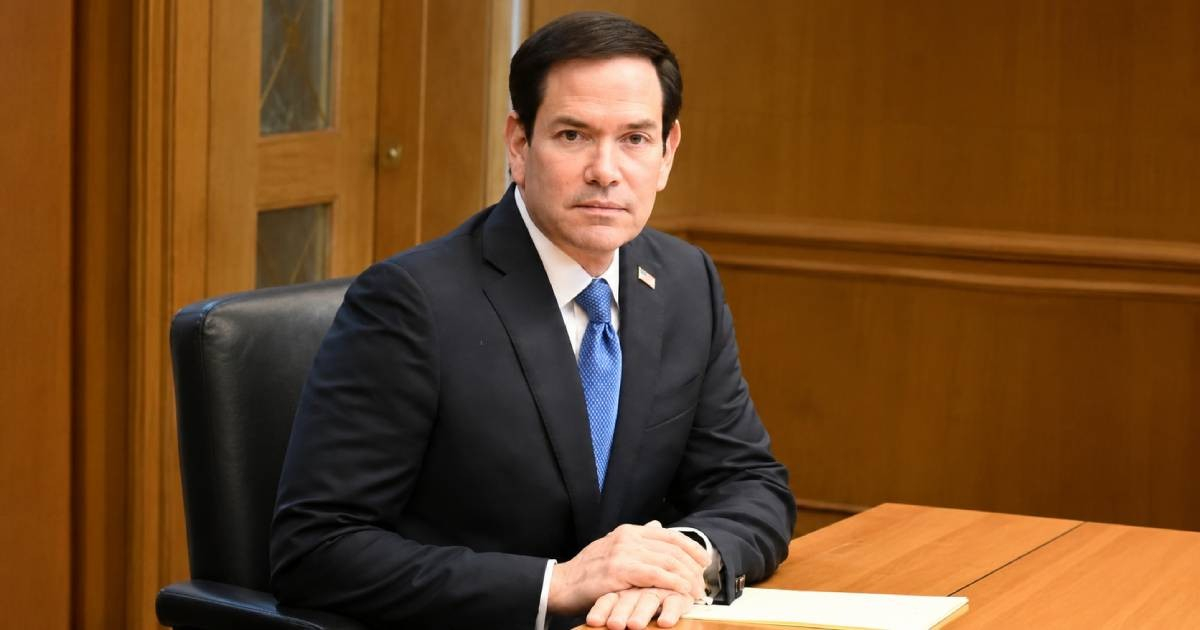
On Thursday, the Trump administration intensified its campaign to exert maximum pressure on Havana by imposing sanctions on five Cuban entities and eight individuals linked to the procurement of foreign armaments for the Ministry of the Revolutionary Armed Forces (MINFAR) and the regime's security forces.
Secretary of State Marco Rubio signed the designation under Executive Order 14404, which President Trump enacted on May 1, 2026, to authorize broad sanctions against those supporting Cuba's oppressive regime or threatening U.S. national security.
In his official statement, Rubio characterized the regime as "a state sponsor of terrorism that uses its military and intelligence apparatus to spy on the United States, provide material support to violent radicals and terrorist groups, and spread dangerous Marxist ideology within our borders," while highlighting Cuba as a platform for operations by Russia, China, and Iran just 90 miles from American shores.
Rubio also targeted the military conglomerate GAESA (Grupo de Administración Empresarial S.A.) as a central node in the regime's kleptocracy, a structure that controls a significant portion of the Cuban economy.
This round of sanctions is notable for its specific focus: the external intermediaries and facilitators that enable MINFAR to acquire military equipment in international markets, a dimension not directly addressed by previous sanctions.
Through his account on X, Rubio issued a stern warning to the international financial system: "Foreign banks and other companies providing services to these sanctioned actors or holding funds on their behalf must cease these activities immediately," risking becoming subject to sanctions themselves.
This action is part of a sustained escalation that began in May 2026. In the following weeks, Washington expanded its measures: initially against GAESA and its executive president; then against the Cuban Intelligence Directorate (DGI/G2) and senior regime leaders; later targeting MINFAR, MININT, ETECSA, and the CIMEX Corporation; and in July, against the Mariel Container Terminal and other entities linked to GAESA.
The security backdrop driving these actions is severe. According to classified intelligence cited by Axios in May 2026, Cuba reportedly acquired over 300 military drones from Russia and Iran and discussed plans to use them against the Guantanamo Naval Base, U.S. military ships, and possibly Key West, Florida.
U.S. officials also estimate that up to 5,000 Cuban soldiers have fought in Ukraine under the Russian flag, with Moscow paying the regime about $25,000 for each deployed soldier.
In July 2026, the State Department released a nearly 100-page report titled "Cuba: The Capital of 21st Century Communism," where Rubio accused the Cuban regime of being the main sponsor of radical leftism in the U.S. for over six decades, documenting the presence on the island of 18 signal intelligence facilities, including two Russian ones.
Rubio concluded his statement with a message summarizing the administration's stance: "President Trump's resolve is unwavering: The United States will not tolerate a rogue state hosting hostile military, intelligence, and terrorist operations just ninety miles from American soil."
Understanding the Impact of U.S. Sanctions on Cuba
What entities in Cuba are targeted by the new U.S. sanctions?
The new U.S. sanctions target five Cuban entities and eight individuals associated with the acquisition of foreign military equipment for the Ministry of the Revolutionary Armed Forces (MINFAR) and the regime's security forces.
Why is the U.S. imposing sanctions on Cuba's military suppliers?
The U.S. is imposing sanctions on Cuba's military suppliers to disrupt the regime's ability to procure military equipment internationally, thereby weakening its oppressive apparatus and reducing threats to U.S. national security.
How did Secretary of State Marco Rubio describe the Cuban regime?
Secretary of State Marco Rubio described the Cuban regime as a state sponsor of terrorism that uses its military and intelligence to spy on the U.S., support violent radicals, and spread Marxist ideology.