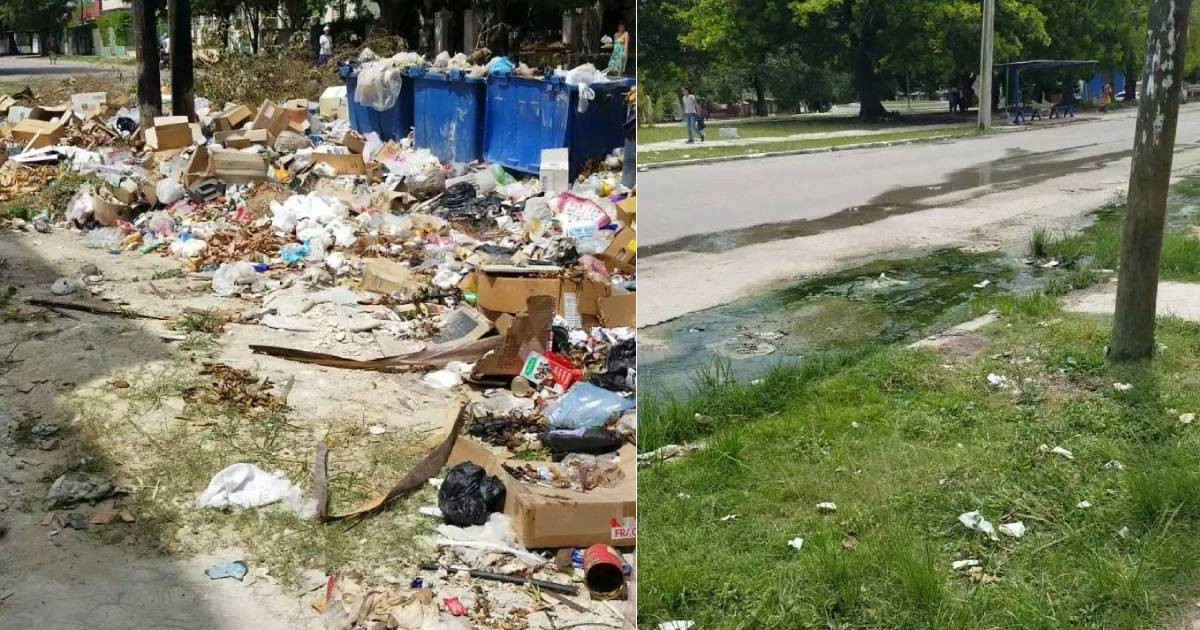
A Cuban resident named Jesús Molina took to Facebook this Wednesday to share a poignant account, accompanied by images, depicting the severe decline of his neighborhood. The area is overwhelmed by heaps of garbage, sewage overflows, and crumbling infrastructure—challenges further exacerbated by frequent blackouts and water shortages.
Molina wrote, "It's impossible... after night upon night without power and eight days without water... to think that going outside will provide any relief." His words paint a picture of a reality that, instead of offering solace, heightens the frustration and exhaustion of those living through it.
The images, captured in late July, reveal shattered sidewalks, overflowing trash bins, waste scattered across green spaces, and pools of sewage invading public streets. In the background, residential buildings show clear signs of neglect.
Challenging the Official Narrative
In his post, Molina questions the official rhetoric that persists in highlighting "the positive and beautiful side of Cuba, the most beautiful," to which he retorts with a brief but powerful comment: "it was."
Amid constant debates over who is to blame for the crisis, Molina dismisses the argument with irony: "Whether it's Chicho's fault... Toti's, or the mother of all problems... it's all just blah, blah, blah."
He believes the issue goes beyond assigning blame. "The balance of things has spiraled out of control, and the chaos is leviathan," he asserts.
Cuba's Infrastructure Crisis
Molina's testimony joins a growing list of citizen reports that have, in recent months, highlighted the decline of basic services in Cuba. In July, residents of El Fanguito in Havana blocked 23rd Street after being left without electricity, water, or gas for over 48 hours. In neighborhoods like Lawton and Alamar, residents even resorted to setting trash on fire due to the lack of waste collection.
The post also coincides with one of the most critical periods for Cuba's electrical system. On August 3, the island experienced its sixth total collapse of the National Electric System in 2026. Just days earlier, on July 29, the Electric Union reported a record deficit of 2,380 megawatts, affecting around 74% of the country during peak demand hours.
Impact of Blackouts on Water Supply
Extended blackouts have a direct impact on water supply. In Havana, 87% of the pumping system relies on electricity, meaning prolonged outages leave hundreds of thousands without water access for days.
According to water specialists in Havana, over 500,000 residents lacked regular water supply in July. Earlier, the government acknowledged that nearly three million Cubans faced issues accessing water nationwide.
Adding to this is the waste collection crisis. Since February, it was reported that only 44 of Havana's 106 garbage trucks were operational, leading to daily accumulations of thousands of cubic meters of waste and worsening sanitary conditions in the capital. It's unclear if this situation has improved since then.
Molina wraps up his post with a phrase dripping with resignation and sarcasm, reflecting a tone increasingly common among Cubans using social media to voice their dissatisfaction with their deteriorating living conditions: "Patience... if it's alright."
Understanding Cuba's Infrastructure Challenges
What are the main issues affecting Cuban neighborhoods like Molina's?
Cuban neighborhoods face significant challenges such as garbage accumulation, sewage overflow, crumbling infrastructure, frequent blackouts, and water shortages.
How do blackouts affect water supply in Havana?
In Havana, 87% of the water pumping system depends on electricity. Blackouts lead to prolonged water supply interruptions, leaving many without access for days.
What was the electrical deficit reported in Cuba in July 2026?
In July 2026, Cuba's Electric Union reported a deficit of 2,380 megawatts, affecting approximately 74% of the country during peak demand hours.