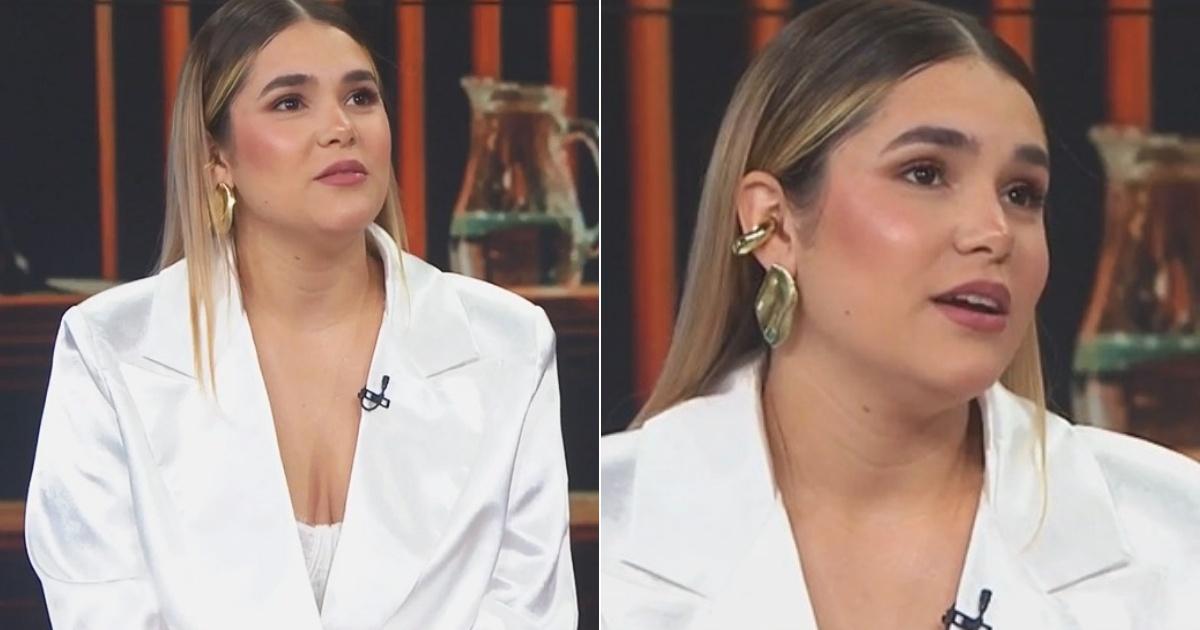
A young Cuban mother, who built her life from scratch in Miami, owning a business and raising a daughter born on American soil, now confronts a deportation order to Ecuador, threatening to dismantle everything she's achieved in the past four years.
Her story, shared during an interview with Gloria Ordaz for Telemundo 51, highlights the immigration crisis affecting tens of thousands of Cubans with an I-220A form in the United States.
The Impact of the I-220A Form
Leidys Barrabí, 25, crossed the U.S. border in 2022 after a journey that started in Nicaragua. Like many other Cuban migrants of that period, she received an I-220A form—an order of release under supervision issued by the U.S. Immigration and Customs Enforcement (ICE)—and began establishing her life in Miami.
Not one to remain idle, Barrabí studied cosmetology, acquired her professional license, and, alongside her husband who also holds an I-220A, opened a beauty salon in the city. Now a mother to a six-month-old baby born in the United States, she recently received news that turned her world upside down.
A Shattered American Dream
"I received a deportation order. I still can't believe this news," Barrabí expressed, describing this as the most challenging moment since she set foot in the U.S. The order would send her to Ecuador, a country she has no ties to. Since November 2025, Ecuador has served as a deportation destination for Cubans under an asylum cooperation agreement with the U.S. government.
Barrabí articulated what's at stake: "I am a Cuban mother who came to this country four years ago with dreams and ambition. After years of sacrifice, building my business from the ground up, establishing a successful salon in Miami, and creating a stable life for my daughter and family, I received this news."
Deportation would not only mean leaving her home but also losing the business she painstakingly built. To add to her burden, her mother, the baby's grandmother, also received a deportation order.
Navigating Legal Challenges
Determined not to give up, Barrabí has made her story public to shed light on the struggles of other Cubans with the I-220A. On Telemundo 51's Virtual Encounter program, immigration attorney Avelino González, not directly involved in her case, discussed legal options for Cubans in similar situations and offered advice on what Barrabí should avoid while in her current immigration status.
The I-220A form does not equate to parole or formal admission into the country, which prevents holders from automatically accessing the Cuban Adjustment Act of 1966 to obtain permanent residency. This act requires being "inspected and admitted" or on parole, a condition not met by the I-220A.
With over 42,000 Cubans under active deportation orders in the U.S., and 612 deported in the first five months of 2026 alone, immigration courts in Miami have expedited hearings initially scheduled for 2028 or 2029, drastically reducing case preparation time. One recourse is to appeal the order with the Board of Immigration Appeals (BIA) using the EOIR-26 form within 30 days, although the appeal itself doesn’t automatically pause deportation.
In February 2026, the 11th Circuit Court of Appeals overturned BIA decisions in cases involving Cubans with I-220A, remanding them for further review without granting automatic eligibility for residency.
The legal status remains unresolved for tens of thousands of Cubans who, like Barrabí, have built productive lives in the U.S. yet find themselves trapped in a complex immigration limbo.
Understanding the I-220A and Its Implications
What is an I-220A form?
An I-220A form is an order of release under supervision issued by the U.S. Immigration and Customs Enforcement (ICE) for individuals who have entered the U.S. without formal admission.
Why are Cubans being deported to Ecuador?
Cubans are being deported to Ecuador under a cooperation agreement for asylum signed between the U.S. and Ecuador, effective since November 2025, designating Ecuador as a deportation destination for Cubans.
Can an I-220A holder apply for permanent residency?
No, holding an I-220A does not automatically allow one to apply for permanent residency under the Cuban Adjustment Act, as it requires being "inspected and admitted" or on parole, which the I-220A does not fulfill.