According to data from the U.S.-Cuba Trade and Economic Council (UCTEC), Cuban purchasers obtained $95,744,767 worth of fuel from the United States between January and June 2026.
This figure highlights an unprecedented surge in U.S. energy exports to the island, driven by a strategic U.S. policy aimed at supporting the Cuban private sector while intensifying sanctions on the state apparatus.
June was a particularly significant month, accounting for nearly half of the total six-month figure. During this time, $47,842,674 in petroleum products were shipped.
The contrast with the year's initial months is stark. In January and February, exports barely reached $2,548,110, a number that skyrocketed more than eighteenfold by the end of the period.
The most significant item was low-sulfur light fuel oil, totaling over $39 million, shipped primarily from the Houston-Galveston and Miami ports.
Shipments originated from four customs districts: Miami and Tampa in Florida, Houston-Galveston in Texas, and New Orleans in Louisiana. Miami saw the most diverse product range, while Houston-Galveston led in value, contributing $25,194,850 to the total.
The exports included both leaded and unleaded gasoline, jet kerosene, aviation and motor lubricants, medicinal-grade mineral oils, liquid propane, and various hydrocarbon blends.
The legal framework for these operations was established on February 25, 2026, when the Department of Commerce introduced the "Support for the Cuban People" (SCP) license exception, allowing petroleum product exports to private Cuban entities without specific authorization from the Office of Foreign Assets Control (OFAC).
On the same day, OFAC announced a favorable policy for reselling Venezuelan-origin oil to the island's private sector, explicitly excluding the government, military, and sanctioned entities.
Secretary of State Marco Rubio described the strategy as "entirely designed to elevate the private sector and unaffiliated Cuban individuals—those not linked to the government or military."
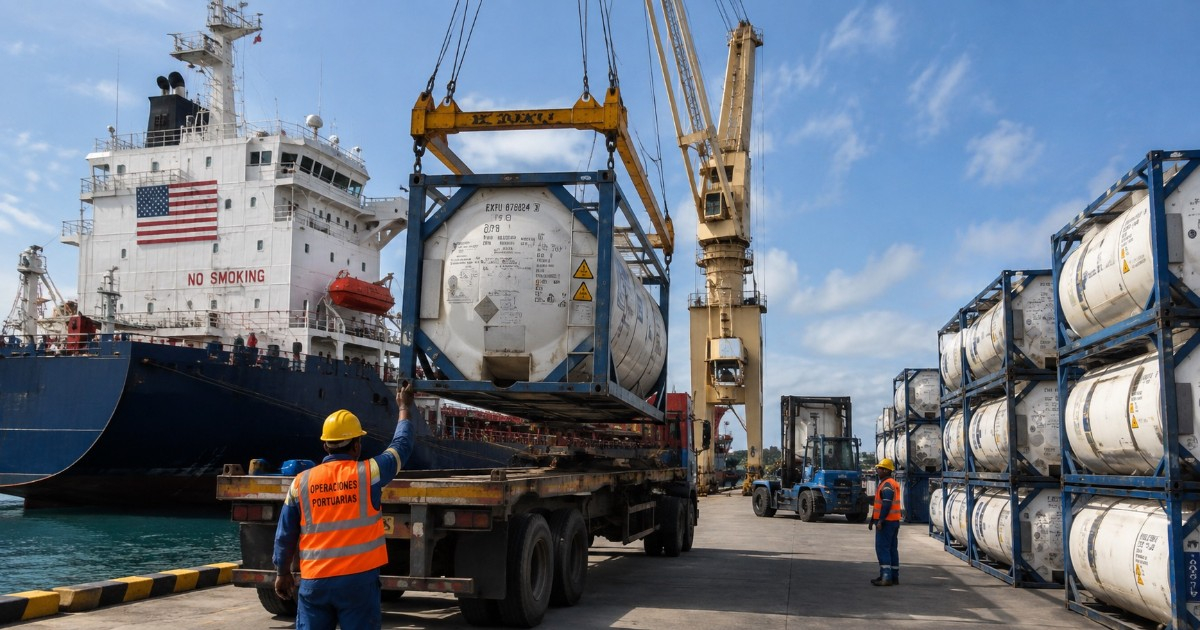
The fuel is primarily delivered in isotanks transported by container ships and unloaded at the port of Mariel. Identified beneficiaries include private bakeries, wholesalers, and small distributors.
This trade dynamic unfolds alongside a tightening of sanctions against the state energy sector. In June, Washington imposed sanctions on CUPET, and by late July, CEINPET, ENERSA, and EINARBO were also sanctioned, targeting the entire exploration, importation, and distribution chain of the regime's fuel resources.
Following the capture of Nicolás Maduro on January 3, 2026, Venezuela ceased oil shipments to Cuba, and subsequently, Mexico also halted its cooperation with the island.
In May, Energy and Mines Minister Vicente de la O Levy publicly acknowledged that Cuba had "absolutely no fuel, no diesel, only accompanying gas."
Despite the increasing volume of U.S. fuel, it flows exclusively to the private sector, failing to address the collapse of the national electrical system.
FAQs About U.S. Fuel Exports to Cuba in 2026
What was the total value of fuel purchased by Cuba from the U.S. in early 2026?
Cuba purchased $95,744,767 worth of fuel from the United States in the first half of 2026.
What policy changes facilitated the increase in U.S. fuel exports to Cuba?
The "Support for the Cuban People" (SCP) license exception, introduced by the Department of Commerce on February 25, 2026, allowed for these exports without specific OFAC authorization.
Which ports were the main points of origin for these fuel shipments?
The main ports of origin were Miami, Tampa, Houston-Galveston, and New Orleans, with Miami showing the most product variety.