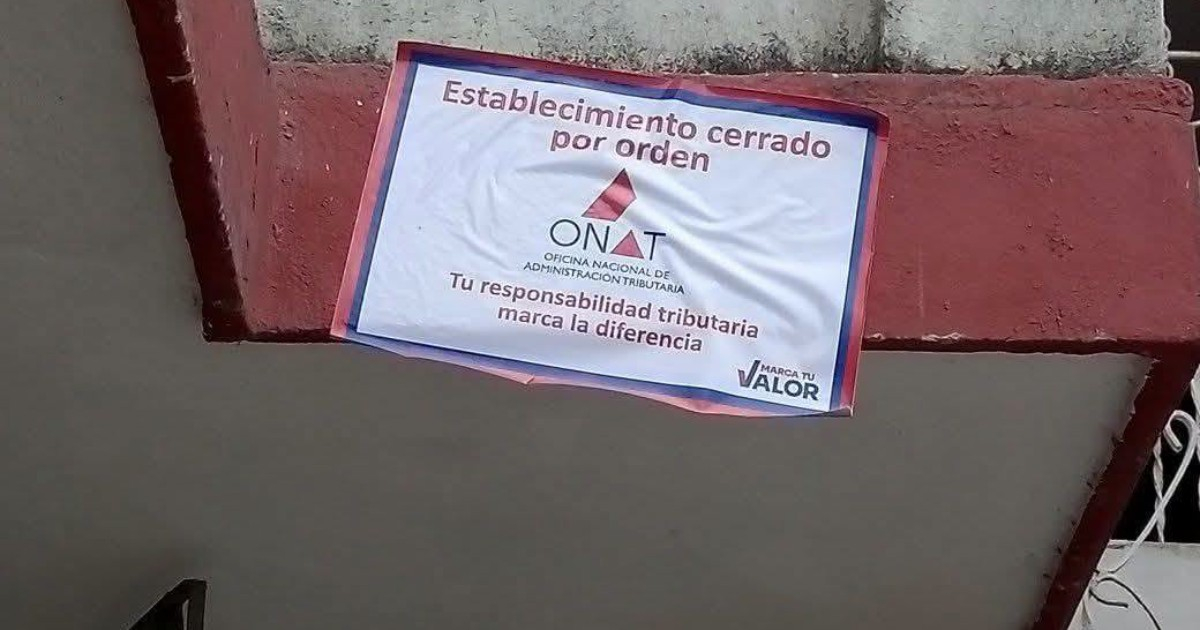
In Bayamo, located in Granma province, five businesses were shut down for refusing to accept payment through electronic transfers. These establishments are now under scrutiny by the National Tax Administration Office (ONAT), as part of the government's effort to enforce the use of electronic payment platforms in private enterprises.
The state-run CMKX Radio Bayamo reported that these closures occurred in the morning, citing the Coordinadora Economía profile as their source.
This government-linked account further confirmed on Facebook that the businesses, closed for not accepting transfers from the public, will be audited by ONAT.
The authorities have not disclosed the names of the closed businesses, nor have they detailed the potential tax audit outcomes for their owners.
Government Warnings and Previous Actions
Previously, on July 31, Coordinadora Economía had warned of actions to be taken by so-called multidisciplinary groups against businesses that rejected electronic payments.
In that announcement, the profile displayed a sticker intended for sanctioned establishments, with the message "Closed by ONAT order" and the slogan "Your tax responsibility makes the difference."
Wider Compliance Issues Across Provinces
The Bayamo incidents follow a day after a similar audit operation in Sancti Spíritus led to over 200 fines and the closure of at least five businesses for violations primarily related to pricing, and to a lesser extent, payment methods.
Among the irregularities found in that province were the refusal to process digital payments and charging different prices depending on whether the customer paid in cash or via transfer.
Broader Government Pressure on Private Sector
Cuban authorities have previously reported more than 15,240 fines and 269 closures linked to non-compliance with electronic payment regulations, despite connectivity issues and complaints from merchants whose suppliers also do not accept transfers.
This new measure is part of increased governmental pressure on the private sector in Granma. Additionally, the provincial government has summoned small and medium-sized enterprises (SMEs) and self-employed importers of food and personal hygiene products to explore "joint solutions against the brutal Yankee blockade."
Simultaneously, other regional actions aim to regulate the private sector. For instance, authorities in Guantánamo have set a reference price of 2,200 pesos per unit of oil, without specifying brand, volume, or packaging, and have announced penalties, confiscations, enforced sales, and temporary closures for those who do not comply.
Understanding the Impact of Electronic Payment Mandates in Cuba
Why are businesses in Cuba being forced to accept electronic payments?
The Cuban government is mandating electronic payments as part of an effort to modernize the economy and ensure better tax compliance across the private sector.
What are the consequences for businesses that refuse electronic payments?
Businesses that refuse electronic payments face audits by the ONAT, potential fines, and even closure, as seen in recent actions taken in Bayamo and Sancti Spíritus.
How are other provinces in Cuba responding to these regulations?
Other provinces, like Guantánamo, are implementing their own measures, such as setting price controls and announcing penalties for non-compliance, to regulate the private sector and enforce these new payment mandates.